Electricity
star
star
star
star
star
Last updated over 6 years ago
18 Nsɛmmisa
Hyɛ no nsow a efi ɔkyerɛwfo no hɔ:
electricity current and static
1
1
1

1
1
1
1
1
1
1
1
1
1
1
1
1
1
1
electricity current and static
All matter is made up of tiny particles called __________________, which are made up of even tinier particles called protons, neutrons, and electrons. An _________________ is a particle with a negative charge which can move from atom to atom and from one object to another.
The number of electrons on the surface of an object can make it have a negative charge or a positive charge. If the surface has more electrons, the object is negatively charged (-). If the surface has fewer electrons, it has a positive charge (+). A negative charge can build up on an object when electrons move to it from another object. This build up of electric charge on an object is called ________________ ___________________ .
If the built up charge is strong enough, static electricity may "jump" from one object to another. We call this "jump" and electric ________________ , and it can give a quick shock.
Based on the diagram above, draw what will happen if two positively (+) charged balloons are put beside each other? What about a positively (+) charged balloon and a negatively (-) charged balloon? Show me by drawing a diagram in the space below.
To be useful, electric energy must change into other forms of energy. Electrical energy can change into light, heat, sound, and motion. When you switch on a light, electric current flows through wires to the light bulb. The current causes a wire or gas inside the bulb to give off light. The bulb also gives off heat.
An electrical _______________ is the path that an electric current takes.
A simple electrical circuit has four main parts - a source, a load, a connector, and a switch. Draw a simple electrical circuit and label it's parts. Make sure it is a closed circuit that will allow current to flow freely.
Draw a table in the space below that shows 2 materials that are conductors and two materials that are insulators.
The circuit shown is an open circuit.
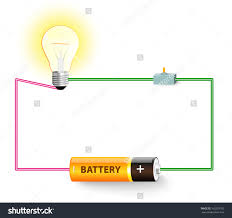
What type of electricity is shown in the image?
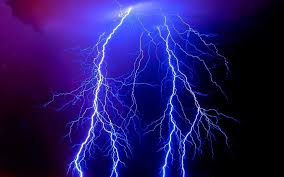
What type of electricity in shown in the image?
What is the difference between static and current electricity?
Material that allows eletric current to flow through it easily
Material that blocks the flow of electric current
The path that electric current flows through is called a __ __ __ __ __ __ __ .
A complete circuit consists of which four items?
In order for current to power a load, a circuit must be ________________ .