USING FOSSILS TO STUDY CLIMATE
A fossil is the preserved remains of a once living organism. A fossil can be the entire organism, part of the organism or an impression of the organism. Fossils form in layers of rock. We call these layers rock strata. Fossils found in superficial or shallow layers of rock are younger than fossils found in deeper layers of rock. Fossils found in deeper rock layers are older than fossils found in shallower rock layers.
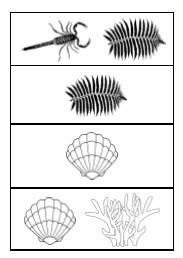
Fossils help us determine what the environment was like in the past. For example, if fossils of marine (water) organisms are found in a location that is now dry land, that area must have been covered by an ocean in the past. If fossils of land plants are found in a location that is now covered by water, that area was dry land in the past.
Fossils can help us understand what the climate was like for a location as well. The fossils of plants are often used to study past climate. Some plants are more commonly found in specific climates. For example, coniferous (cone-bearing - like evergreen trees) trees are often associated with Taiga, which is associated with cold, snowy conditions. These trees can grow in other climates but fossils of these organisms suggest a region was once cold and relatively dry. Some plants are specific to certain climates. For example, many plants only grow in the Tropical Rainforest. When fossils of these plants are found in rock layers, they indicate that a region was once warm and wet.