Ɛhia
1
Ɛhia
1
Ɛhia
1
Ɛhia
1
Ɛhia
1
Ɛhia
1
This quiz has been updated with audio support for those students who require that accommodation.
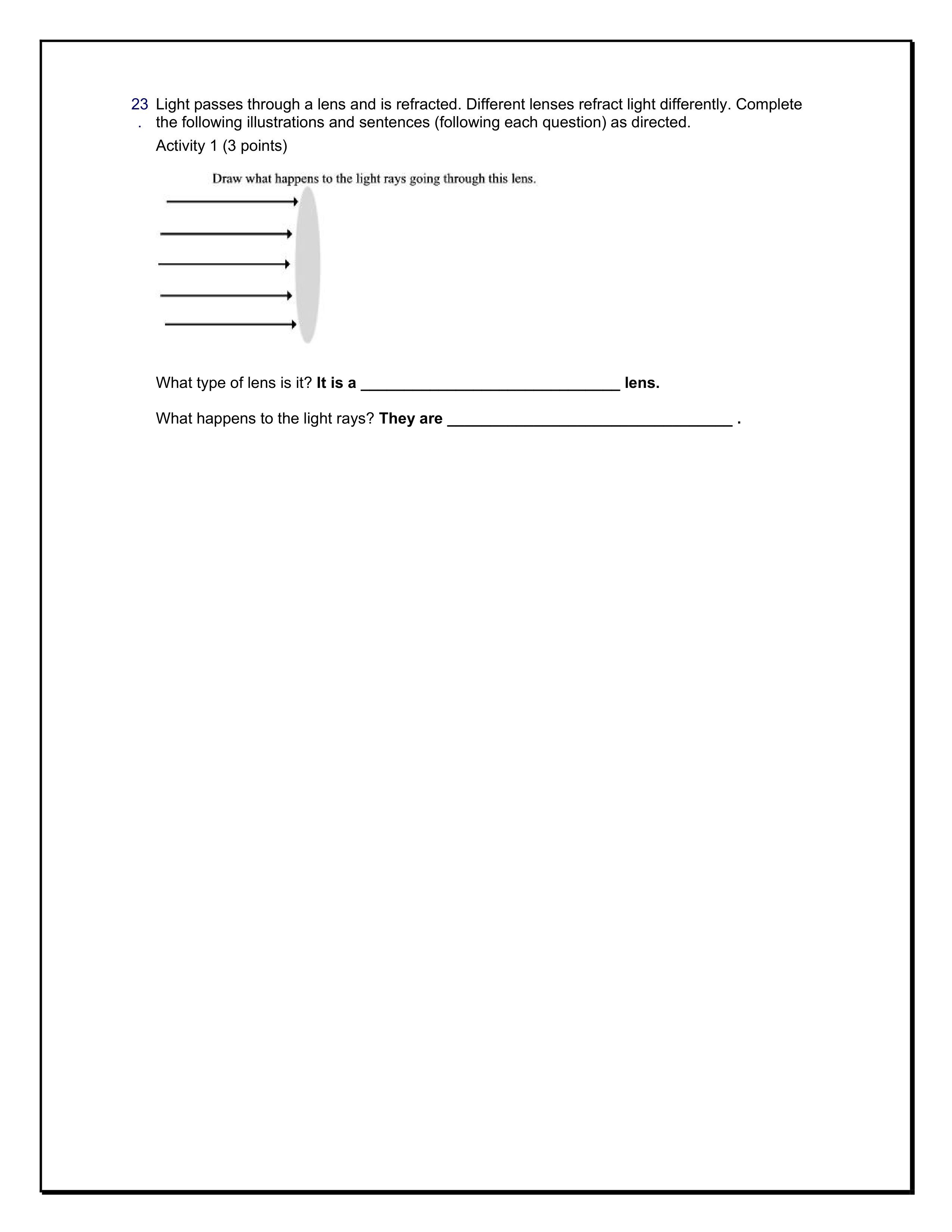
Light passes through a lens and is refracted. Different lenses refract light differently. Complete the following illustration.
What type of lens is shown in question 24?
When light travels, it does so in straight lines. What creates a shadow?
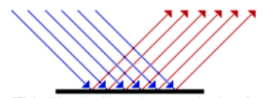
This illustration demonstrates how light travels and is referred to as a ...
When light interacts with a substance, different things can happen to the light because of the type of material it is made of. Opaque materials do this to light ...
When a light bulb in a lamp receives electrical energy, it will produce light. The term used to indicate that the light source produces light is ...
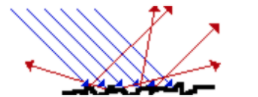
This illustration demonstrates a type of reflection referred to as ...
Reflection is the process in which light strikes a surface and bounces off that surface at the same angle. The reflected ray will bounce back directly to the light source if it is lined up with the ...
To discover the laws of reflection, it is necessary to use a ...
In stating the law of reflection, that the angle of incidence equals the angle of reflection, it is necessary to
understand that this is a law because ...
When you attempt to focus an image on a screen using a concave mirror but cannot, yet you can see an image when you are looking into the same concave mirror, the image is called a ...
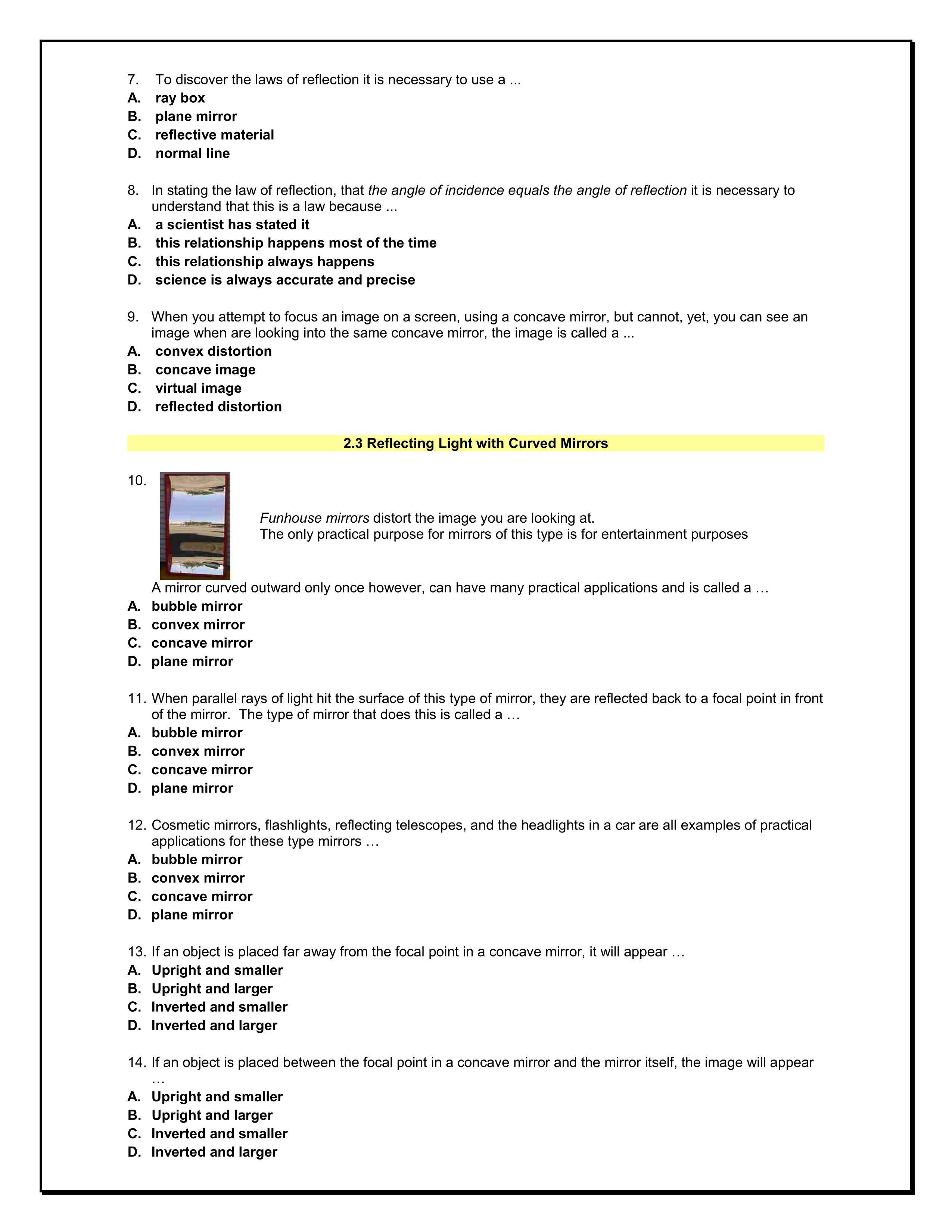
Funhouse mirrors distort the image you are looking at. The only practical purpose for mirrors of this type is for entertainment purposes. However, a mirror curved outward only once can have many useful applications and is called a ...
When parallel rays of light hit the surface of this type of mirror, they are reflected back to a focal point in front of the mirror. The type of mirror that does this is called a ...
Cosmetic mirrors, flashlights, reflecting telescopes, and the headlights in a car are all examples of practical applications for these types of mirrors ...
If an object is placed far away from the focal point in a concave mirror, it will appear ...
If an object is placed between the focal point in a concave mirror and the mirror itself, the image will appear
Refraction is the bending of light when it travels from one medium to another. What direction does the light bend when it travels from a medium of greater density to one of lesser density?
When light is refracted, the angle of incidence increases and the angle of refraction ...
Mirages cause an illusion of a watery surface. This illusion is actually ...
When light strikes a surface and is absorbed, the light ...
During refraction, when the angle of incidence is doubled, the angle of refraction is ...
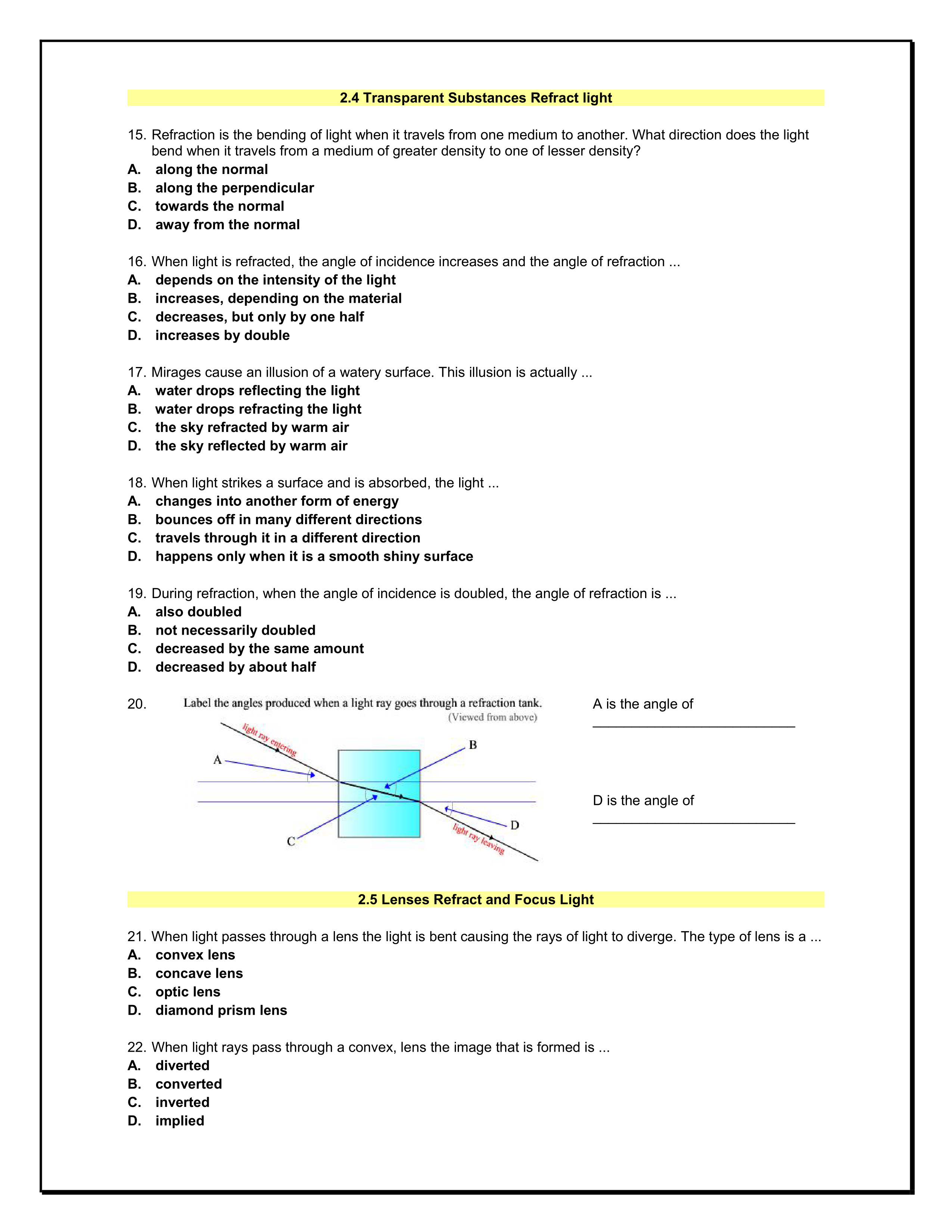
In the diagram, the angle that "A" is pointing to is what type of angle that the light goes through in this type of medium. Is it...
In the diagram, the angle that "D" is pointing to is what type of angle that the light goes through in this type of medium. Is it...
When light passes through a lens, the light is bent, causing the rays of light to diverge. The type of lens is a ...
When light rays pass through a convex lens, the image that is formed is ...
What happens to the light rays as it passes through this lens?
Did you listen to these songs?