Chemistry Unit Test 2020
star
star
star
star
star
Last updated over 6 years ago
20 Nsɛmmisa
1
1
1
1
1
1
1
1
1
1
1
1
1
1
1
3
3
3
2
3
The following diagram represents the reaction of methane with oxygen gas to form carbon dioxide and water.
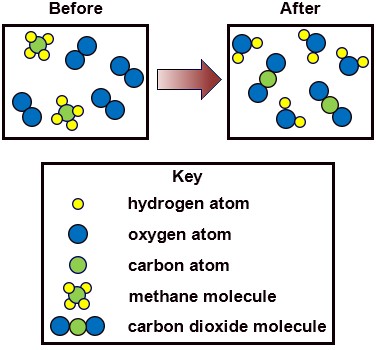
The chemical reaction shown above takes place in a closed system. What is true about the system while the reaction occurs?
An engineer is designing a process to cool hot water from a power plant before returning the water to the environment. His plan is to allow the hot water to flow past a containing a solution that is undergoing a chemical reaction.
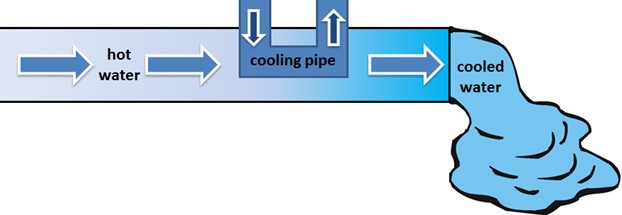
What kind of chemical reaction is most likely occuring in the cooling pipe?
In the chemical reaction below, calcium metal and water react to form calcium hydroxide and hydrogen gas.
calcium metal + water → calcium hydroxide + hydrogen gas
Calcium and water are the reactants in the chemical reaction, whereas calcium hydroxide and hydrogen gas are the products that are formed. Once the reaction reaches completion,
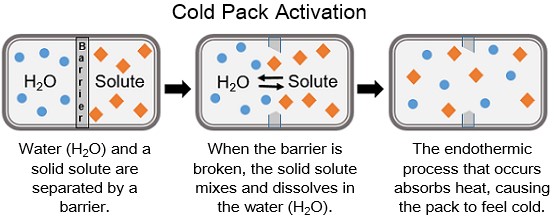
Cold packs can be used to treat sprained ankles and similar injuries. A cold pack is activated by breaking a barrier within the the pack, allowing the chemicals inside to mix. The process that occurs is endothermic, meaning it absorbs heat and leaves the pack feeling cold, as shown in the diagram below.
A group of students wants to create their own cold pack, so they did an experiment using four different solutes to see which one would be best. To determine which solute would be best, the students mixed 20 g of each solute into separate containers that each held 50 mL of 24°C water. The students then recorded the temperature changes in each container. The data table below shows the maximum and minimum temperatures they obtained for each solute, as well as the temperature difference.
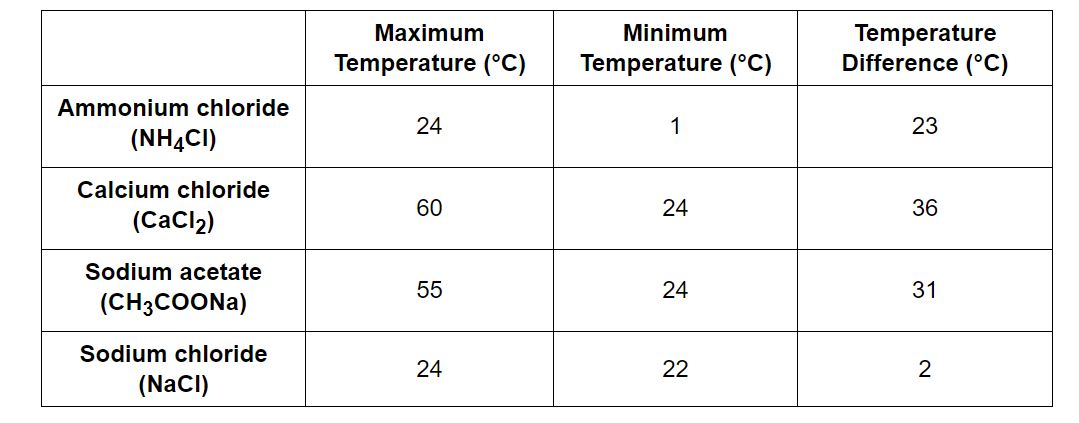
According to the students' data, which solute should they use in their cold pack?
A chemical reaction involves the rearrangement of atoms to form new molecules. During a chemical reaction, however, atoms are neither created nor destroyed. Which of the following is true about the atoms involved in a chemical reaction?
Which statement describes a change that occurs during a chemical reaction?
Rodrigo is using the design process to make a device that will cool a drink without ice or electricity. His first prototype was simply an airtight, watertight pouch containing 40 g of ammonium chloride (NH4Cl). He added 100 mL of water to the ammonium chloride, sealed the pouch tightly, and then wrapped the pouch around a small bottle of water. He tested his prototype by measuring the temperature of the bottle of water over time.
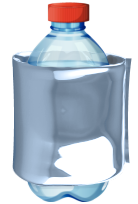
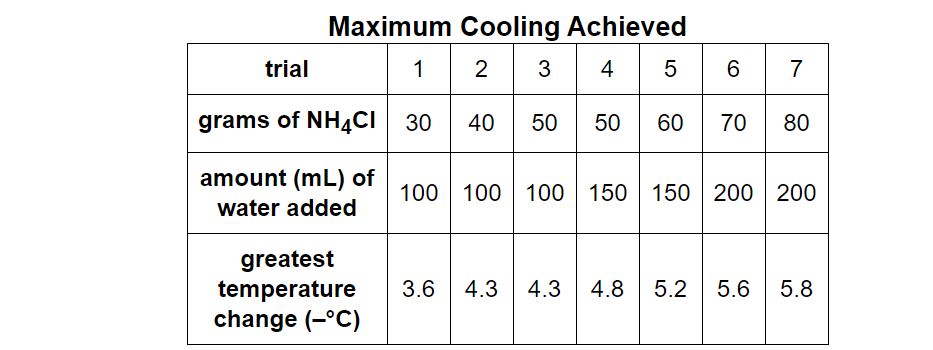
Next, Rodrigo performed the same test with different amounts and different concentrations of the ammonium chloride solution. For each set of measurements, he found the lowest temperature reached by the bottle of water and calculated the total temperature change. The table below summarizes his results.
Finally, Rodrigo held the amount and concentration of the solution constant while trying different amounts of insulation.
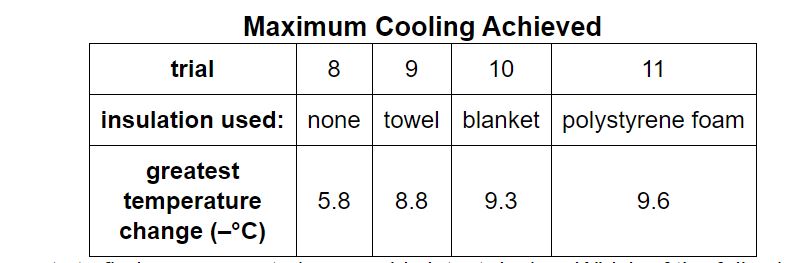
Rodrigo wants to find more ways to improve his latest design. Which of the following should he try?
Which of the following is true about the mass of the reactants in a chemical reaction?
Pure sodium metal explodes when it makes contact with water. In its natural state, chlorine is a deadly, poisonous gas. When these two chemicals combine, they form a harmless, white powder known as sodium chloride or table salt. Which of the following statements does this information support?
Henry puts 2.0 grams of baking soda into a 1.0 gram plastic bag. He then pours 5.0 grams of vinegar into the bag and immediately closes it.
A reaction takes place. Henry observes a gas being produced, and the plastic bag with the baking soda and vinegar becomes cold to the touch.
What will be the total mass of the bag and its contents after the reaction?
Justify your answer about the total mass of the bag after the reaction.
Over time, an iron nail reacts with water to produce iron oxide, or rust. Which of the following is a signal that rusting has taken place?
When a strip of zinc metal is added to a test tube of hydrochloric acid, the liquid forms bubbles, and the test tube feels hot. The bubbles are a result of the formation of hydrogen gas. What does the hot test tube indicate?
Ethanol contains the elements carbon, hydrogen, and oxygen. When ethanol burns, it chemically reacts with oxygen gas.

What elements will be present in the substances that are created when ethanol burns?
Iron (Fe) and diatomic oxygen (O2) combine to produce iron (Ill) oxide (Fe2O3). The table below compares the properties of these substances.
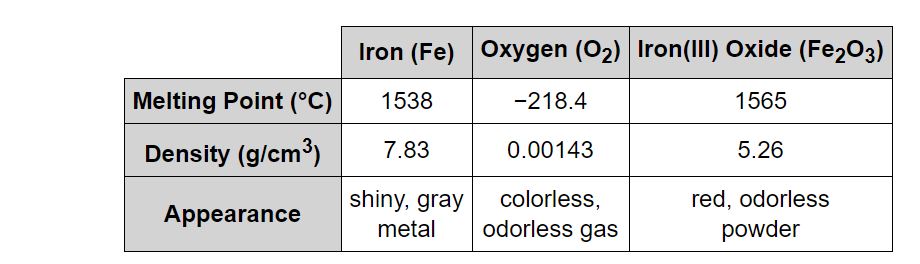
What can be concluded from this data?
Ted found four pieces of metal. He thinks that two metals might be the same. Ted needs your help to know if he has two pieces of the same metal.
You measured the mass and volume, and calculated the density of each piece of metal that Ted found. The data for each piece of metal are in Table 1.
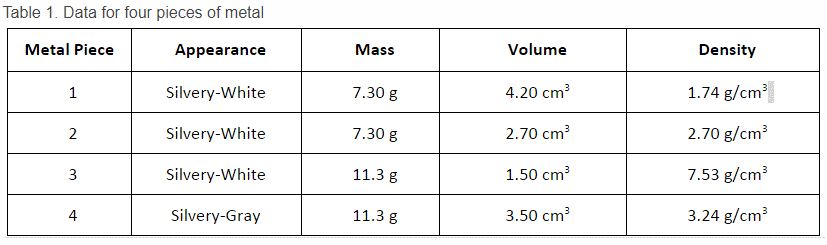
Write a scientific explanation about whether any of the pieces of metal are the same. Be sure to include:
1. a claim
2. evidence
3. reasoning
On lab day, Milana did an experiment the with two solids: potassium iodide and silver nitrate. Here is a video https://drive.google.com/file/d/0ByX3PPKyWVhHT1FXMU16US1GMTg/view
showing what Milana did: Mixing potassium iodide with silver nitrate solutions.
Milana measured and recorded the mass, solubility, melting point, and calculated the density of potassium iodide and silver nitrate before mixing and for Solid A after mixing.
The results are in Table 1.
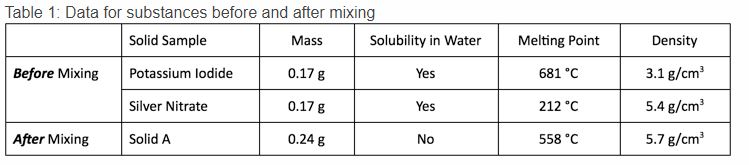
Milana wondered if a chemical reaction occurred.
Use the data in Table 1 to write a scientific explanation about whether a chemical reaction occurred when mixing the solutions of potassium iodide and silver nitrate.
Be sure to include:
1. a claim
2. evidence
3. reasoning
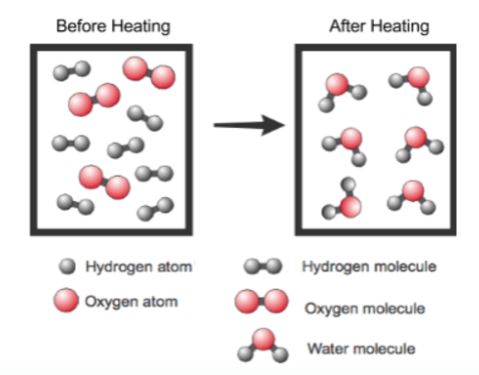
Josh created the model above to explain what happens in a chemical reaction.
Examine the above model and use what you know about chemical reactions to
1. Determine whether Josh’s model correctly explains that a chemical reaction conserves atoms.
2. Support your answer using the model to describe the atoms that make up hydrogen, oxygen and water. Be sure to include the number and types of atoms for each molecule before and after heating.
Go to NGSS website https://ngss-assessment.portal.concord.org/ngsa-collections and complete the following:
Battery under water (ID#: 025.03-c06)
Take a screenshot and insert it into the space below. Control + shutter button
From your drawing make a scientific argument about what happens during the reaction to the atoms of the water molecules and expain why mass is conserved during this reaction.
Be sure to include:
1. a claim
2. evidence
3. reasoning