6:1 Land and Water.

Last updated over 5 years ago
8 questions
Note from the author:
United States and Canada - Physical Geography Basics

Chapter 6: The U.S. and Canada - Physical Geography

Section 1: Land and Water

Use chapter 6, section one of your textbook to help answer each of the following questions as best you can.
20

Match the physical feature on the left with its correct description on the right.

To match: Click the 4-way arrow "+" to the left of each physical feature to activate. (It will turn blue). Then click a blue arrow next to a description you wish pair with the physical feature.

You may also click/drag the features up and down to line them up with correct description.

Draggable itemCorresponding Item
Mount Logan
the major mountain system in
western North America
Rocky Mountains
They are a mountain range that separates California From the rest of the United States to the east.
Laurentian Highlands
In Canada, the Appalachian Mountains become these
Sierra Nevada Mountains
Canada's highest peak
25

Match the physical feature on the left with its correct description on the right.

To match: Click the 4-way arrow "+" to the left of each physical feature to activate. (It will turn blue). Then click a blue arrow next to a description you wish pair with the physical feature.

You may also click/drag the features up and down to line them up with correct description.

Draggable itemCorresponding Item
Interior Plains
Huge area of flat and gently rolling land located between the Rockies and the Appalachian Mountains. Called this in Canada
plateau
Huge area of flat and gently rolling land located between the Rockies and the Appalachian Mountains. Called this in The U.S.
Death Valley
A large area of flat land elevated high above sea level
Great Basin
Low lying desert area between Sierra Nevada Mountains and the Rocky Mountains
Great Plains
The hottest and driest part of North America. Located in the Great Basin of Californi
30

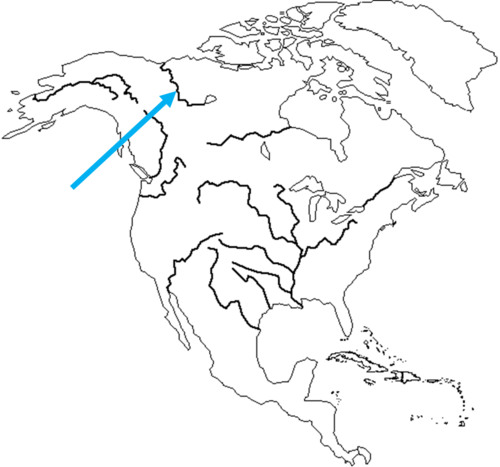
Match each body of water with its correct image or map location.

To match: Click the 4-way arrow "+" to the left of each body of water to activate. (It will turn blue). Then click a blue arrow next to the image you wish pair with the body of water..

You may also click/drag the features up and down to line them up with correct description.

Click on images to open enlarged versions. Click off images to return to page,

Draggable itemCorresponding Item
Great Lakes
Mississippi River
glaciers
Mackenzie River
St. Lawrence River
tributaries
5

The Great Lakes were formed by

5

That lies between the Rocky Mountains and the Appalachian mountains?

5

What Canadian landform covers about half the country?

5

What separates east-flowing from west-flowing Rivers?

5

Other than its size, what makes the Mississippi River such an important River for the United States?