Twa kɔ nsɛm atitiriw so
Log in
Sign up for FREE
arrow_back
Laabri

Chem Unit 7 I Get a Charge Summary

star
star
star
star
star
Last updated 3 months ago
11 Nsɛmmisa
Hyɛ no nsow a efi ɔkyerɛwfo no hɔ:

This is a review of static charges and the activities with the static sticks.

5
2
1
1
2
1

Feel the force! This is a lab-tivity that will attract your interest!

Please investigate forces using the apparatus and links provided as well as the Wayground and PhET activity with the sweater and balloons.

https://www.physicsclassroom.com/class/estatics/Lesson-1/Charge-Interactions

https://phet.colorado.edu/sims/html/balloons-and-static-electricity/latest/balloons-and-static-electricity_all.html

Asemmisa {{asɛmmisaAhyɛnsode}}
1.

Balloons

Inflate then investigate the balloons using

  • hair and clothes

  • light stream of water from faucet

  • paper dots

  • paper roll

In the Show Your Work box, include 2 pictures of your work. (2pts)

In the answer box, please type a few sentences or list the interactions of the balloons. (3pts)

3
Asemmisa {{asɛmmisaAhyɛnsode}}
2.

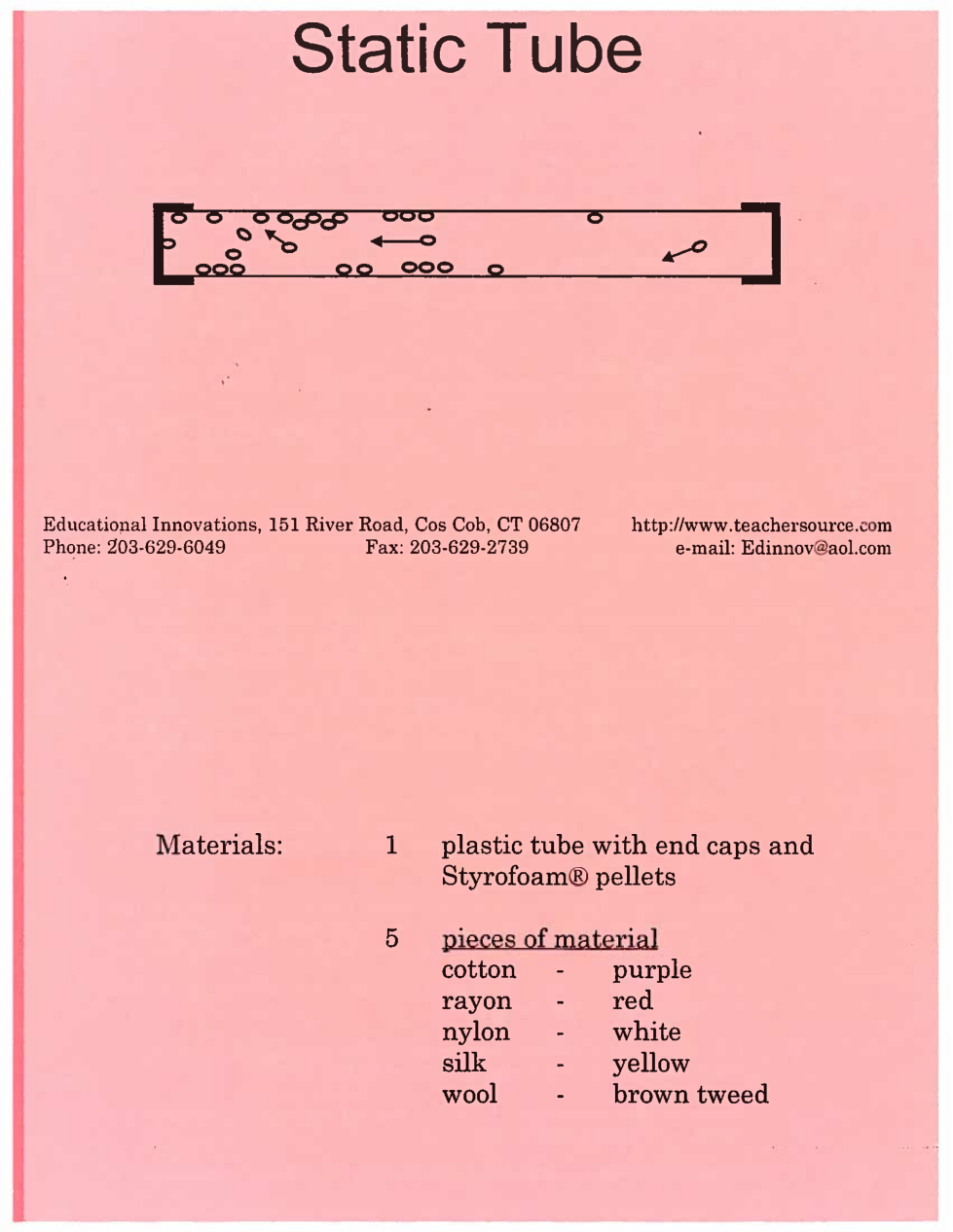
Static Tube

List 3 things you learned or noticed while investigating the static tube.

Add a photograph of a piece of fabric either attracting to or repelling from the tube.
Question 3
00:51
keyboard_arrow_down
1
Question 4
01:35
keyboard_arrow_down
1
Question 5
03:20
keyboard_arrow_down
1
Question 6
04:10
keyboard_arrow_down
2
Asemmisa {{asɛmmisaAhyɛnsode}}
7.

Why do opposite charges attract?

Asemmisa {{asɛmmisaAhyɛnsode}}
8.

Electrostatic force develops when ...

Asemmisa {{asɛmmisaAhyɛnsode}}
9.

Please insert a screenshot from the PhET / Wayground balloon and sweater activity that shows the balloon stuck to the wall.

https://phet.colorado.edu/sims/html/balloons-and-static-electricity/latest/balloons-and-static-electricity_all.html

Asemmisa {{asɛmmisaAhyɛnsode}}
10.

Can water molecules be influenced by electrostatic force?

Insert a photograph that supports your answer choice.

Asemmisa {{asɛmmisaAhyɛnsode}}
11.

If these negatively charged objects could move on their own, what would they do?

Asemmisa {{asɛmmisaAhyɛnsode}}
3.

The word electricity is derived from what?

Asemmisa {{asɛmmisaAhyɛnsode}}
4.

Electrostatic forces from charges are always attractive forces just as gravity is always an attractive force.

Asemmisa {{asɛmmisaAhyɛnsode}}
5.

What happens to the strength of the force between charged objects as they get closer to each other?

Asemmisa {{asɛmmisaAhyɛnsode}}
6.

Why are the types of charges called positive and negative?