Ch 10 Test: Agriculture & Rural Land Use
star
star
star
star
star
Last updated over 6 years ago
51 Nsɛmmisa
Hyɛ no nsow a efi ɔkyerɛwfo no hɔ:
Unit test on Agriculture
Unit test on Agriculture



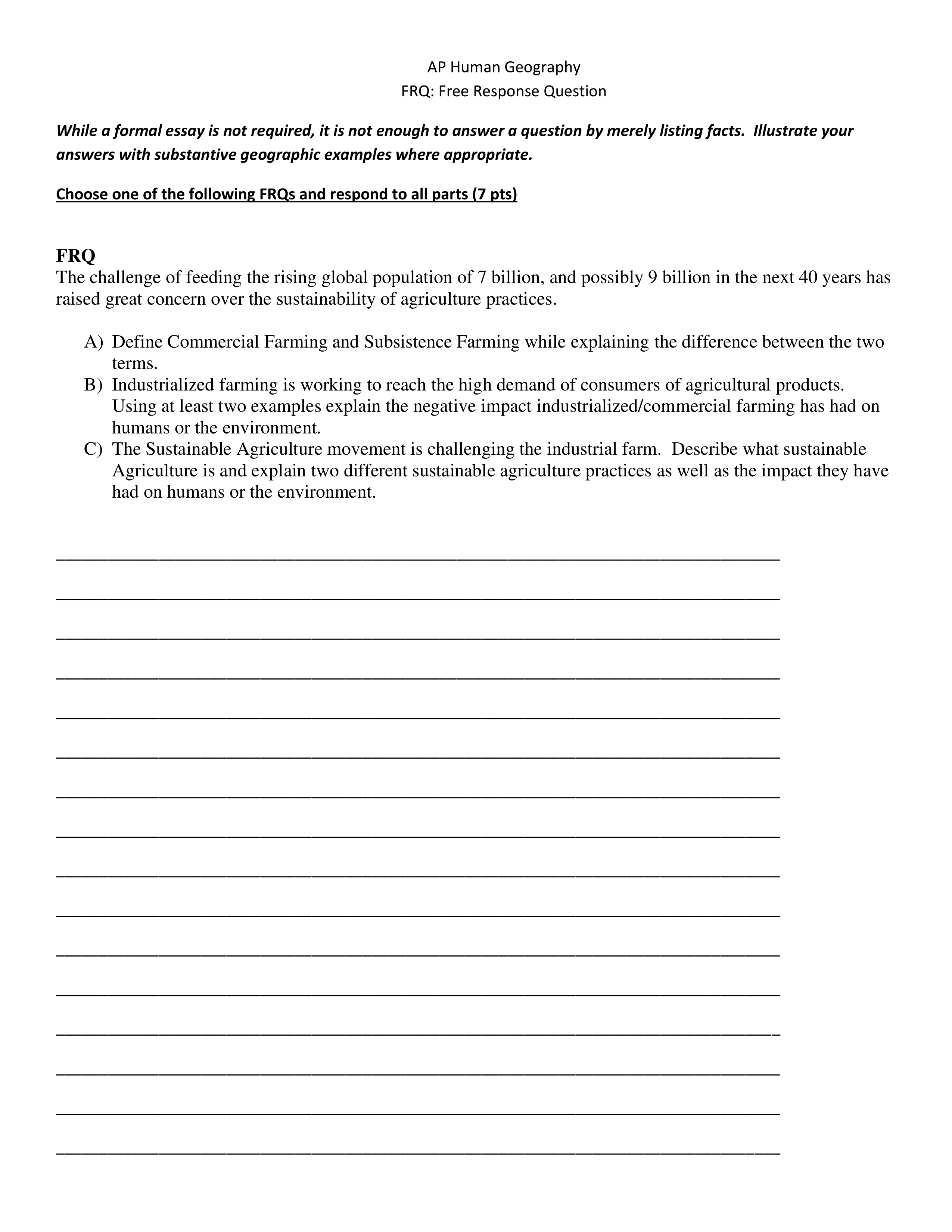
FRQ 1: A) Define Commercial Farming and Subsistence Farming while explaining the difference between the two terms.
FRQ 1: B) Industrialized farming is working to reach the high demand of consumers of agricultural products. Using at least two examples explain the negative impact industrialized/commercial farming has had on humans or the environment.
FRQ 1: C) The Sustainable Agriculture movement is challenging the industrial farm. Describe what sustainable Agriculture is and explain two different sustainable agriculture practices as well as the impact they have had on humans or the environment.
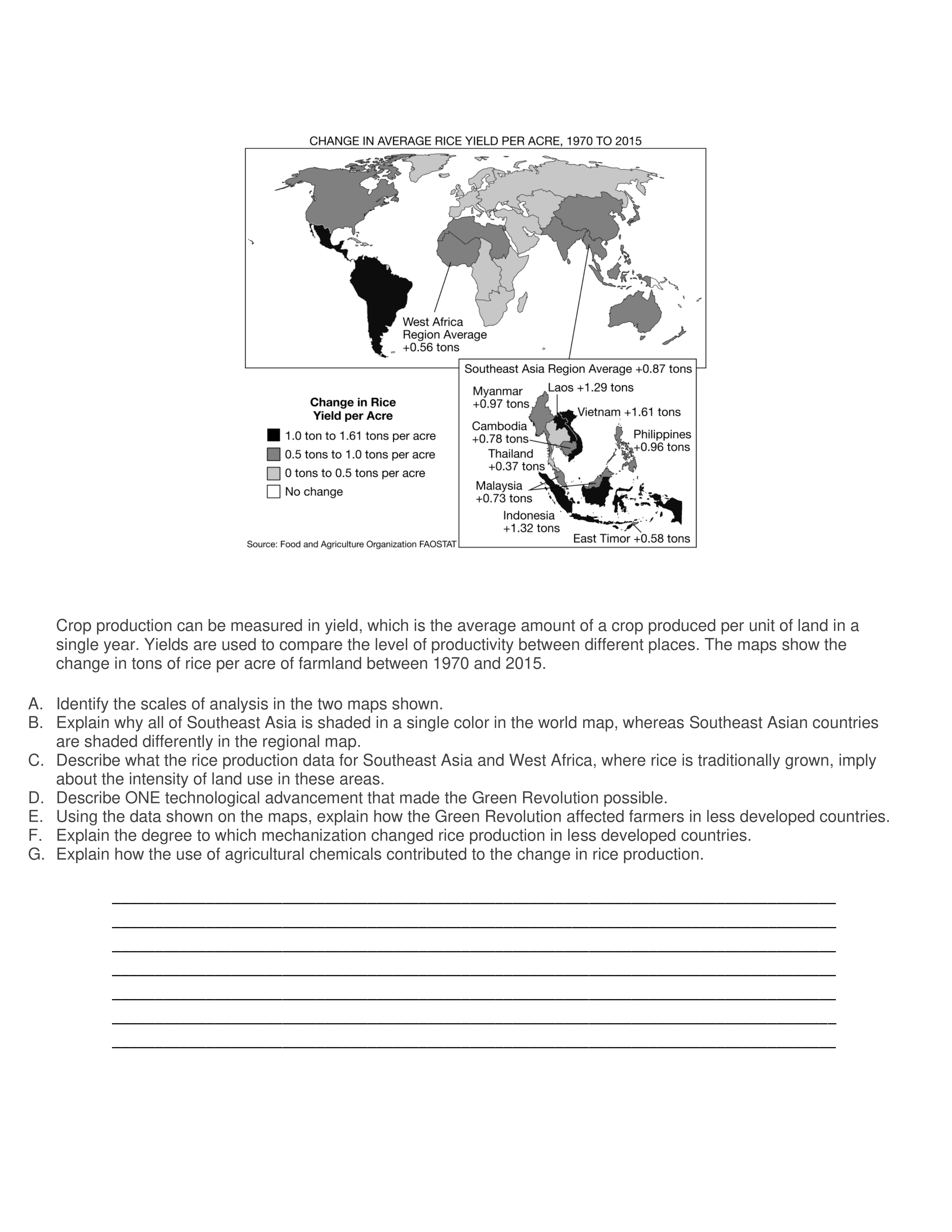
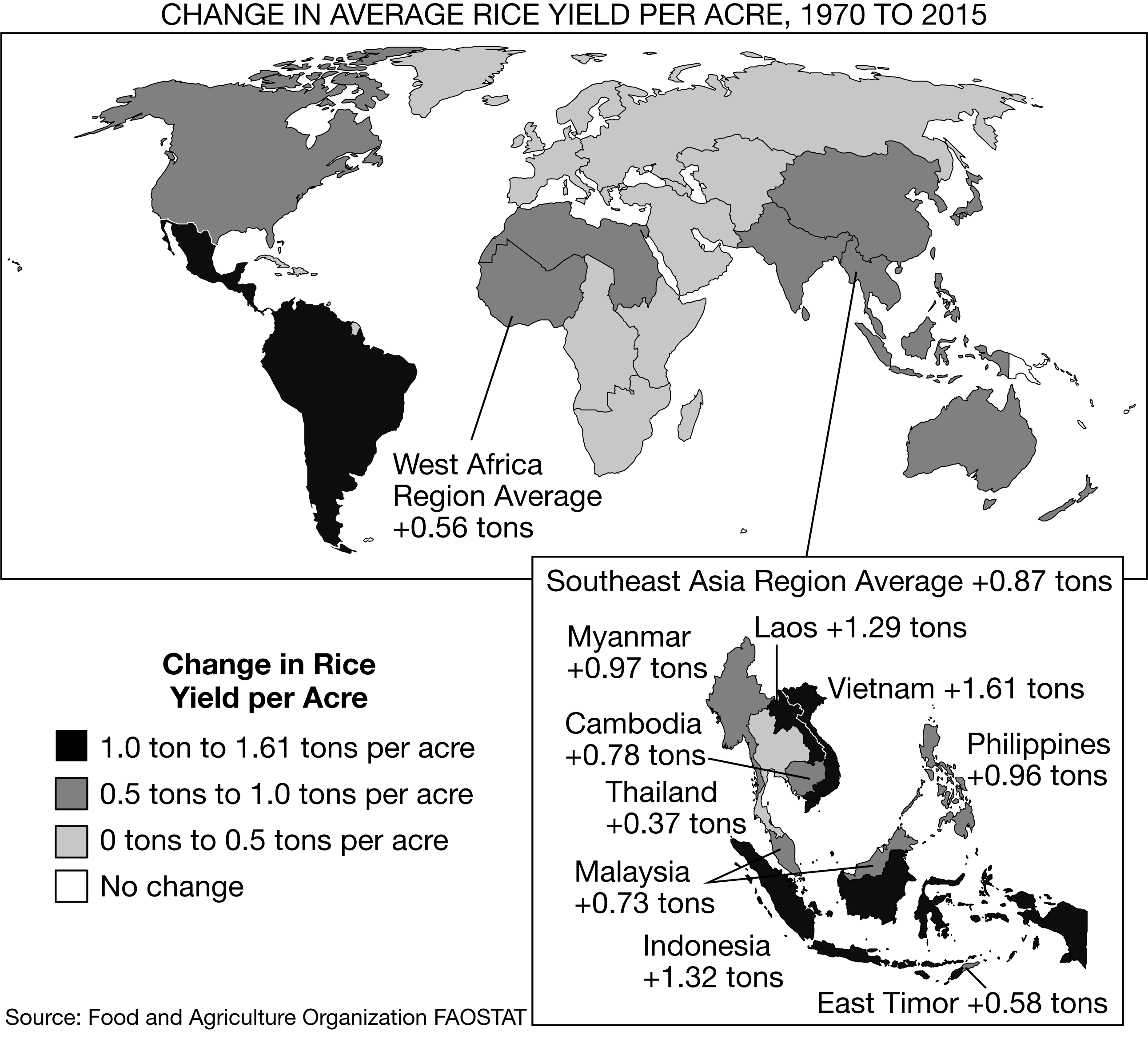
FRQ 2: A) Identify the scales of analysis in the two maps shown.
Which type of agriculture is found primarily in less developed countries?
Which type of agriculture is practiced by the largest percentage of the world's people?
Which of the following is a typical practice in growing rice in Asia?
Unlike other forms of commercial agriculture, plantations are
Which of the following have aided commercial farmers in MDCs?
The decline in the number of farmers in MDCs can best be described as a consequence of
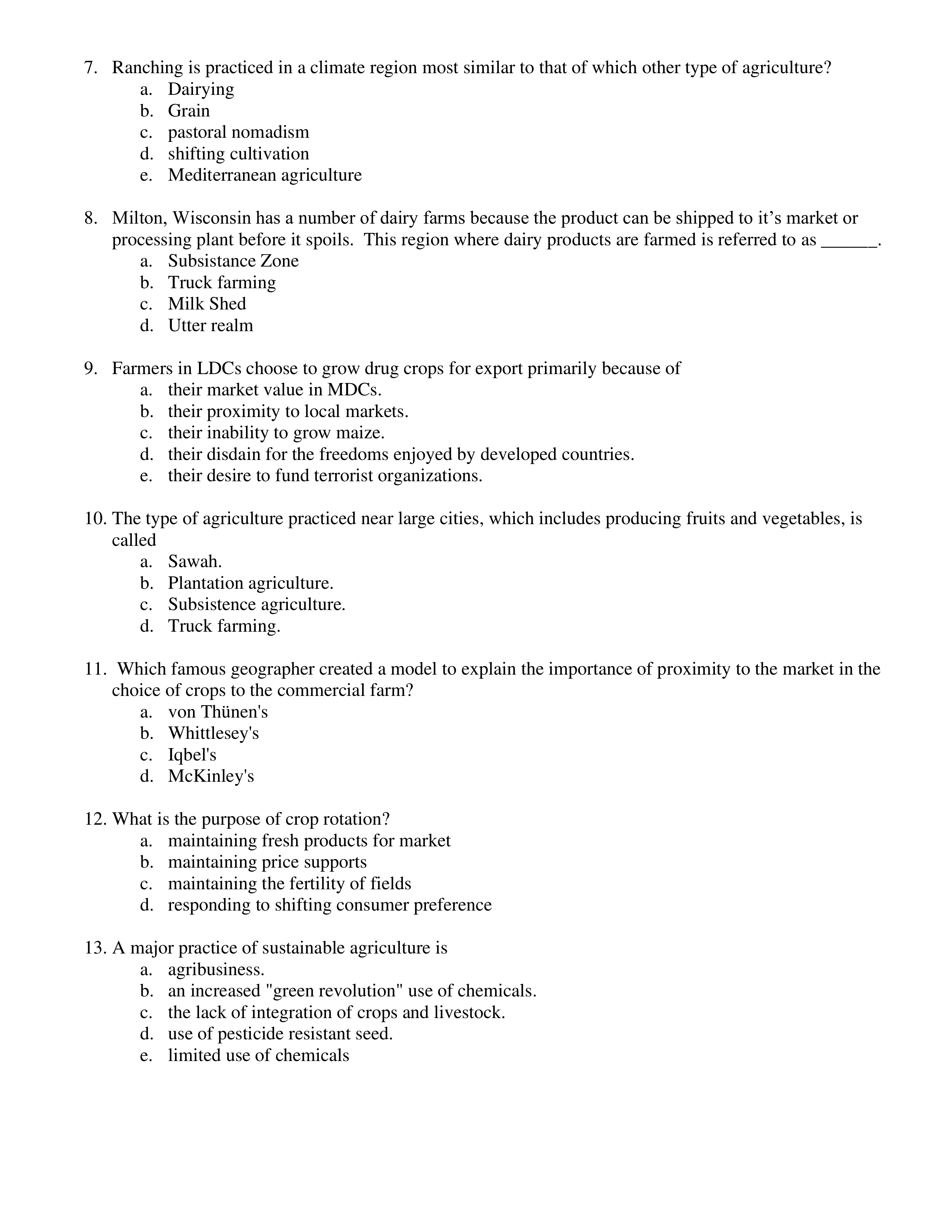
Ranching is practiced in a climate region most similar to that of which other type of agriculture?
Milton, Wisconsin has a number of dairy farms because the product can be shipped to it’s market or processing plant before it spoils. This region where dairy products are farmed is referred to as ______.
Farmers in LDCs choose to grow drug crops for export primarily because of . . .
The type of agriculture practiced near large cities, which includes producing fruits and vegetables is called _________.
Which famous geographer created a model to explain the importance of proximity to the market in the choice of crops to the commercial farm?
What is the purpose of crop rotation?
A major practice of sustainable agriculture is . . .
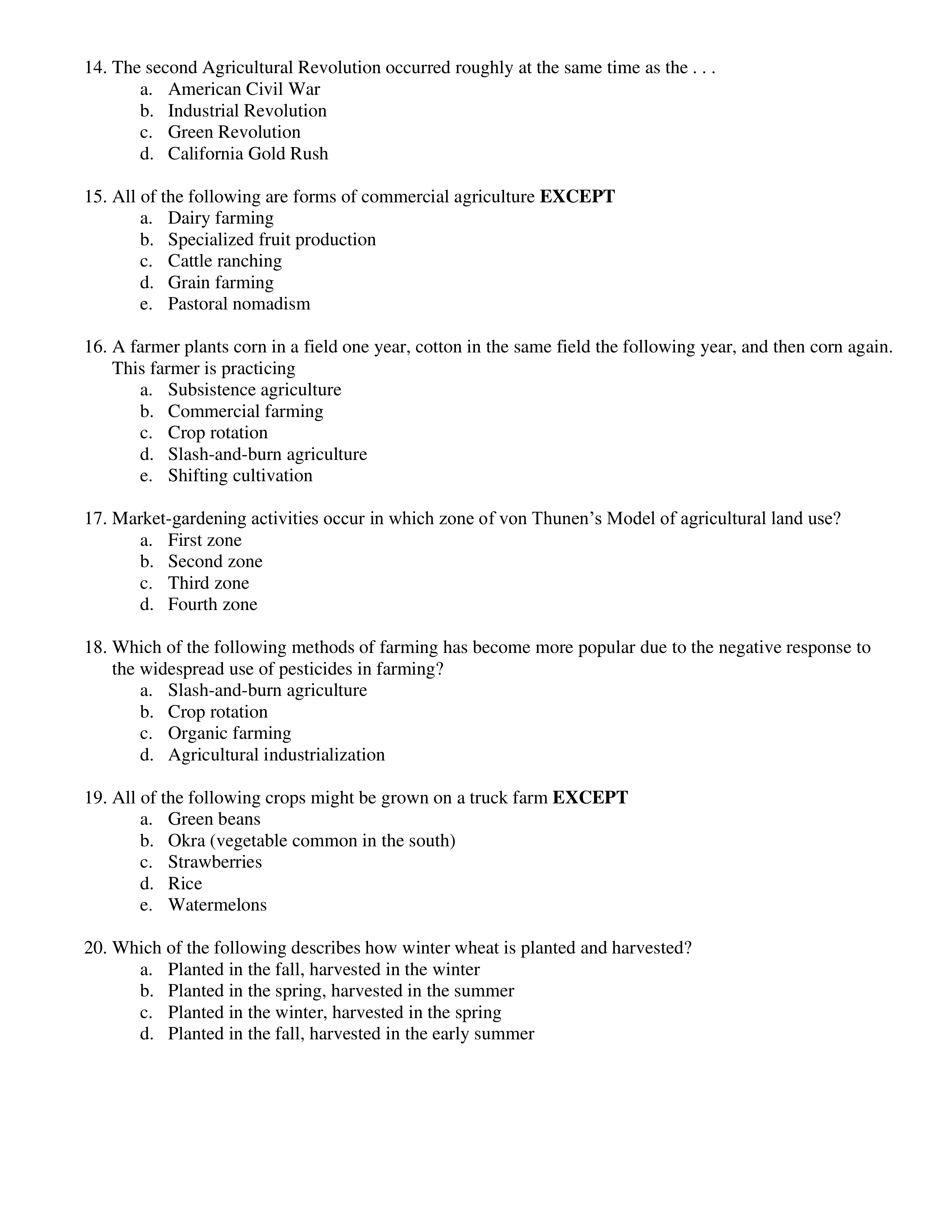
The second Agricultural Revolution occured roughly at the same time as the . . .
All of the following are forms of commercial agriculture EXCEPT
A farmer plants corn in a field one year, cotton in the same field the following year, and then corn again. This farmer is practicing
Market-gardening activities occur in which zone of von Thunen’s Model of agricultural land use?
Which of the following methods of farming has become more popular due to the negative response to the widespread use of pesticides in farming?
All of the following crops might be grown on a truck farm EXCEPT
Which of the following describes how winter wheat is planted and harvested?
All of the following crops are products of a Mediterranean agriculture EXCEPT
1. Which of the following refers to the decision to abandon the use of a product that harms the environment and switch to a product that is more environmentally friendly?
In the preservationist land use model, people are encouraged to
The theory that people will do what is in their own best interest even when it is not in the best interest of the common good is called the
Which of the following is characterized by a commercial farm where no one lives and it is farmed by migrant workers?
Which of the following is an example of the implementation of the sustainable land use model?
All of the following states are located in the Corn Belt EXCEPT
A type of animal feeding operation (CAFO) that prepares an animal for slaughter by increasing the weight of the animal is called
Which of the following is a benefit of industrial agriculture?
A crop grown for profit is called a __________.
Which of the following is a practice of an extractive industry?
A developer clears several acres of forest to make room for a shopping center. All traces of the original landscape have been eliminated. This is an example of ______.
The agricultural location model suggests that
The farming of oysters is an example of ____.
Which of the following is NOT and example of a luxury crop?
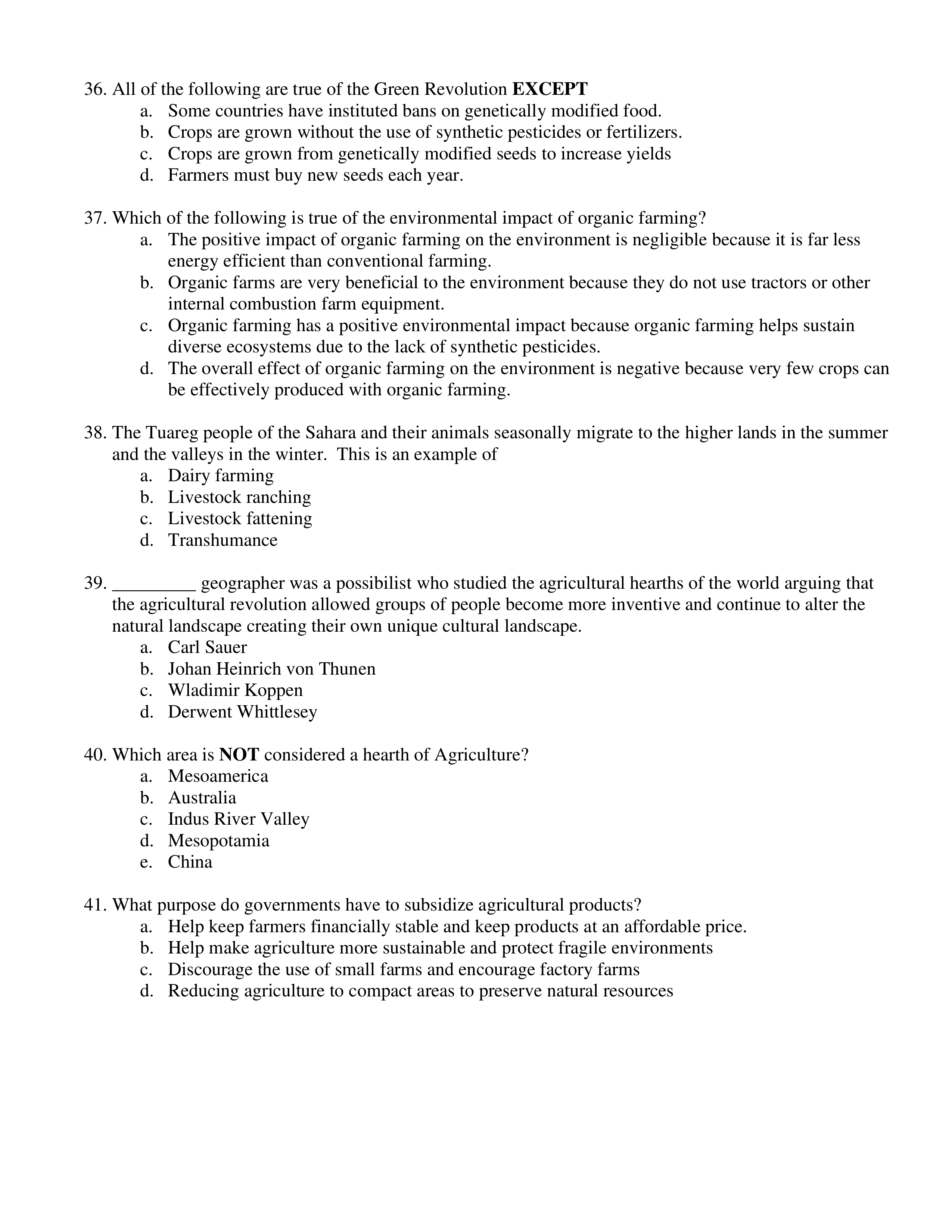
All of the following are true of the Green Revolution EXCEPT
Which of the following is true of the environmental impact of organic farming?
The Tuareg people of the Sahara and their animals seasonally migrate to the higher lands in the summer and the valleys in the winter. This is an example of
_________ geographer was a possibilist who studied the agricultural hearths of the world arguing that the agricultural revolution allowed groups of people become more inventive and continue to alter the natural landscape creating their own unique cultural landscape.
Which area is NOT considered a hearth of agriculture?
What purpose do governments have to subsidize agricultural products?
FRQ 2: B) Explain why all of Southeast Asia is shaded in a single color in the world map, whereas Southeast Asian countries are shaded differently in the regional map.
FRQ 2: C)
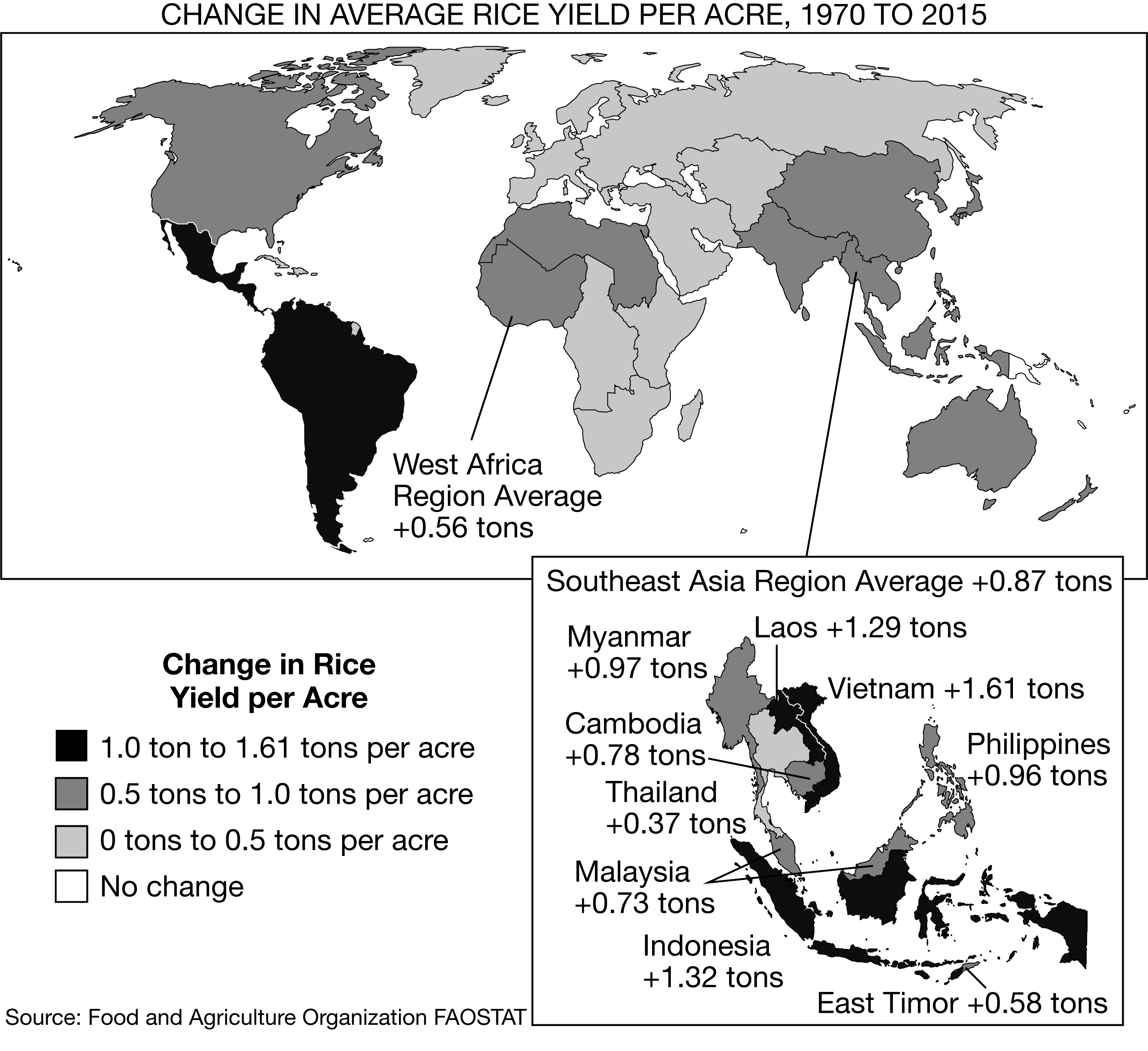
Describe what the rice production data for Southeast Asia and West Africa, where rice is traditionally grown, imply about the intensity of land use in these areas.
FRQ 2: D) Describe ONE technological advancement that made the Green Revolution possible.
FRQ 2: E) Using the data shown on the maps, explain how the Green Revolution affected farmers in less developed countries.
FRQ 2: F) Explain the degree to which mechanization changed rice production in less developed countries.
FRQ 2: G) Explain how the use of agricultural chemicals contributed to the change in rice production.