


List those details here.
Why could leaving childhood be devastating? Use the story as defense to your answer.

There is a metaphor at the end of this paragraph. What is being compared? (Reminder: A "metaphor" is a comparison between two things NOT using like or as.)
What do you learn about Miss Lottie's son? What do you think about the children's love of disturbing him?
Why do the children think Miss Lottie is a witch?
Why do the children hate the marigolds?
What do the children gain by destroying the flowers?

Do you think the narrator has a good, final explanation for the children's desire to destroy?
What literary term/figurative language could identify the word, "zing"?
Why do you think Lizabeth is acting like this?
Why type of conflict is Lizabeth experiencing?
Might this conversation take place in homes across the country today? Explain.

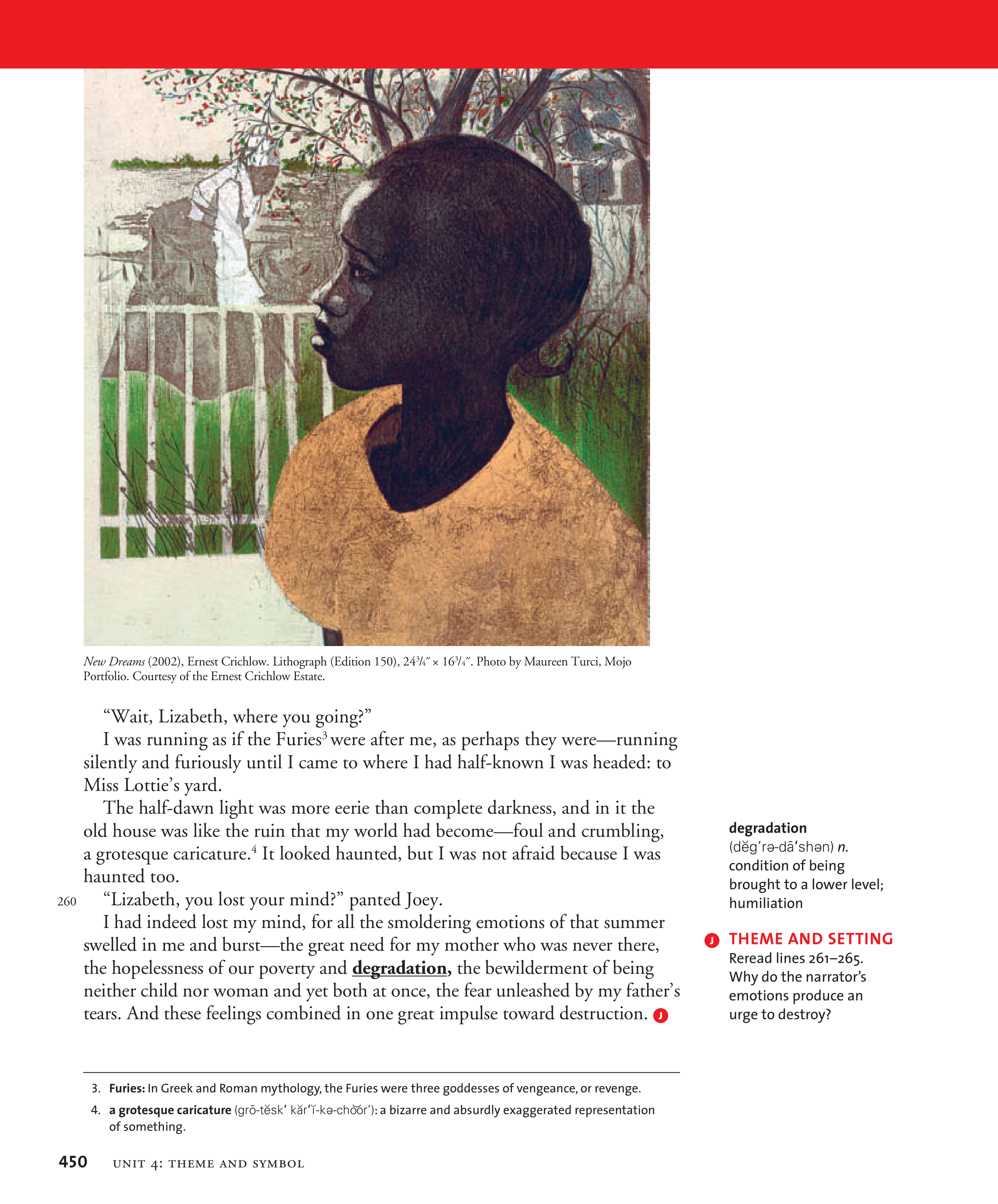
What do you think is haunting Lizabeth? Predict what Lizabeth is going to do next.
What makes this the "climax" of this story?
Do you agree or disagree with the sentence that says, "This was the beginning of compassion, and one cannot have both compassion and innocence."

How old is the narrator in the story?
Answer this question here. (6-8 sentences)
What is unusual about Miss Lottie's marigolds?
What does the narrator do that she later regrets?
Answer the question here.
Answer the question here.
Answer question here.
Answer this question here in a mini-essay. (6-8 sentences)