"The Monkey's Paw" Assessment
star
star
star
star
star
Last updated over 5 years ago
10 questions
Note from the author:
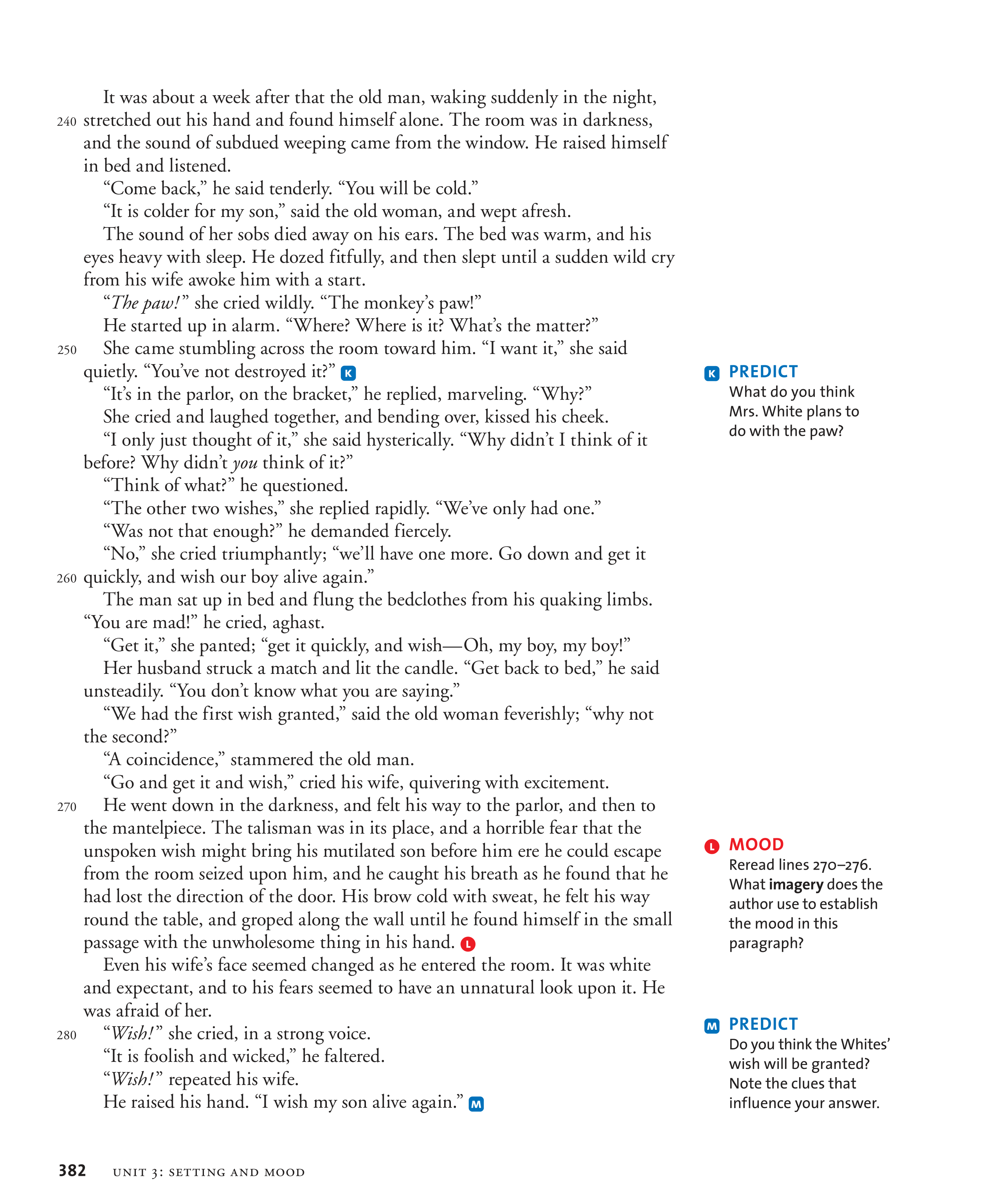
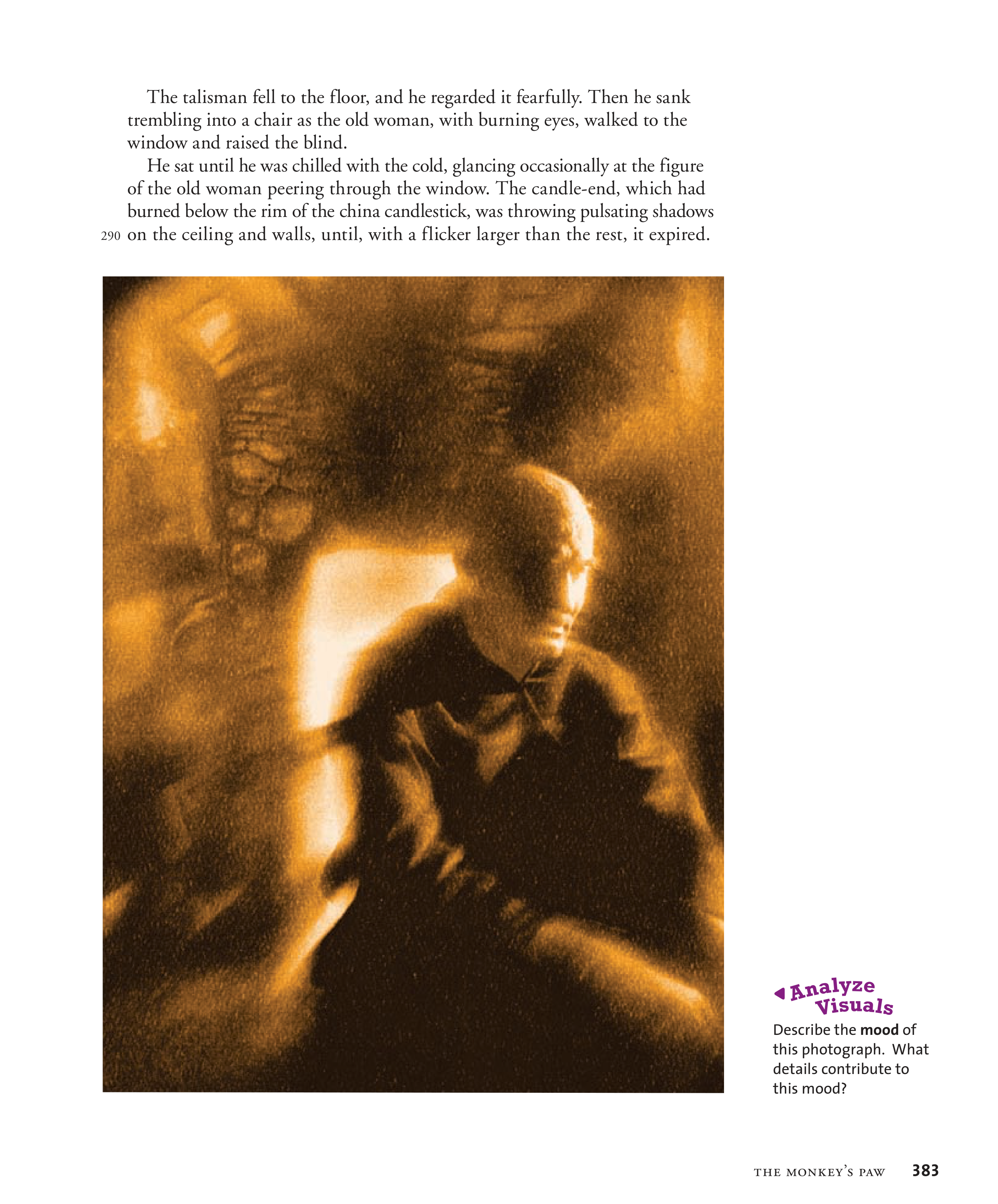
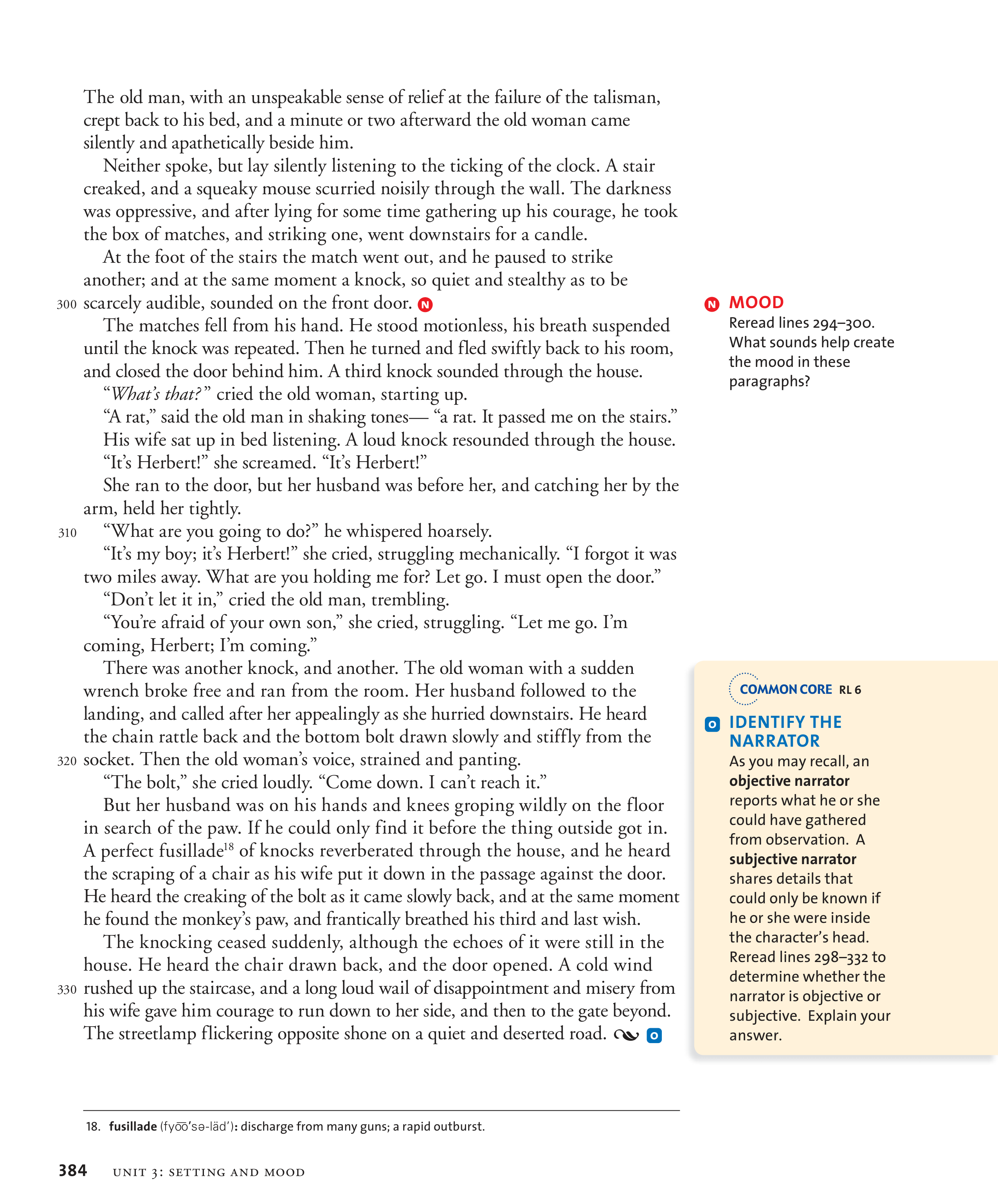
This is an assessment on "The Monkey's Paw" that includes the short story at the beginning for students to refer back to.
2
On page 1, Sergeant Major Morris comes to the White's house. Mr. White says, "'Twenty-one years ago, when he went away, he was just a boy in the warehouse...Now look at him.'"
What can you infer about Sergeant Major Morris and Mr. White's relationship?
On page 1, Sergeant Major Morris comes to the White's house. Mr. White says, "'Twenty-one years ago, when he went away, he was just a boy in the warehouse...Now look at him.'"
What can you infer about Sergeant Major Morris and Mr. White's relationship?
2
On page 1, Sergeant Major Morris and Mr. White are talking. Mr. White says, "I'd like to see those old temples, and fakirs and jugglers...What was that about a monkey's paw or something you started telling me about the other day, Morris?"
Which of the following is a FAULTY (incorrect) inference?
On page 1, Sergeant Major Morris and Mr. White are talking. Mr. White says, "I'd like to see those old temples, and fakirs and jugglers...What was that about a monkey's paw or something you started telling me about the other day, Morris?"
Which of the following is a FAULTY (incorrect) inference?
2
On page 2, which of the following characters knows more about the monkey's paw than other characters do?
2
On page 2, Mr. White asks Sergeant Major Morris why he doesn't have three wishes. In response, the author writes, "The soldier looked at him as if he were a foolish boy. 'I have,' he said quietly, and his red face whitened."
What makes Morris seem suspicious in this instance?
On page 2, Mr. White asks Sergeant Major Morris why he doesn't have three wishes. In response, the author writes, "The soldier looked at him as if he were a foolish boy. 'I have,' he said quietly, and his red face whitened."
What makes Morris seem suspicious in this instance?
2
On page 3, a man from Herbert's work comes to the White's house. The author writes, "[Mrs. White] was watching the mysterious movements of a man outside in the street, who seemed to be trying to decide whether to open the gate and enter...Three times he paused at the gate and walked away."
What type of conflict is the man at the gate facing?
On page 3, a man from Herbert's work comes to the White's house. The author writes, "[Mrs. White] was watching the mysterious movements of a man outside in the street, who seemed to be trying to decide whether to open the gate and enter...Three times he paused at the gate and walked away."
What type of conflict is the man at the gate facing?
2
What evidence supports your answer to question #5?
2
On page 6, the author ends the story with this sentence: "The street lamp opposite the house shone flickeringly on a quiet and deserted road."
What mood does this description evoke?
On page 6, the author ends the story with this sentence: "The street lamp opposite the house shone flickeringly on a quiet and deserted road."
What mood does this description evoke?
2
On page 6, the author ends the story with this sentence: "The street lamp opposite the house shone flickeringly on a quiet and deserted road."
What does the flickering light most likely symbolize?
On page 6, the author ends the story with this sentence: "The street lamp opposite the house shone flickeringly on a quiet and deserted road."
What does the flickering light most likely symbolize?
2
Which of the following themes is apparent in "The Monkey's Paw"?
2
What evidence supports your answer to question #9?