You cycle to school at an average speed of 6 m/s and you live a distance of 8km from school. How many minutes does it take you to cycle to school? Round your answer to the nearest minute.
4 points
4
Question 2
2.
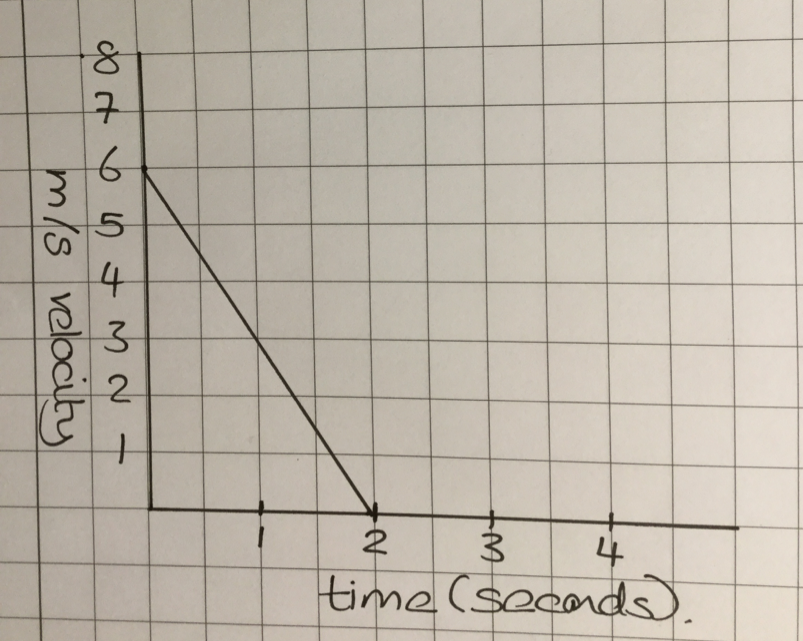
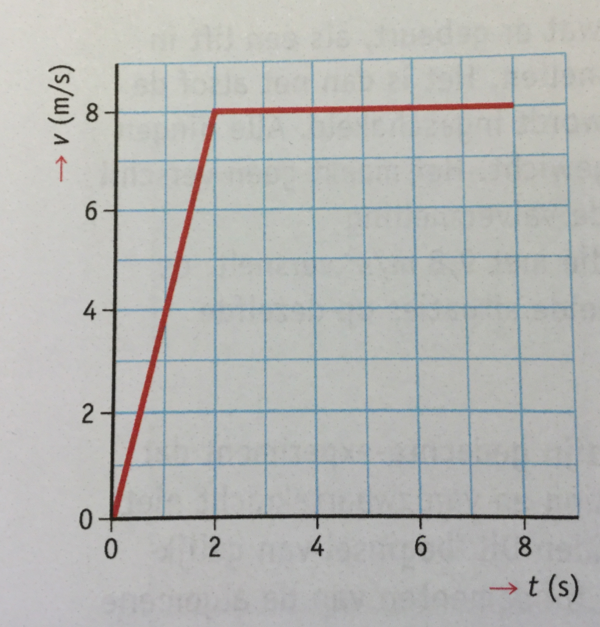
Above you can see a velocity / time graph.
a. Work out the acceleration during the first 2 seconds. Answer in m/s per second or m/s2
b. Work out the distance travelled in the 8 seconds of this journey.
Show all your workings: the formular + the formula filled in with the correct numbers + the answer with the correct units.
3 points
3
Question 3
3.
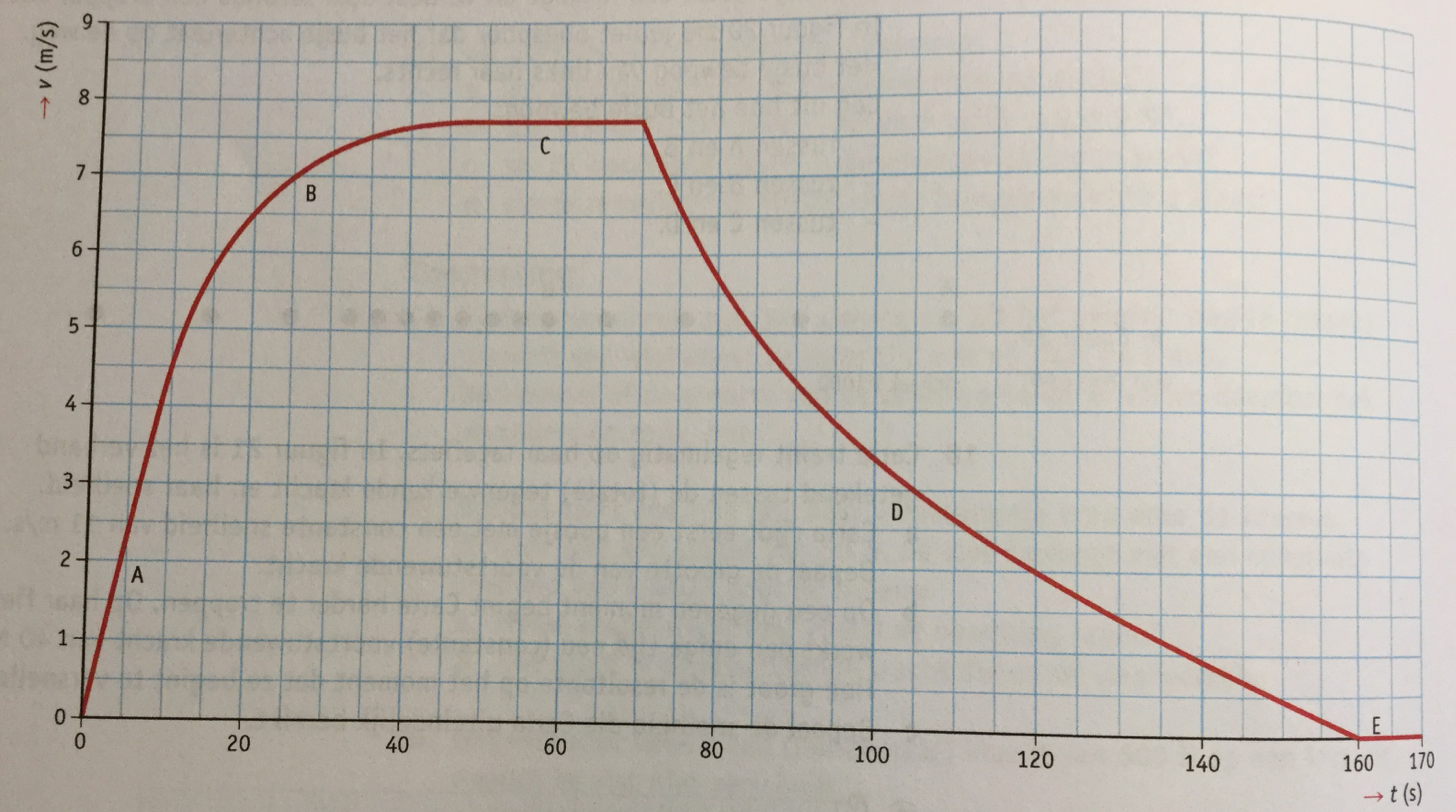
Calculate the average deceleration for cyclist in the above graph. Show all workings and formulas used + correct units for deceleration.
1 point
1
Question 4
4.
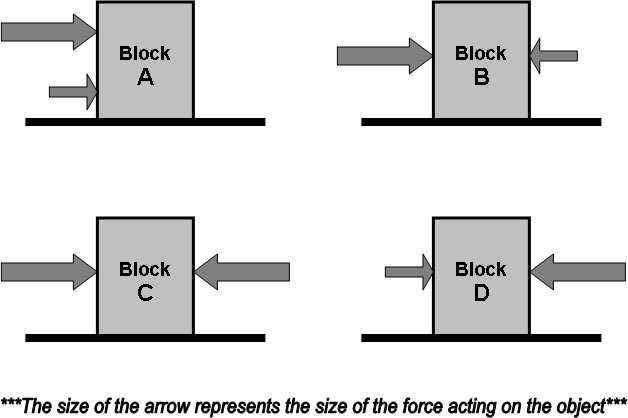
Which of the blocks shown would not move when exposed to the forces ?
2 points
2
Question 5
5.
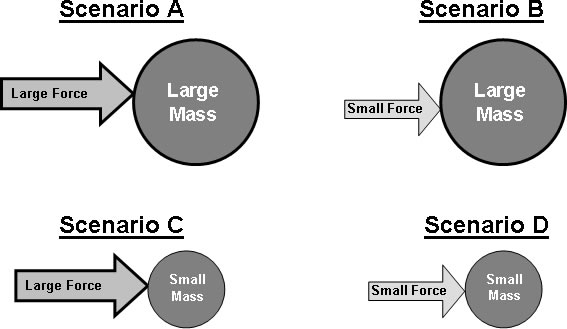
In Scenario A, a ball is being pushed along by a large force. If the force were suddenly decreased (like in Scenario B), what would happen to the motion of the ball? Explain your answer in terms of mass, force, acceleration or deceleration.
1 point
1
Question 6
6.
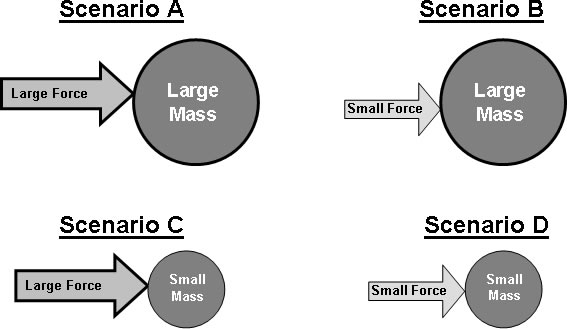
The ball in Scenario D is moving at the same speed as the ball in Scenario A. This is because
4 points
4
Question 7
7.
Watch out for units on this one!
A car is moving at a velocity of 63km/h. The car driver gives more gas and the velocity increases to 90km/h with a constant acceleration in 5 seconds.
a. Calculate the acceleration of the car in m/s per second (= m/s2)
b. Calculate the final speed if the acceleration takes 6 seconds instead of 5 seconds. Give you answer in km/h
6 points
6
Question 8
8.
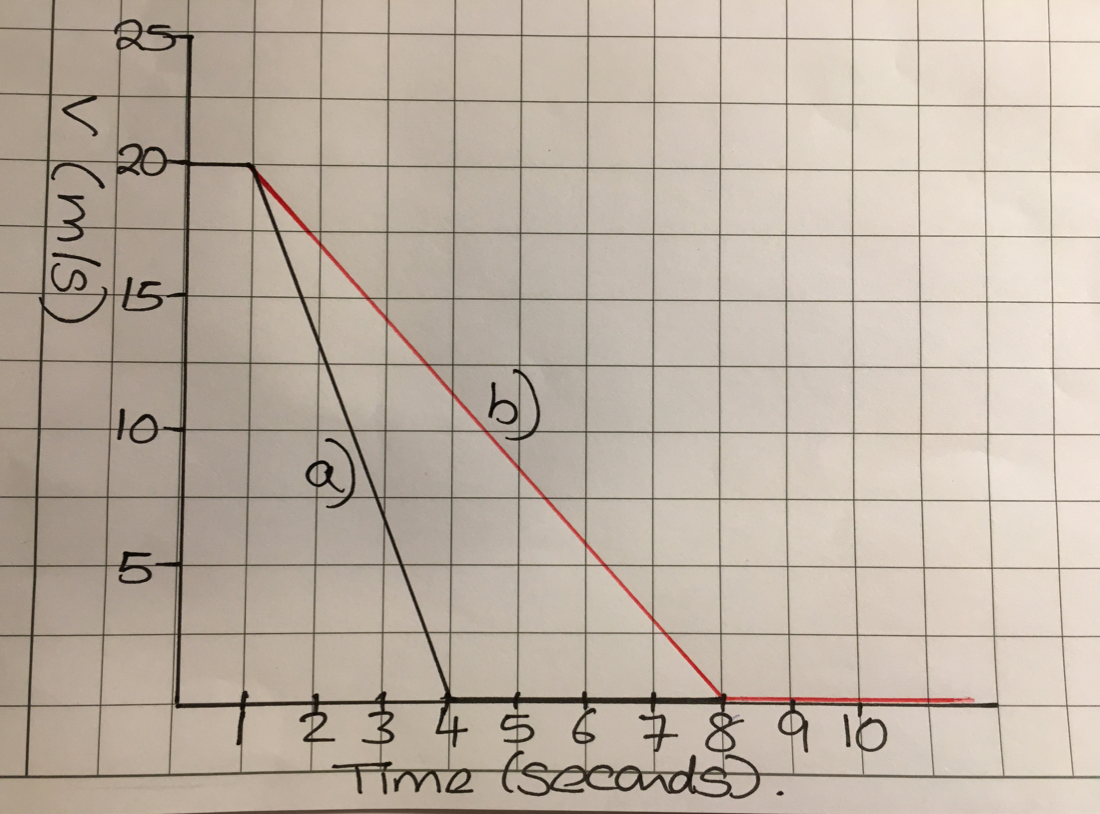
The above graph represents the deceleratin of car X.
a. What is the deceleration of this car? Show your formula + calculation + correct units
b. Car Y is travelling at the same velocity as car X, but on a very slippery road. The net braking force is halved because the road is so slippery. What is the the deceleration of car Y?
c. How long does car Y take to come to a stop? Show your formula + calculation + correct units
2 points
2
Question 9
9.
BONUS QUESTION
Which car has the slowest decrease in deceleration?
Explain your answer by calculating the braking time and the braking deleceration for each car.