Fraction Times Fraction Checkpoint
star
star
star
star
star
Last updated over 6 years ago
11 Nsɛmmisa
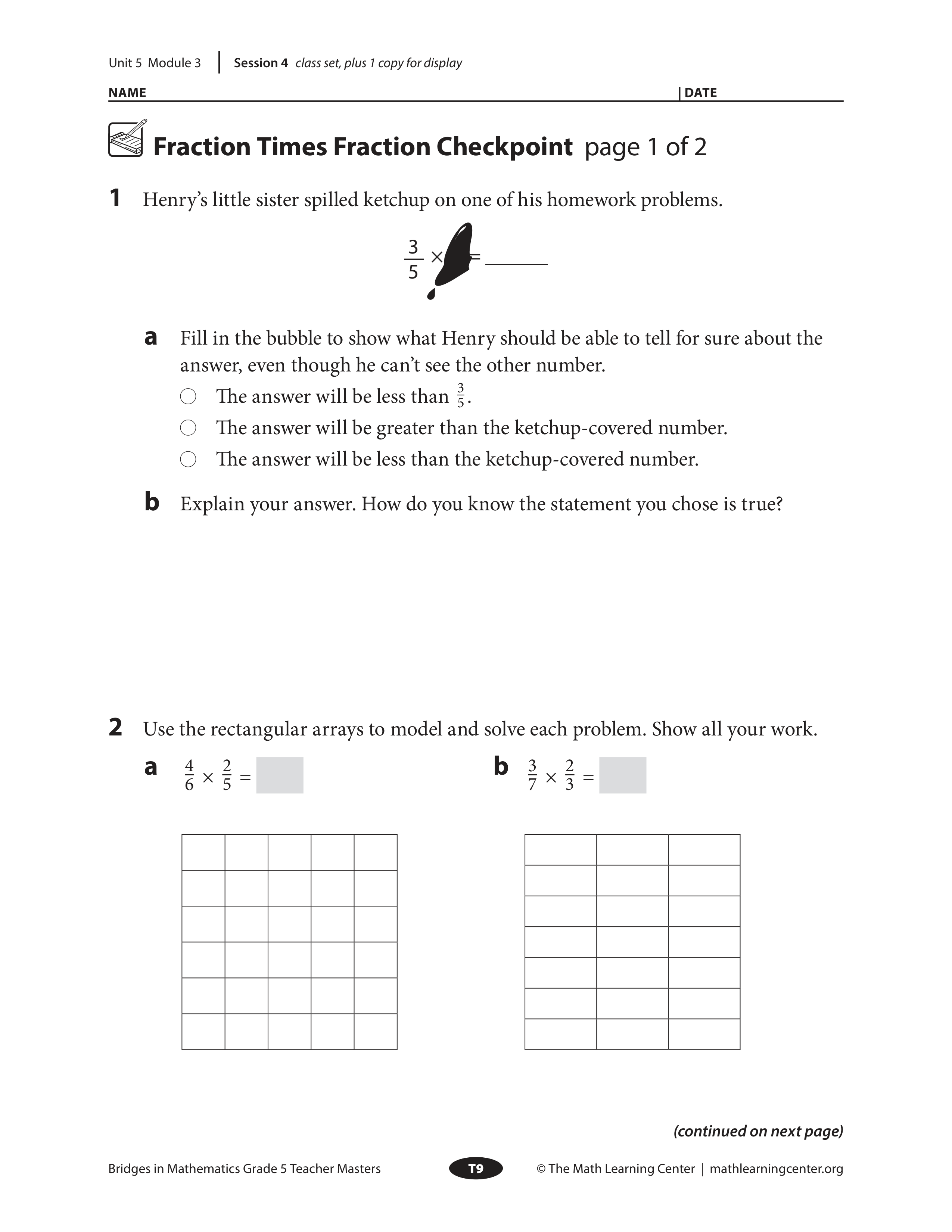
Fill in the bubble to show what Henry should be able to tell for sure about the answer, even though he can't see the other number
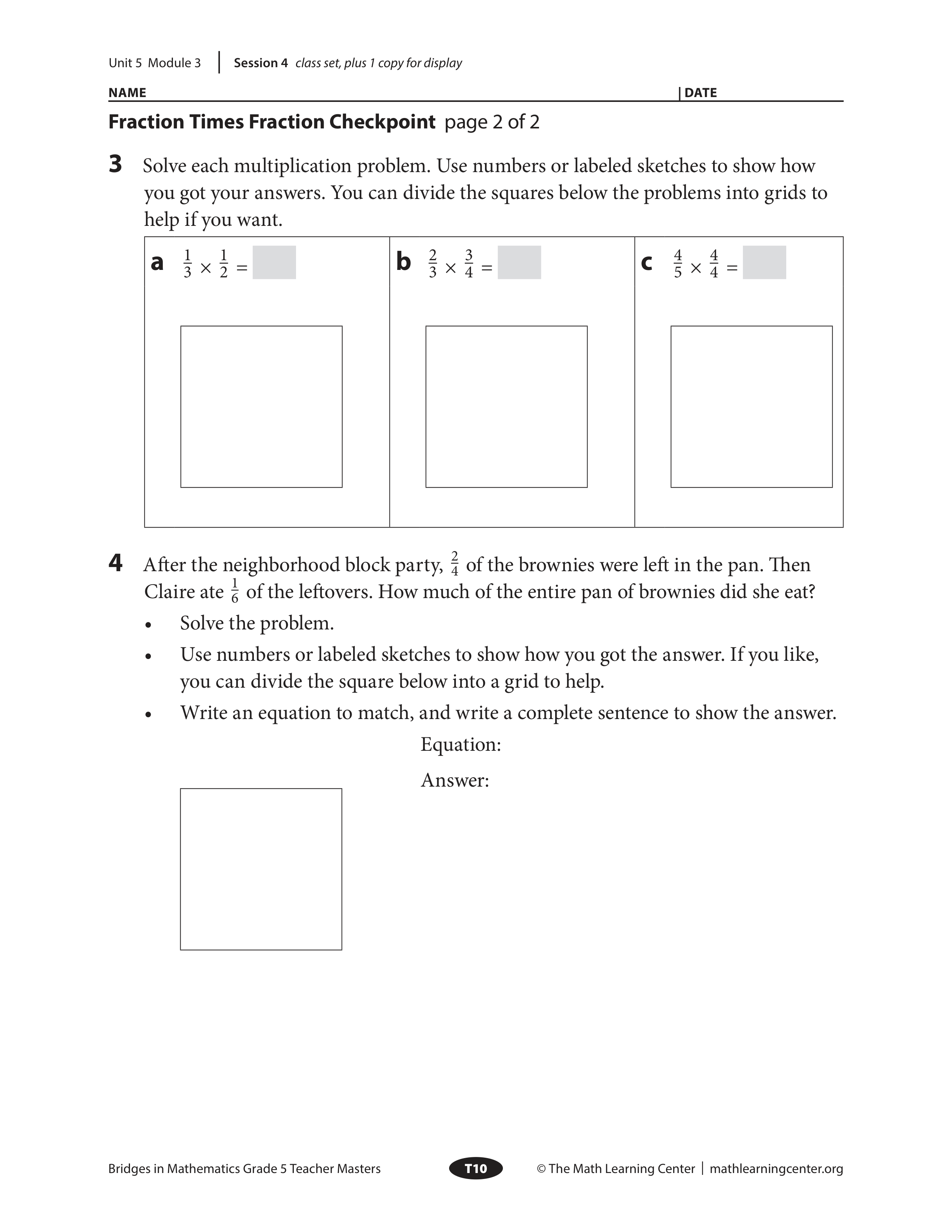
Solve the problem
Explain your answer. How do you know the statement you chose is true?
Use the rectangular arrays to model and solve each problem. Show all your work
Use the rectangular arrays to model and solve each problem. Show all your work
Solve each multiplication problem. Use numbers or labeled sketches to show how you got your answers. You can divide the squares below the problems into grids to help if you want.
Solve each multiplication problem. Use numbers or labeled sketches to show how you got your answers. You can divide the squares below the problems into grids to help if you want.
Solve each multiplication problem. Use numbers or labeled sketches to show how you got your answers. You can divide the squares below the problems into grids to help if you want.
Use numbers or labeled sketches to show how you got the answer. If you like, you can divide the square below into a grid to help.
Write an equation to match.
Write a complete sentence to show the answer