Determine if the following are abiotic or biotic.
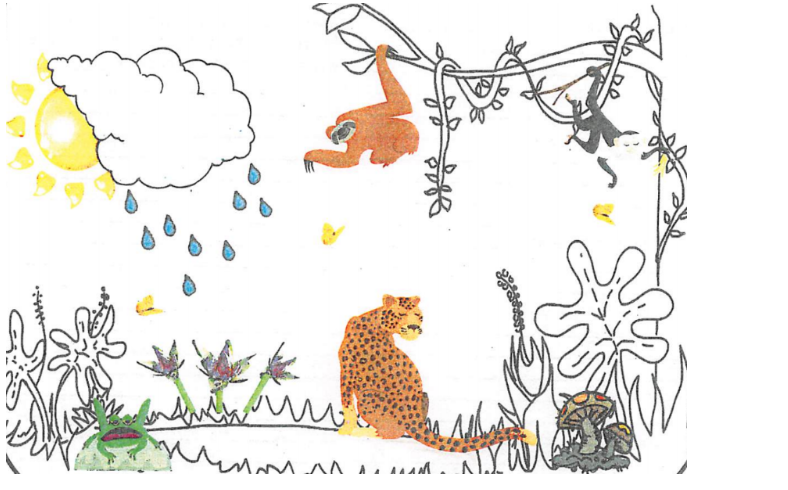
Determine if the following are abiotic or biotic.
Soil/Dirt
Cloud
Sloth
Mushroom
Frog
Butterfly
Cheetah
Sun
Rain
Monkey
Flower
Water (Pond)
Rock
Abiotic
Biotic
Honesty - Integrity Pledge
Cheating is insidious - it convinces us that "it isn't a big deal this one time", or "everyone else is doing it", or "this isn't an important thing I am cheating on", until it is EVERY time and you ARE the only one cheating and it IS on the important things. To paraphrase the esteemed Vanderbilt Professor Madison Sarratt - "Today I will be giving you two tests, one is in Science and the other is a much more real test: one of your integrity. I sincerely hope you will pass both, but if you must fail one test, then I hope it will be the Science test, for there are many good people in the world who couldn’t pass a test in Science, but there are no good people in the world who couldn’t pass a test of their integrity.” – Mrs. Maser
Determine if the following are abiotic or biotic.
Soil/Dirt
Cloud
Sloth
Mushroom
Frog
Butterfly
Cheetah
Sun
Rain
Monkey
Flower
Water (Pond)
Rock
Abiotic
Biotic
What is ecology?
Put the parts of a system in order from SMALLEST to LARGEST.
ecosystem
biome
population
community
biosphere
Match each ecology term with the correct description.
| Draggable item | arrow_right_alt | Corresponding Item |
|---|---|---|
biome/ecosystem | arrow_right_alt | the way of life of a species, or its role in an ecological community |
community | arrow_right_alt | includes all the living and nonliving features of an environment |
biosphere | arrow_right_alt | all populations in an ecosystem |
habitat | arrow_right_alt | all organisms of a certain kind within a defined region |
population | arrow_right_alt | every place on Earth tha can support life |
niche | arrow_right_alt | the natural home of an animal, plant or other organism |
Which if the following is a difference between a food chain and a food web?
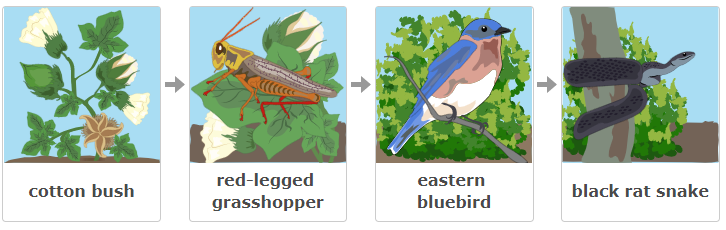
This is a picture of a
This is a picture of a
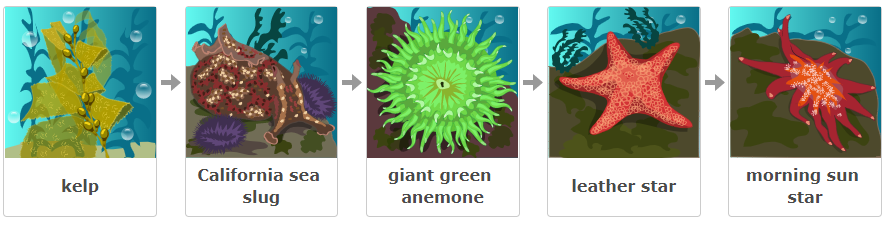
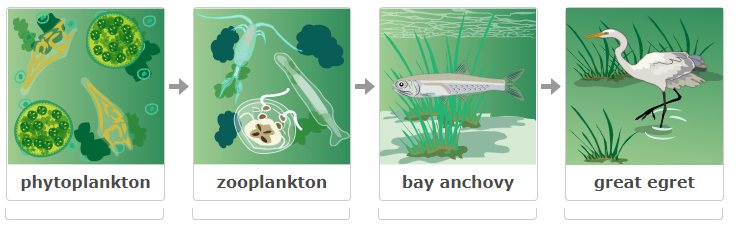
This food chain shows organisms in an ocean ecosystem.
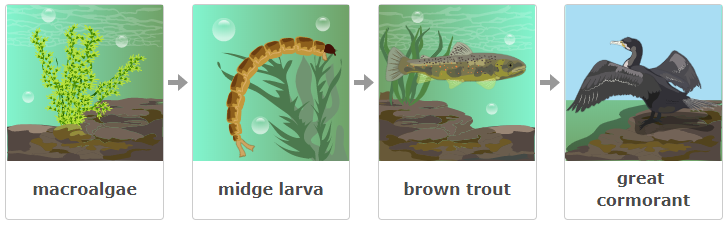
The _____ is both a predator and prey in this food chain. It is a predator because it hunts and eats the _____. It is prey because it is hunted and eaten by the _____.
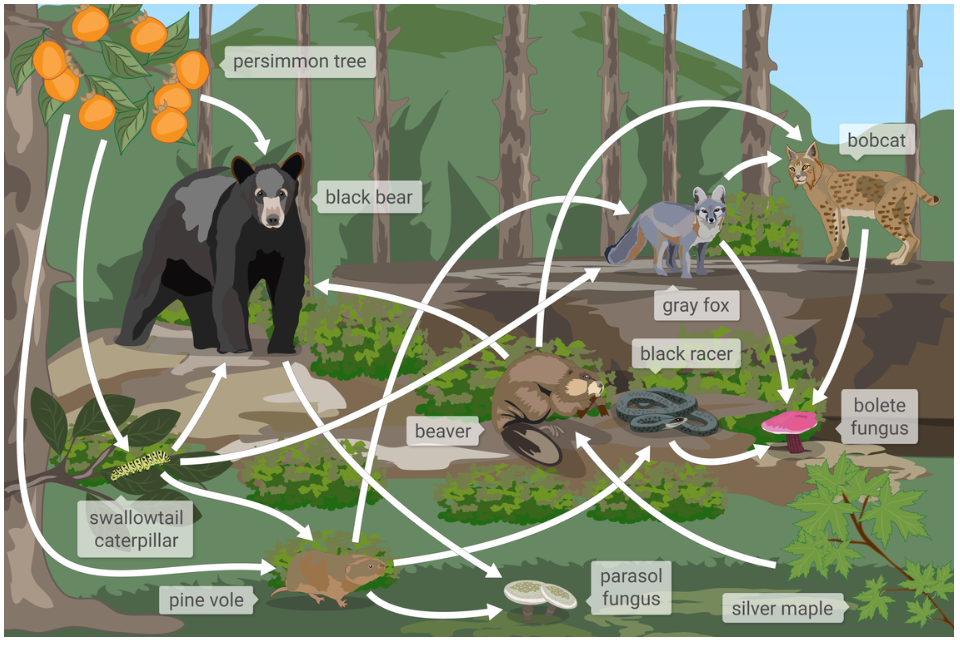
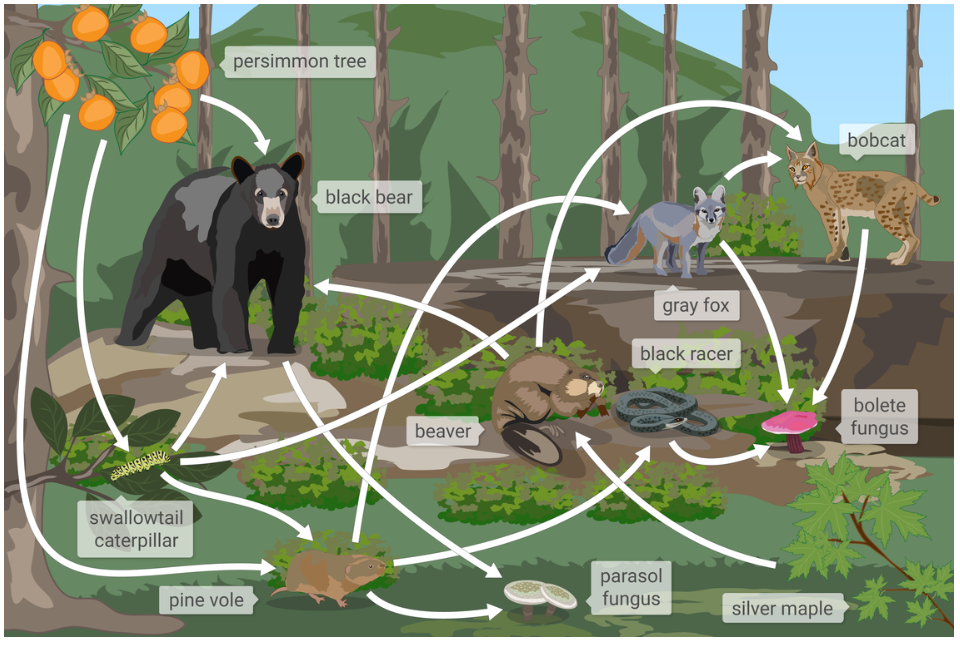
This is a food web from Shenandoah National Park, a forest ecosystem in Virginia. Which two of the following organisms are producers in this food web?
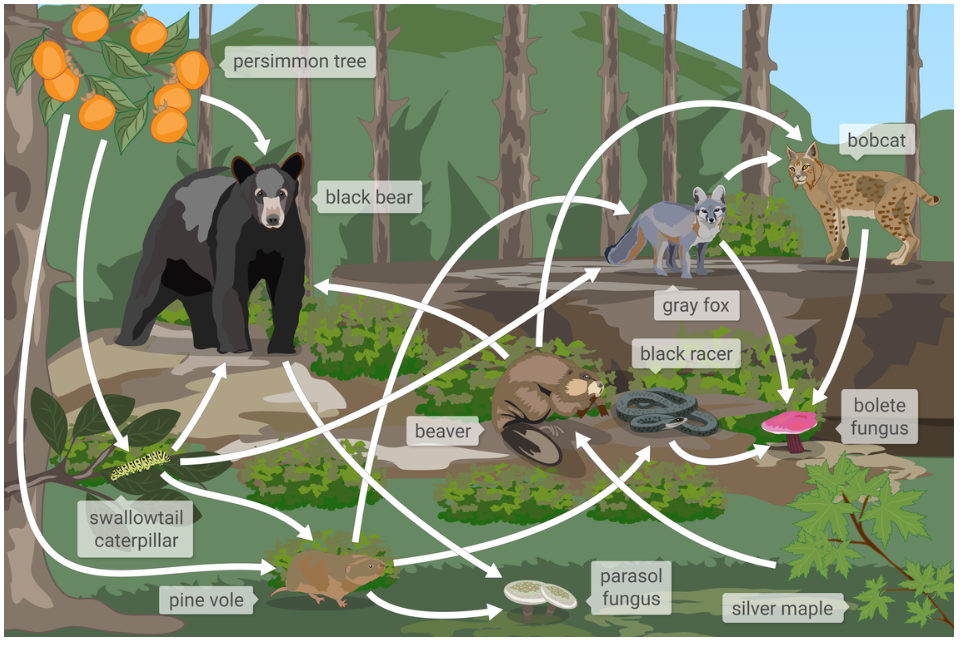
This is a food web from Shenandoah National Park, a forest ecosystem in Virginia. Which two of the following organisms are primary consumers?
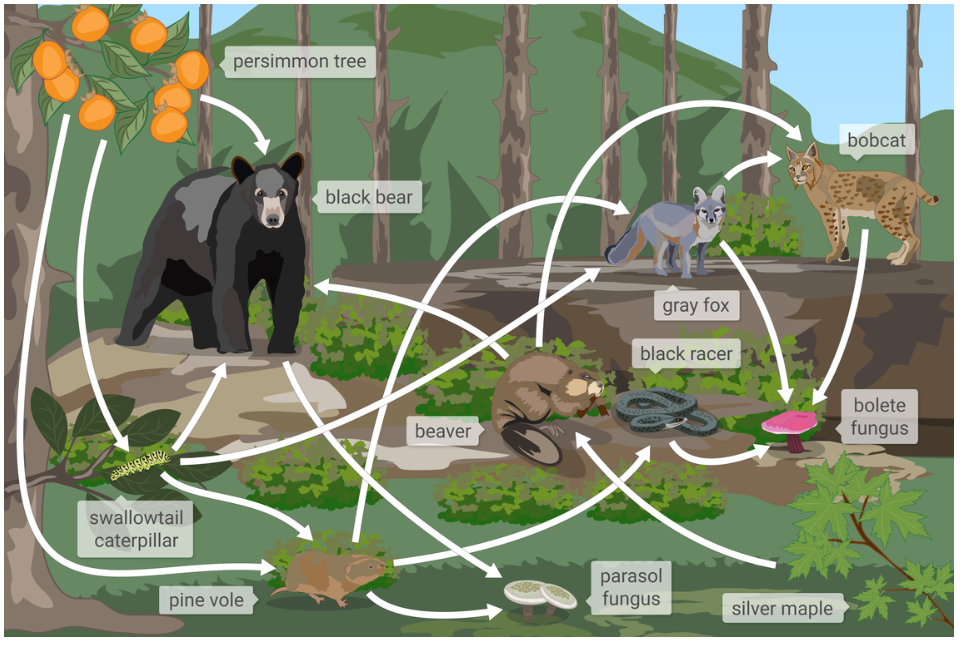
This is a food web from Shenandoah National Park, a forest ecosystem in Virginia. Which two of the following organisms are secondary consumers in this food web?
The Pantanal wetlands expand across western Brazil, Bolivia, and Paraguay. During the rainy season, almost all of the Pantanal is underwater. The water moves slowly through the dense plants that grow throughout the wetlands.
The Pantanal is home to the capybara, the largest rodent species in the world. Capybaras spend so much time in the water that they are considered semiaquatic. Their partially webbed toes help them to swim. Capybaras eat water plants such as the water hyacinth.
In the Pantanal wetlands, the capybaras make up which of the following? Select all that apply.
Match the following terms and descriptions.
| Draggable item | arrow_right_alt | Corresponding Item |
|---|---|---|
Herbivore | arrow_right_alt | are able to use light energy from the sun to make their own food |
Decomposer | arrow_right_alt | animals that eat only plants |
Producer | arrow_right_alt | organisms that are unable to make their own food |
Consumer | arrow_right_alt | animals that eat other animals |
Scavenger | arrow_right_alt | animals and people who eat both animals and plants |
Omnivore | arrow_right_alt | feed on decaying matter |
Carnivore | arrow_right_alt | animals that consume dead organisms |
An energy pyramid shows the flow of energy from one trophic level to the next in an ecosystem. What percent does the energy decrease by at each level?
Match the type of interaction with the correct example.
| Draggable item | arrow_right_alt | Corresponding Item |
|---|---|---|
Competition | arrow_right_alt | Fleas on a dog. |
Mutualism | arrow_right_alt | Egret birds eat insects that cows and horses disturb. |
Parasitism | arrow_right_alt | Bees pollinate flowers. |
Commensalism | arrow_right_alt | Hyenas and lions both try to eat the same prey. |
Match the term with the description of the type of interaction.
| Draggable item | arrow_right_alt | Corresponding Item |
|---|---|---|
Exploitative Competition | arrow_right_alt | different species competing for the same resource |
Interference Competition | arrow_right_alt | same species competing for the same resource |
Interspecific Competition | arrow_right_alt | one species directly and aggressively interferes with the ability of another to survive by physically excluding the other |
Intraspecific Competition | arrow_right_alt | a subtle form of competition in which organisms interact indirectly by consuming the same scarce resource |
Match the term for the factors affecting population growth with the correct description.
| Draggable item | arrow_right_alt | Corresponding Item |
|---|---|---|
density-dependent factor | arrow_right_alt | any factor or condition that limits the growth of a population |
density-independent factor | arrow_right_alt | when a population reaches a state where it can no longer grow |
carrying capacity | arrow_right_alt | environmental factors such as disease and competition, etc. |
limiting factor | arrow_right_alt | environmental factors such as storms, fires, extreme temp, etc. |
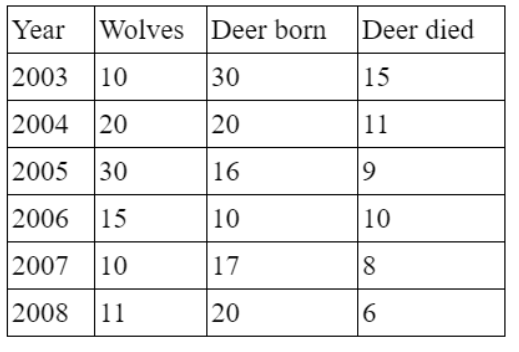
What is the carrying capacity of the wolf population?
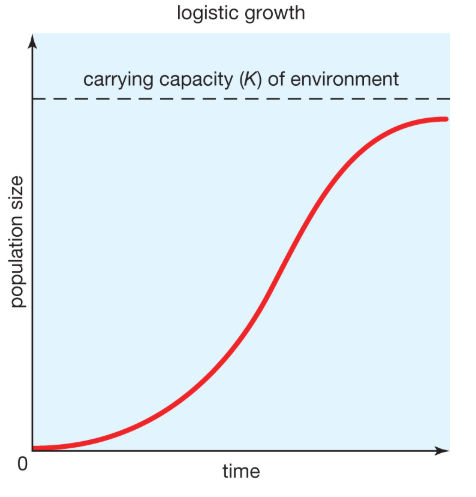
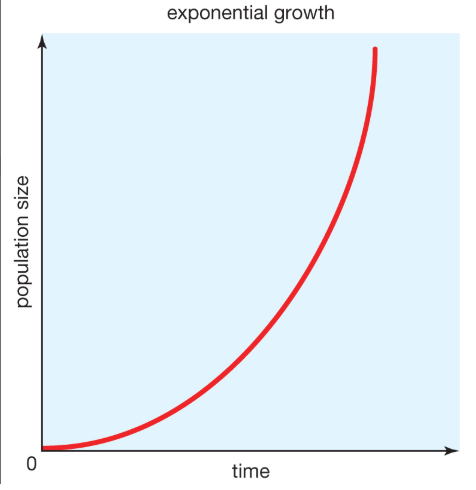
Match the graph with the correct type of growth.
| Draggable item | arrow_right_alt | Corresponding Item |
|---|---|---|
| arrow_right_alt | exponential |
| arrow_right_alt | logistic |
Match the terms for types of species with the correct description.
| Draggable item | arrow_right_alt | Corresponding Item |
|---|---|---|
Keystone Species | arrow_right_alt | Muscovy ducks were brought to Southwest Florida from South America. They have developed widespread populations because they lack natural predators and out compete for resources. |
Native Species | arrow_right_alt | African cichlid fish in the south Florida canals that were accidentally released from aquaria, squirrel monkeys that were released or escaped from tourist attractions in central Florida, and red-eared sliders, which are the popular "baby turtles" sold in the pet trade. They are now found throughout most the state and do not disrupt the native species. |
Invasive Species | arrow_right_alt | Leatherback turtles have originated in Florida naturally and without any human involvement. |
Non-Native Species | arrow_right_alt | Moss and lichen are common examples of this species because they have tiny root like structures that can take hold on exposed rock. |
Pioneer Species | arrow_right_alt |
|
Match the pictures and descriptions with the correct type of succession.
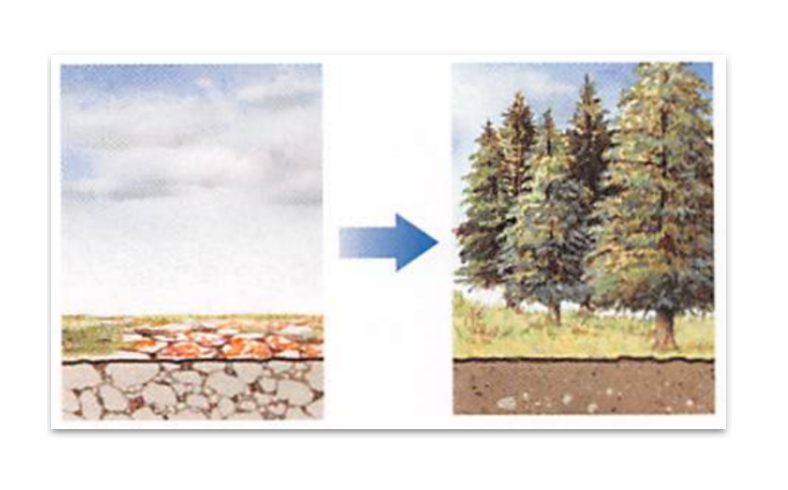
occurs when soil is present
occurs when no soil is present
floods, tornados, forest fires will cause this type of succession
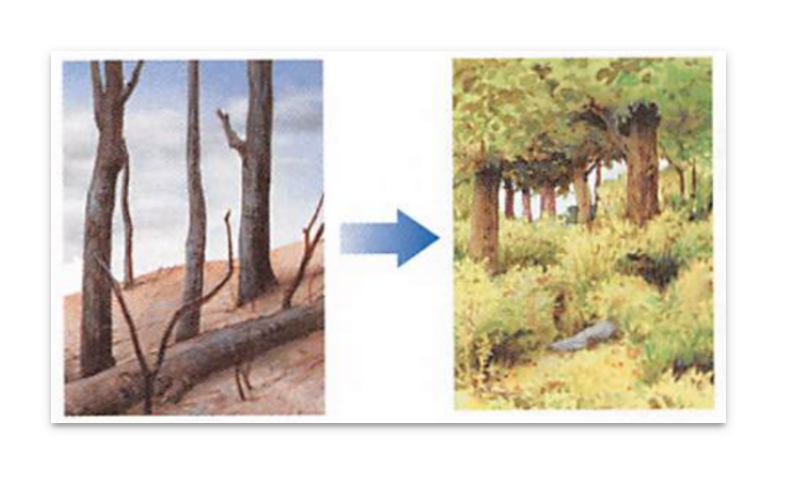
volcanic eruption will cause this type of succession
Primary
Secondary
Strangler figs are part of many symbiotic relationships in a rain-forest ecosystem. In some cases, the symbiotic relationship benefits both the fig and an animal. Fig wasps lay their eggs in the fruit of the strangler fig and, in turn, pollinate it. Many birds feed on the fruit of the strangler fig and, in doing so, spread the seeds of the plant. The fig does not benefit from its interactions with all species. For example, certain butterflies feed on juice from the fruit without affecting the tree in any way.
The symbiotic relationship that gives the strangler fig its name is that between the strangler fig and its host tree. Birds drop seeds onto the top of a tree, and vines of the fig grow downward. Eventually, the vines of the strangler fig touch the ground and join with the roots of the host tree. The host tree is harmed because the leaves of the strangler fig block sunlight and its vines take root, using up nutrients the host tree needs.
Write a paragraph describing some of the different roles played by a strangler fig in the rain forest. Use the vocabulary words - habitat, niche, populations, community and ecosystem.