1
1
1
0
How can knowing time of death impact an investigation?
How can knowing time of death impact an investigation?
1
1
How can knowing time of death impact an investigation?
Why can insects not give an exact time of death?
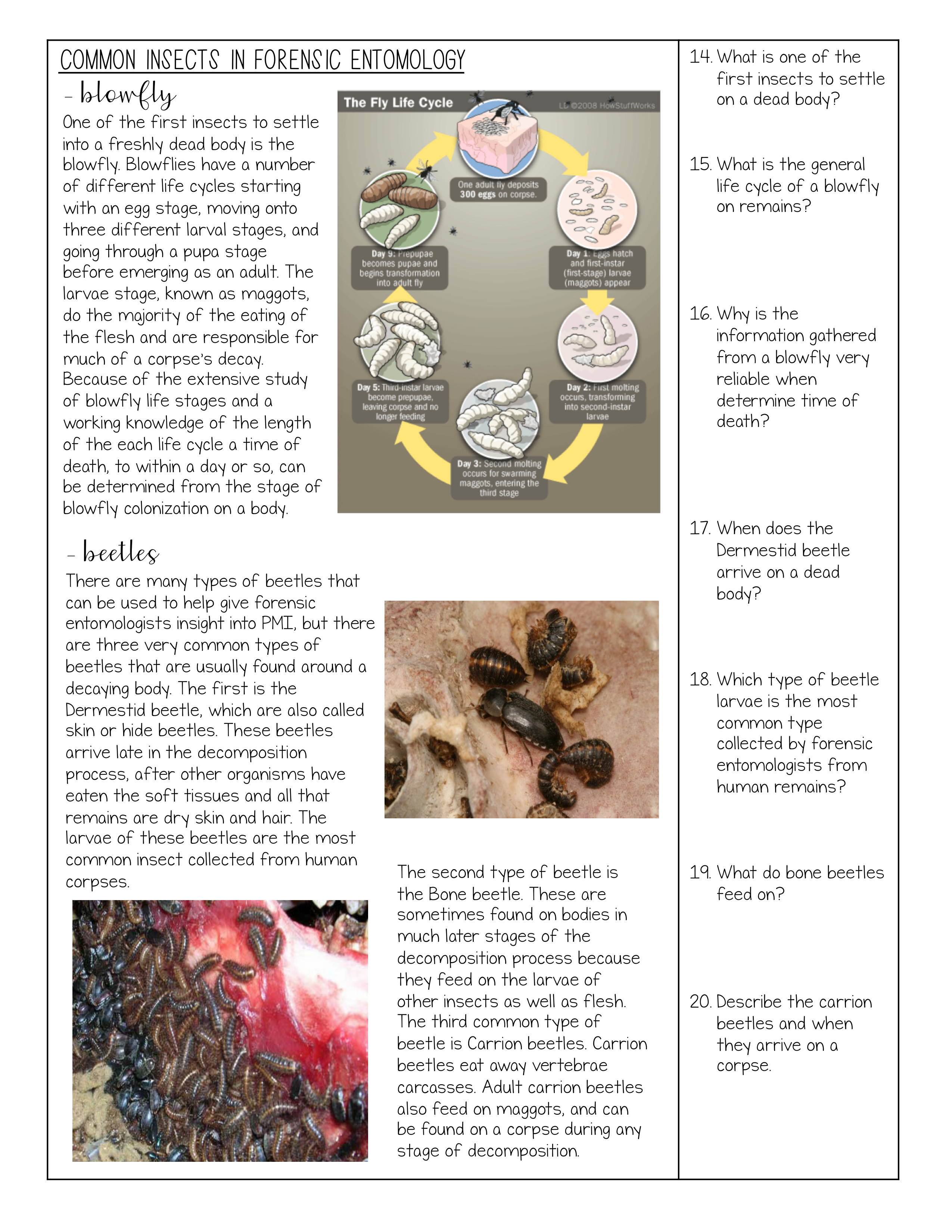
What is the general life cycle of a blowfly on remains?
Why is it important to consider the temperature inside a dwelling as well as outside?
What is forensic entomology?
What aspects of investigations can forensic entomology give insight to?
How do maggots affect the decomposition of the body?
Why is forensic entomology important for cases that are more than a few days old?
What other information, besides time of death, can forensic entomology tell us (Check all that apply).
What information is used to determine time since death?
What are the TWO methods of determining PMI? (Choose TWO)
What is looked at to determine time of death if the body was dead less than a month?
What is looked at if the body was dead more than a month?
Which type of insects come within minutes of death?
What is the time frame that insects can no longer give important information about the time of death?
What is one of the first insects to settle on a dead body?
Why is the information gathered from a blowfly very reliable when determining time of death?
When does the dermestid beetle arrive on a dead body?
Which type of beetle larvae is the most common type collected by forensic entomologists from human remains?
What do bone beetles feed on?
Describe the carrion beetles and when the arrive on a corpse.
What does it mean when it says insects are "cold-blooded"?
How does temperature affect the decomposition rate?
How does the indoor/outdoor location affect the rate of decomposition?
What is forensic entomotoxicology?
Why can insects give insight to wound sites in earlier stages of death?
How can insects give insight to location change after death?