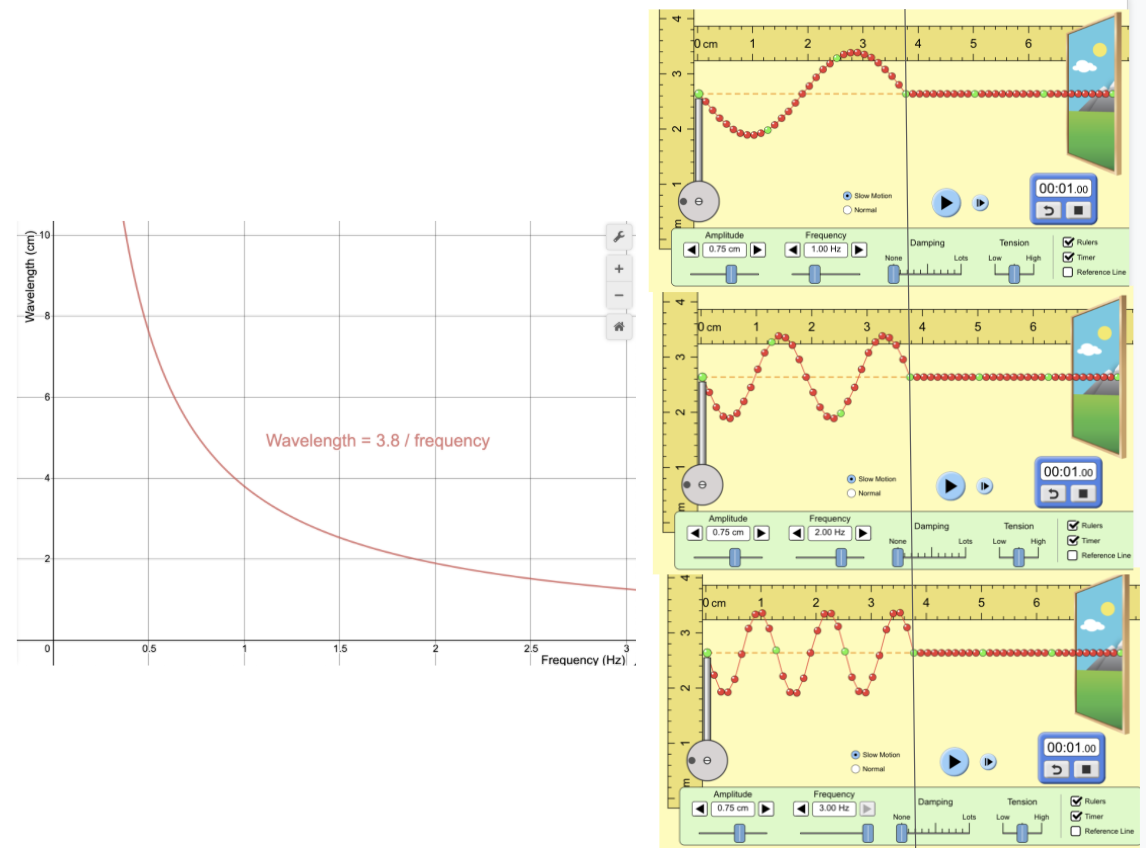
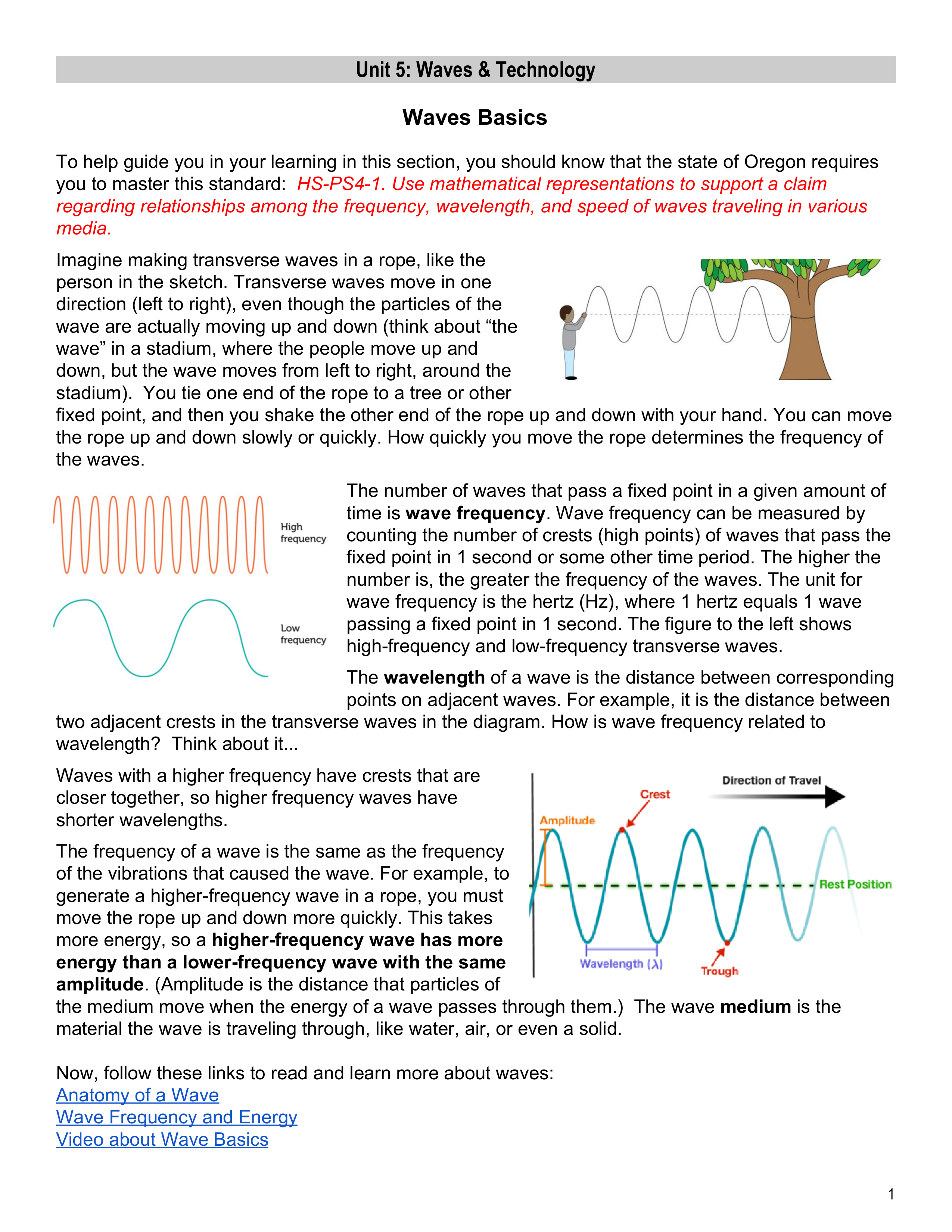
Finding Patterns in Waves
Mr. Anderson explains the fundamentals of waves in the video below.
Use the image below to set up the the simulation embedded further below:
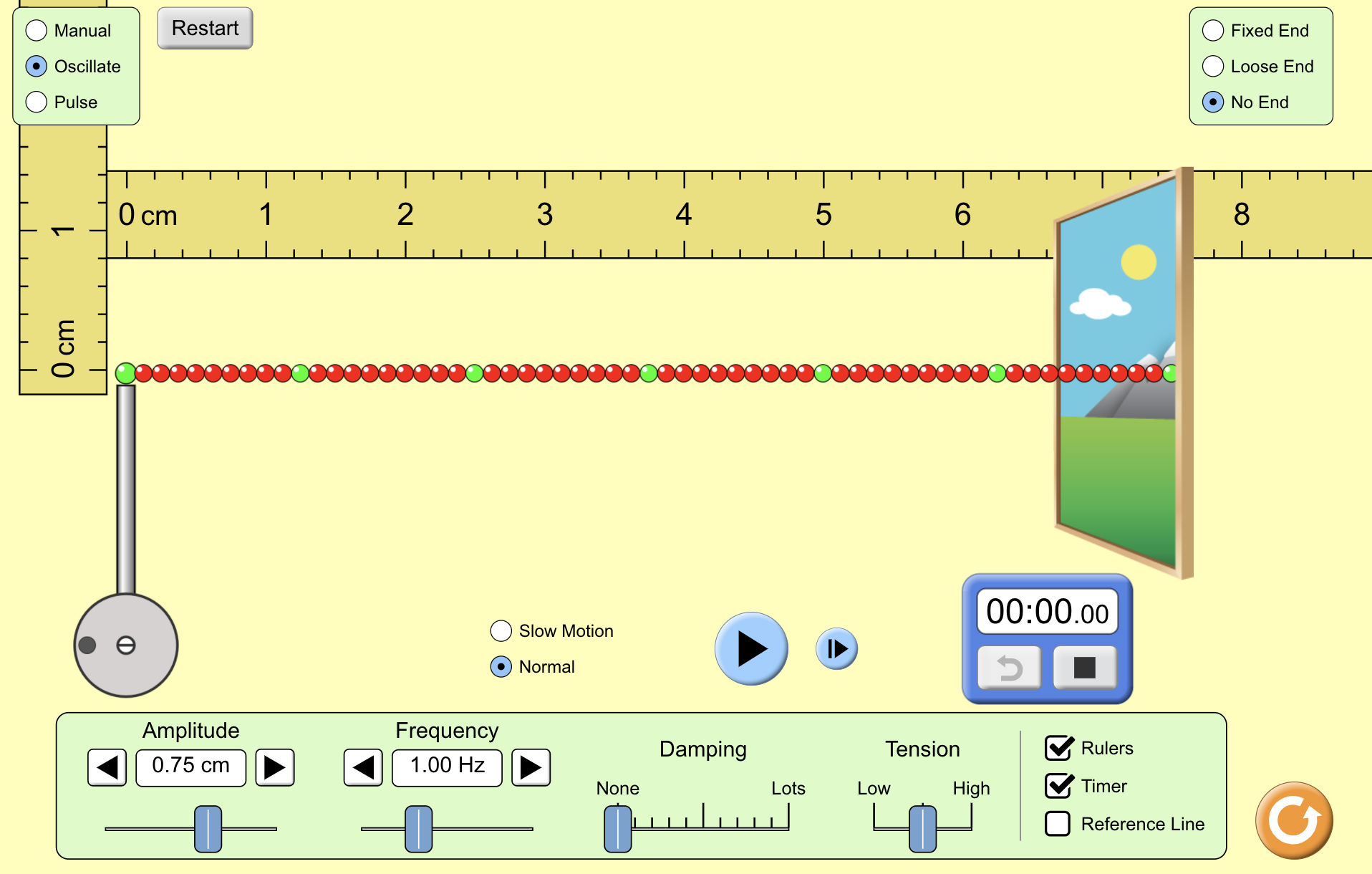
The video below explains how to measure wavelength and wave speed in PhET.
Now try different frequencies and measure the wavelengths and wave speeds. If you have trouble with the embedded simulation below you can open it as it's own webpage here.
Collect your data how frequency affects wave velocity in the Desmos file below. If you have trouble with the embedded Desmos you can open it as it's own webpage here.
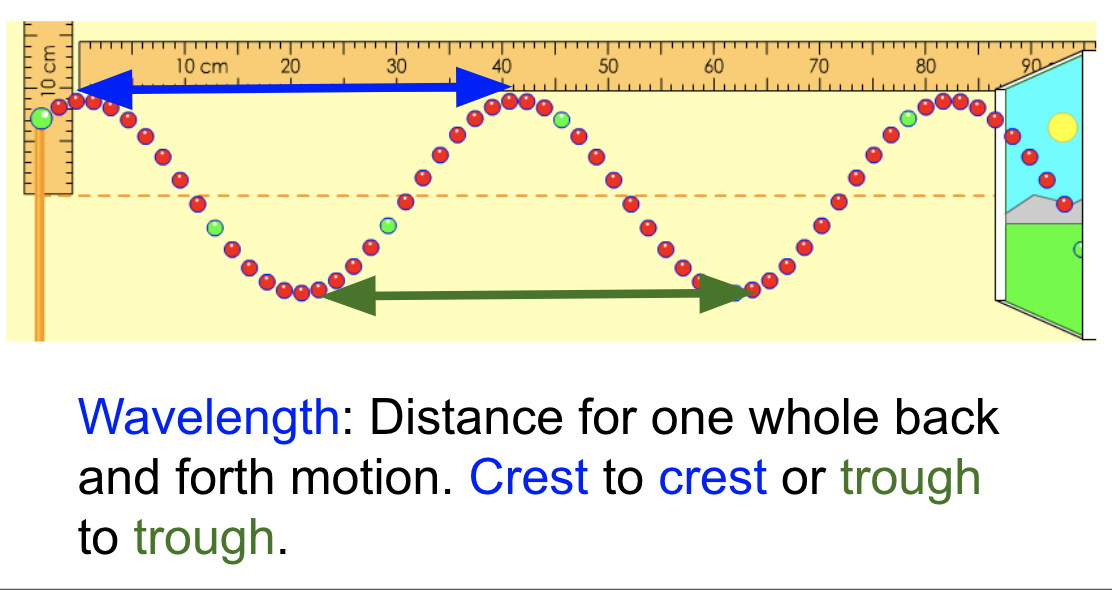
Collect your data how frequency affects wavelength (space between crests see image below) in the Desmos file below. If you have trouble with the embedded Desmos you can open it as it's own webpage here.