Here we are in Week 4, so it's time for Chapter 4: "Tap Into Your Superpowers"
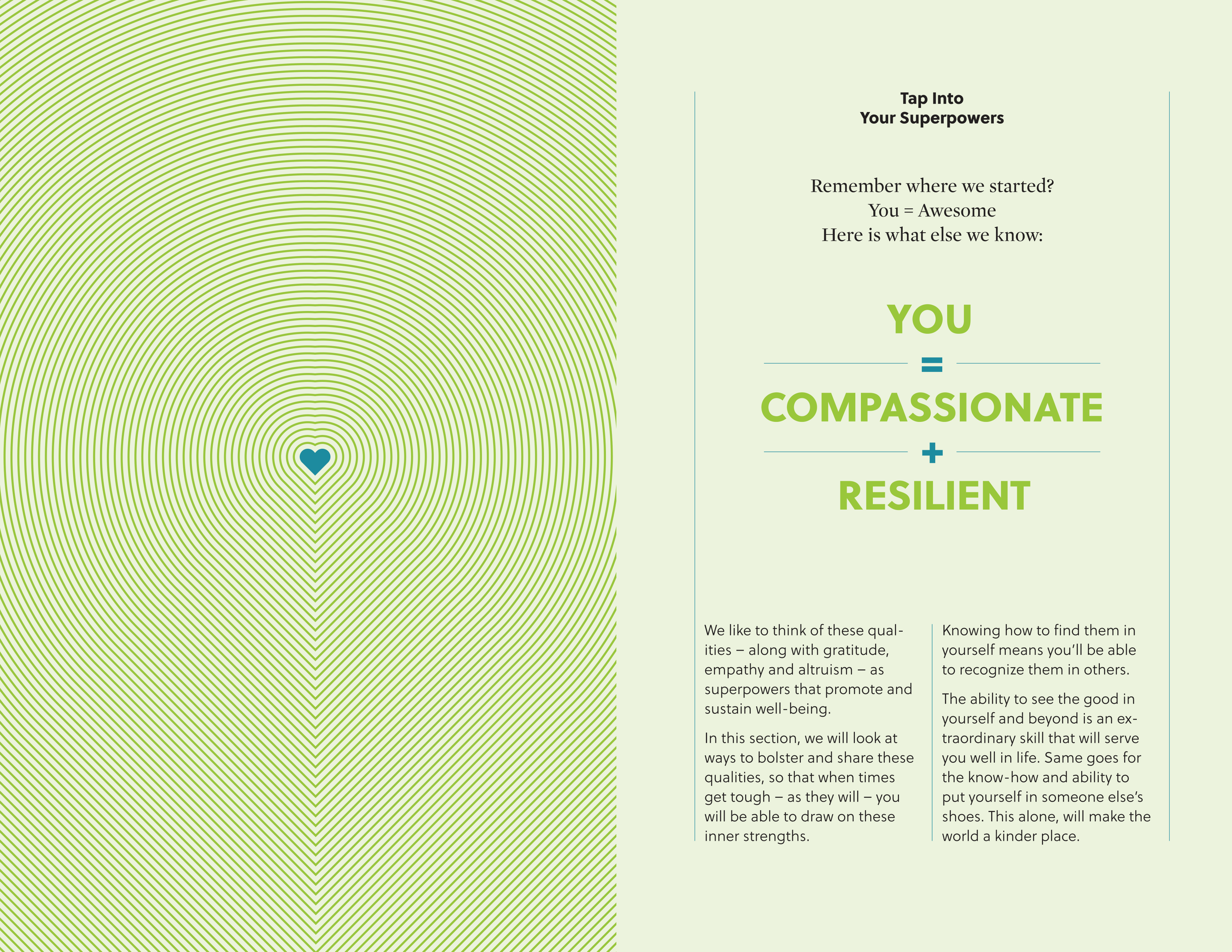
Let's start with a little self reflection about this equation of YOU = COMPASSIONATE + RESILIENT.
Answer one of these questions:
What does it mean to be compassionate?
OR
What does it mean to be resilient?
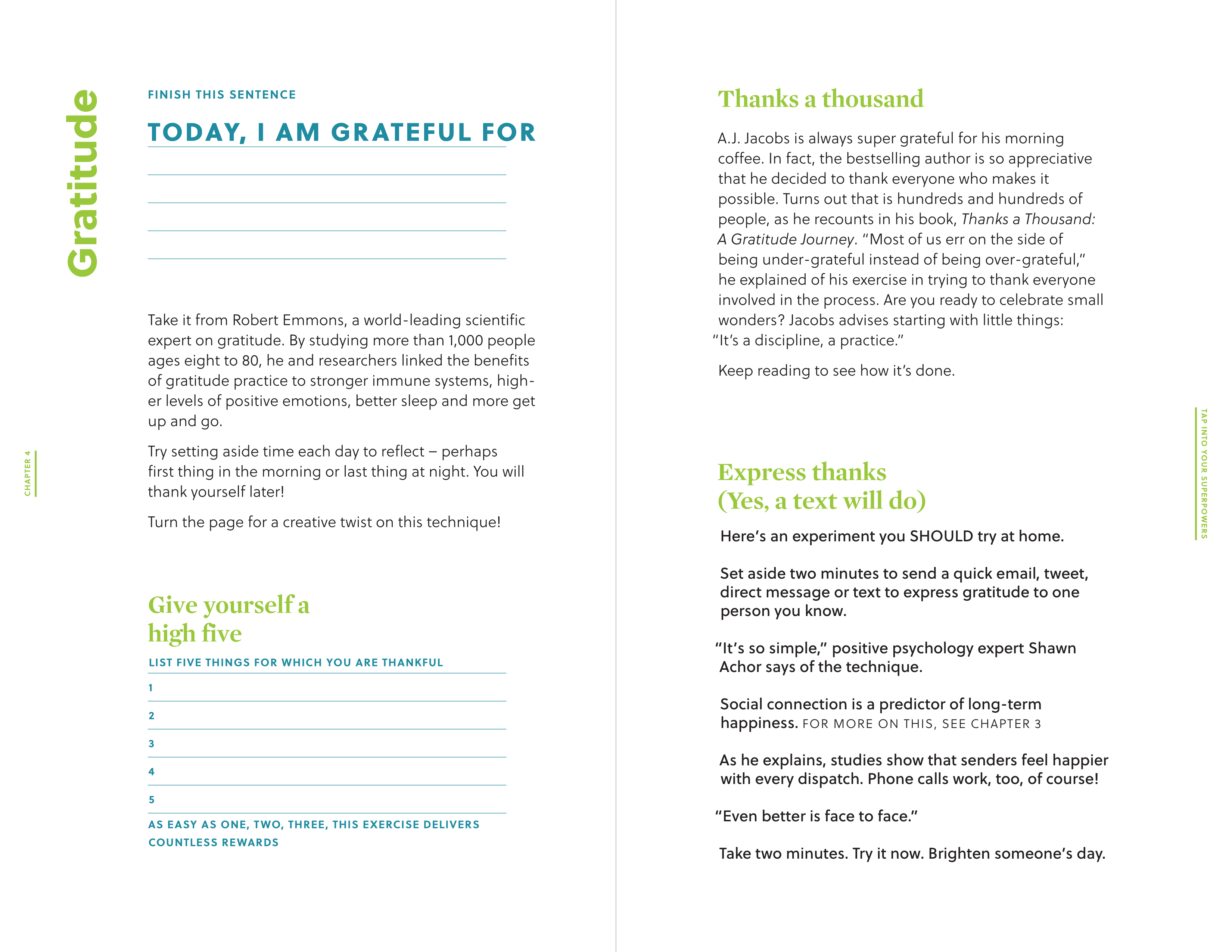
Based on this reading, what are 3 positive benefits of gratitude?
Let's do this! List 5 things for which you are thankful.
Here are mine:
(1) Having a supportive husband
(2) A quiet space to work during the day
(3) Supportive teachers who help me figure out this e-learning thing!
(4) Going on walks outside with my dog
(5) Extra time to read amazing books
Try this now! Send a quick message of gratitude to one person you know.
Who did you reach out to?
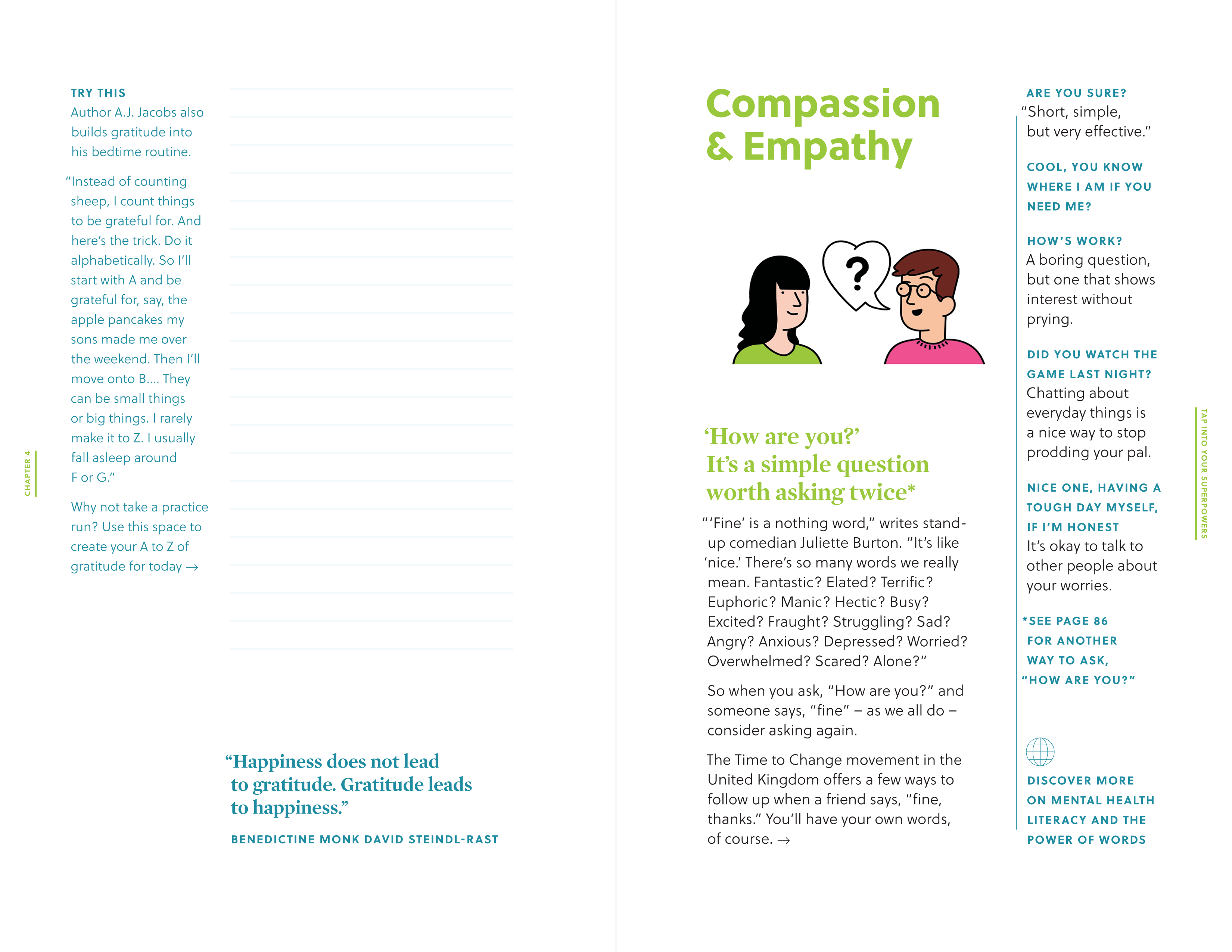
How are YOU today? Try to pick a very specific emotion word (or lots of them).
Want some ideas of new words to express your emotions? Check out this list: https://www.hoffmaninstitute.org/wp-content/uploads/Practices-FeelingsSensations.pdf
Today I feel distant and unsure, but also calm.
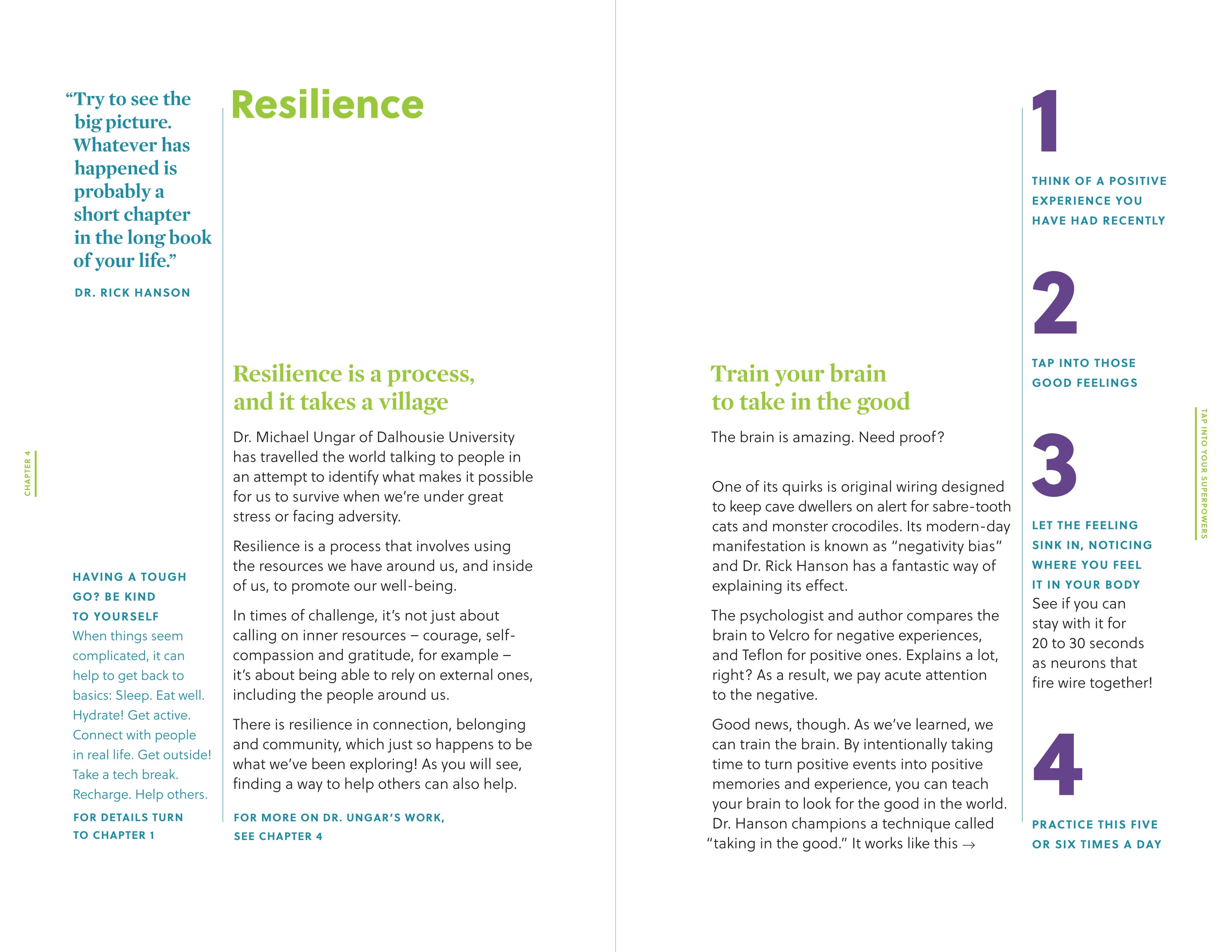
According to this reading, which types of experiences does our brain naturally more easily pay attention to?
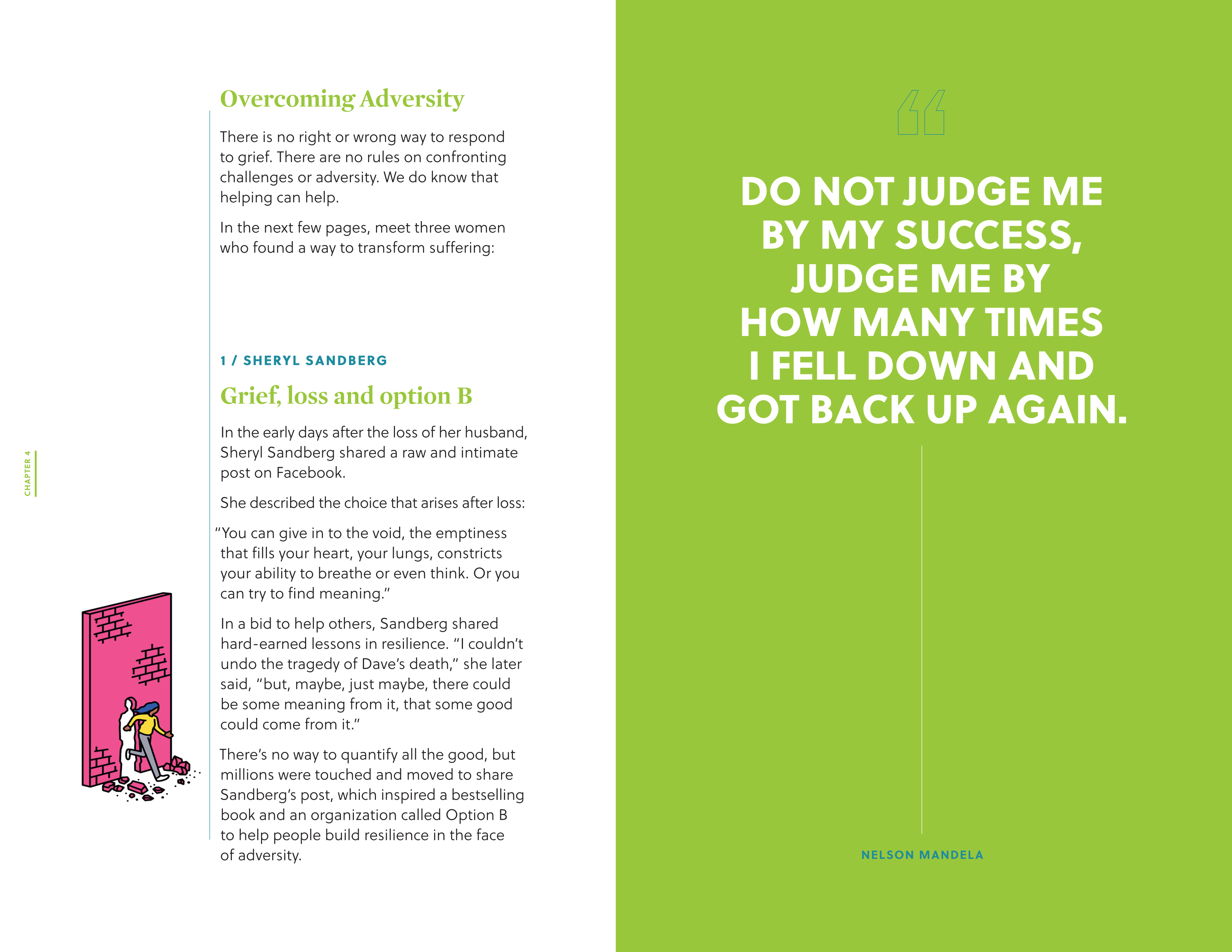
On the last two pages, there have been three stories of resilient women who faced very difficult challenges: Sheryl Sandberg, Annie Bartleet, and Emma Gonzalez.
Choose one of these stories to respond to. Why did this particular woman's story stick out to you?
How can you be more positive on social media?
Respond to either of these questions:
(1) What is one positive feed / account you follow?
(2) What is a positive thing you've posted recently?
We've heard the golden rule and over and over: "treat others the way you want to be treated"
Today, how can you put that into practice? What is one specific thing you have done (or can do) today?

Overall, what is one takeaway you learned from WE Wellbeing Ch 4?
Do you have any suggestions for me to help us continue our sense of connection to our class community (right now I do so by replying to your posts, daily padlets, and weekly optional zooms)?
Do you have any questions, comments, or concerns about ANYTHING?