PRACTICE: Angles
star
star
star
star
star
Last updated over 6 years ago
14 Nsɛmmisa
3
3
3
2
2
3
3
1
2
1
1
1
1
1
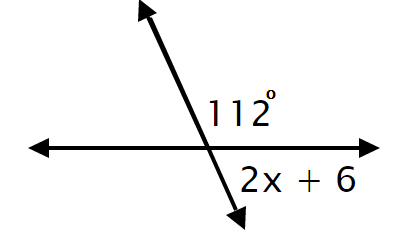
Using the figure above, solve for x. (HINT: These angles = 180)
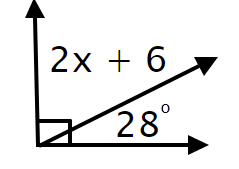
Using the figure above, solve for x. (HINT: These angles =90)
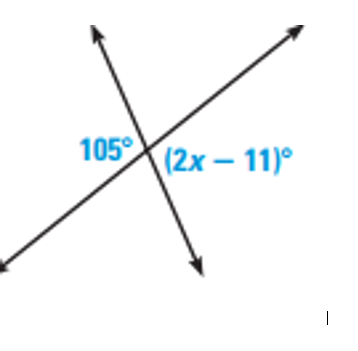
Using the figure above, solve for x. (HINT: These angles equal each other. 2x-11=105)
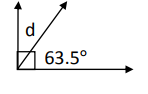
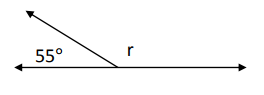
Using the figure above, what is the missing angle measurement. (HINT: Thes angles = 90)
Using the figure above, solve for the missing angle measurement. (HINT: These angles =180)
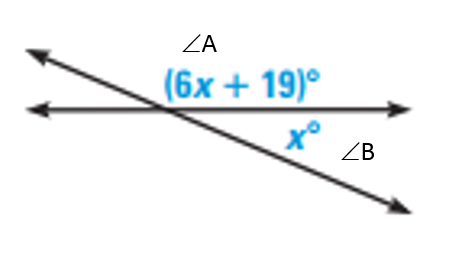
Using the figure above, solve for x. (These angles =180)
Using the same figure, determine the angle measurement for angle A. (Substitute above answer for x in 6x+19)
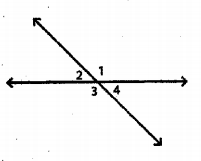
Use the figure above. If angle 1 measures 126 degrees, what is the measure of angle 3?
Using the same figure, determine the measure of angle 2.
Adjacent angles are complementary.
Vertical angles are congruent.
Two obtuse angles can be supplementary.
Complementary angles equal 90 degrees.
Two vertical angles will always equal 180 degrees.