Log in
Sign up for FREE
arrow_back
Library

Evidence of Common Ancestry Formative Quiz 1

star
star
star
star
star
Last updated almost 6 years ago
20 questions
5
5
5
5
5
5
5
5
5
5
5
5
5
5
5
5
5
5
5
5
Question 1
1.

Question 2
2.

Draggable itemarrow_right_altCorresponding Item
arrow_right_alt
arrow_right_alt
arrow_right_alt
Question 3
3.

Question 4
4.

Question 5
5.

Question 6
6.

Question 7
7.

Question 8
8.

Question 9
9.

Question 10
10.

Question 11
11.

Question 12
12.

Question 13
13.

Question 14
14.

Question 15
15.

Question 16
16.

Question 17
17.

Question 18
18.

Question 19
19.

Question 20
20.

What does the fossil record include?
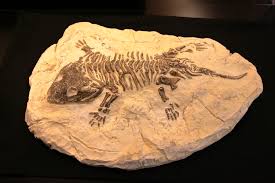
only fossils we can identify what the organism was
all fossils that exist, even if still buried
all life that ever existed, even if it never formed a fossil
only fossils that have ever been found
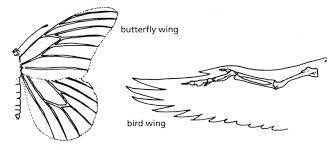
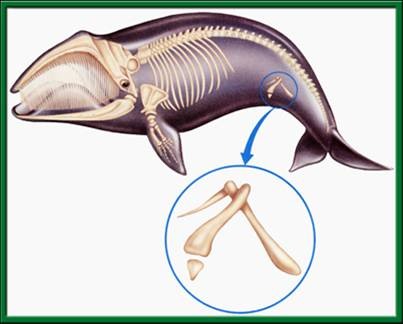
Match the scientific concept with the correspondent picture.
Analogous Structures
Vestigial Structures
Homologous Structures
Which animal is most closely related to birds?
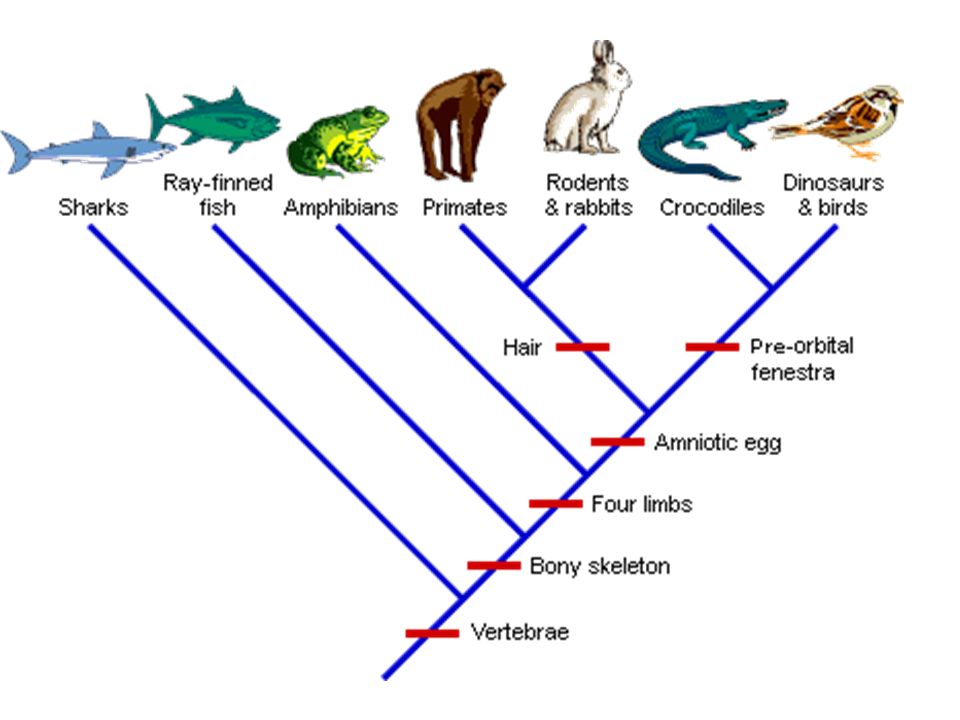
Primates
Crocodiles
Sharks
Amphibians
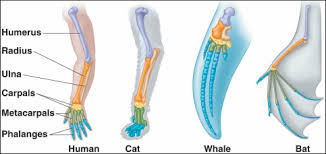
Which type of evidence of evolution is shown in the diagram below?
Fossil evidence
Comparative embryology
Comparative anatomy
Molecular evidence
Which is an example of analogous structures?
human arm and whale fin
bat wing and cat leg
whale fin and cat arm
butterfly wing and bat wing
Birds were the first animals to fly.
True
False
Which animal is most distantly related to the bird?
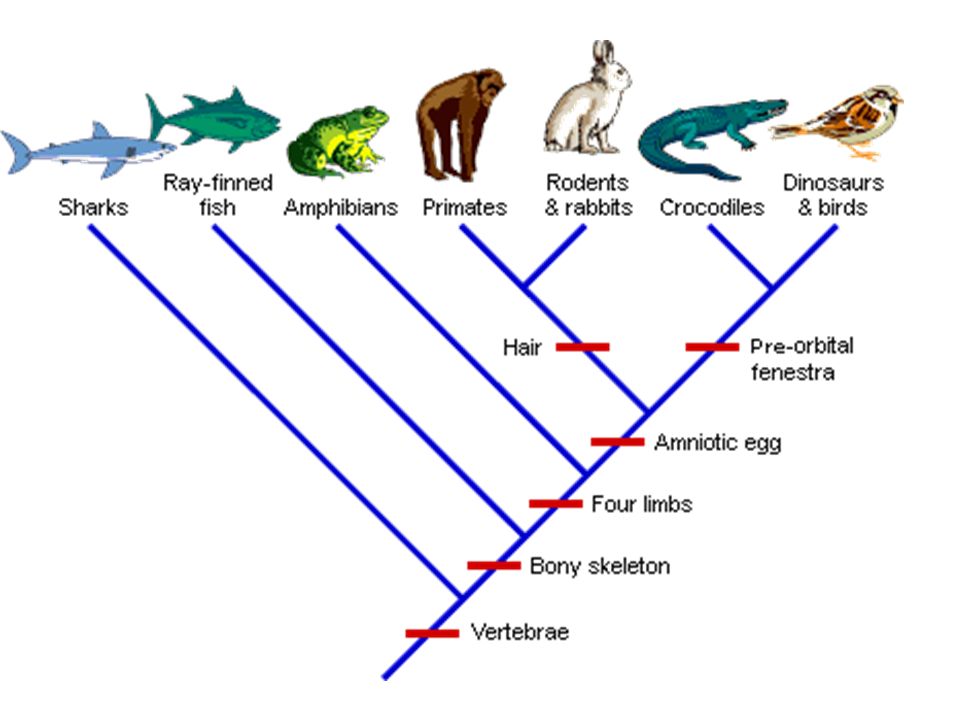
crocodile
rabbit
shark
primate
What statement best supports the idea that some dinosaurs evolved into birds?
The fossil record shows that some species of later dinosaurs had a great deal of body armor, just as modern birds.
The fossil record shows that some species of earlier dinosaurs were extremely large, just as modern birds.
The fossil record shows that some species of later dinosaurs were feathered, just as modern birds.
The fossil record shows that some species of earlier dinosaurs wallowed in mud to keep cool, just as modern birds.
What determines which individuals will survive and pass their traits on to the next generation?
Homologous structures
natural selection
vestigial structures
interspecies reproduction
How does embryology support the Theory of Evolution?
None of these answers
It shows that they have a common ancestor because of their similarities.
Animals change over time.
A change in the inherited characteristics of an organism over time is ________
ancestry
evolution
development
growth
The most recent ancestral form or species from which two different species evolved is known as ________________________.
an embryonic stage.
evolution.
development.
a common ancestor.
Why does common ancestry relate to evolution?
Common ancestors make evolution happen more quickly.
Evolution can never take place with common ancestors.
Evolution only happens when there are common ancestors.
The more two organisms have in common, the more recent is their common ancestor during their evolution.
In stage one (top row) of these embryos, most of the embryos________
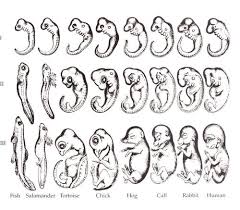
have very different features.
have only a tail if they are non-human.
show different stages of development.
look very similar.
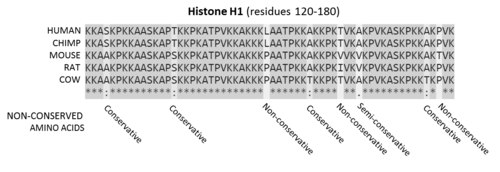
What type of evidence is shown in the image below?
Homologous strucutures
Fossils
Vestigial structures
DNA
What type of evidence are shown in the picture below.
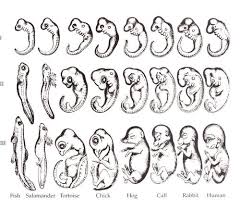
?
Vestigial structures
Fossils
Embryology
Homologous structures
According to this data, the unknown bacterial species is most closely related to:

Species I
Species II
Species III
Species IV
The diagram shows fossils in different rock layers. Which of these statements about the age of these fossils is most likely correct?
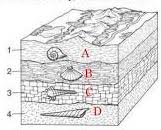
Fossil A and C are the same age
Fossil B is older than fossil C
Fossils A is older than fossil B
Fossil D is older than fossil C
When every organism of a species has died.
Natural Selection
Artificial Selection
Extinction
Evolution
What conclusions can be made based on this table shown?
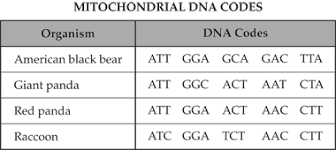
the American black bear and the giant panda are most closely related.
the red panda and the racoon are the most closely related.
the giant panda and the red panda are most closely related.
No conclusions can be drawn.