What is happening when speakers and instruments make sounds?
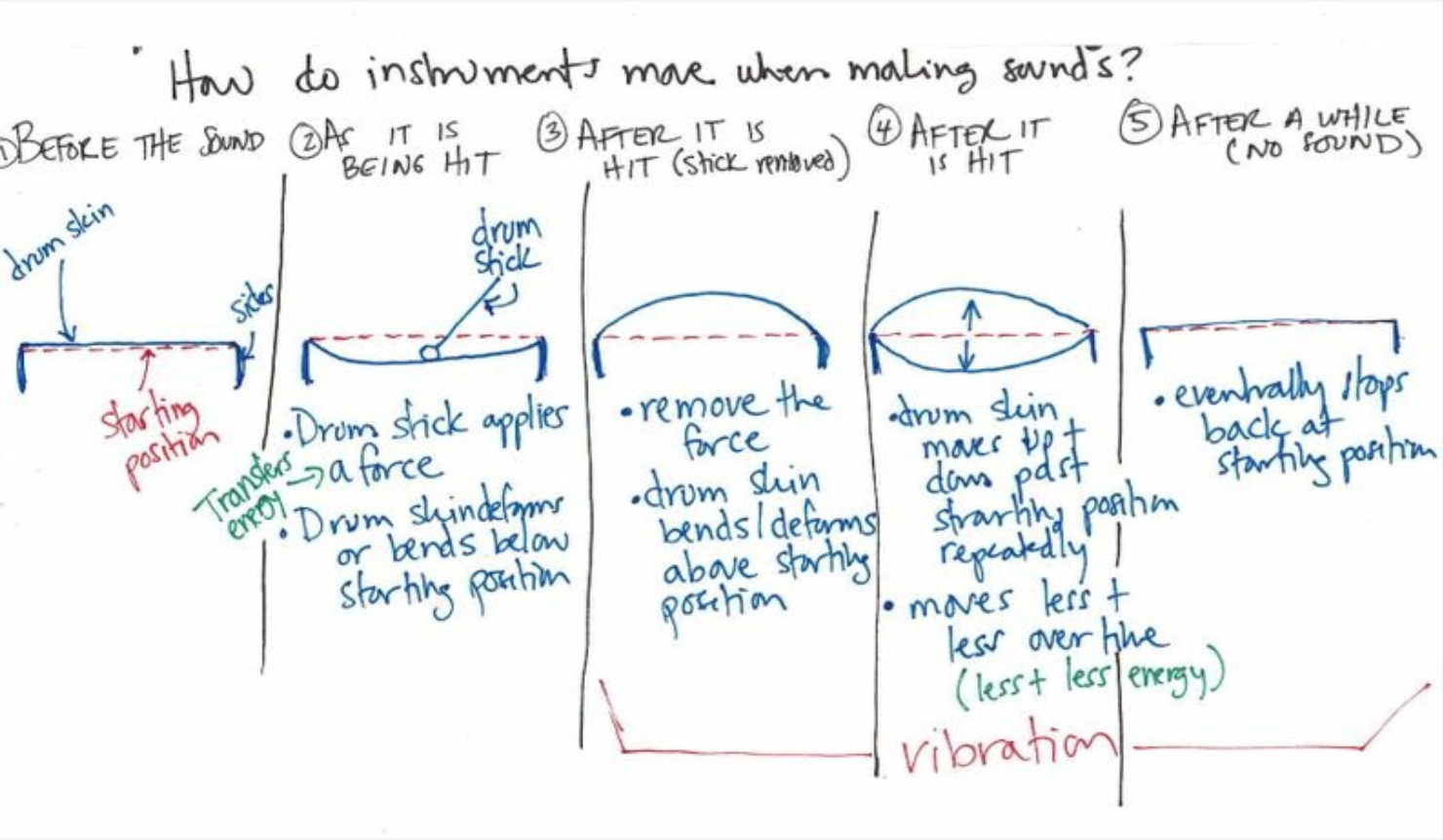
Here is an example like we drew in class about how the unobservable when a drum is played. It is almost like a stop-motion cartoon.
Part of a six lesson series from OpenEdSci materials.
Explore your instrument with your group members. Use the Instrument Data and Observations on google classroom to track your work. When you are finished, you can continue with this GoFormative. Please do not spend more than 30 minutes on this GoFormative.
What is happening when speakers and instruments make sounds?
Here is an example like we drew in class about how the unobservable when a drum is played. It is almost like a stop-motion cartoon.
Now draw your own model for a different instrument.
Use the template to show a cartoon like stop motion. You can always draw it on paper and then take a photo to insert here too.
What did we figure out from today's lesson? Think about the notes we took at the end of class.
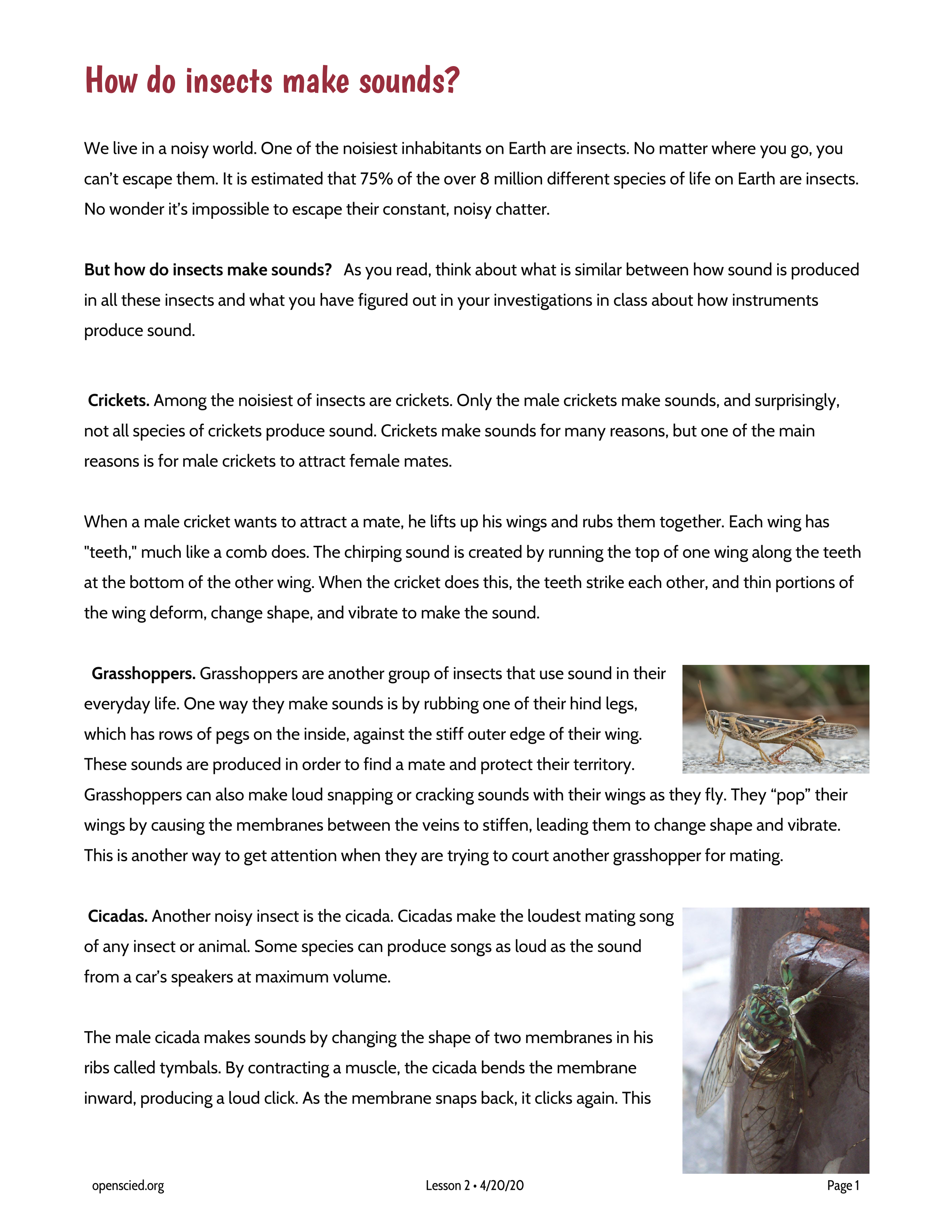
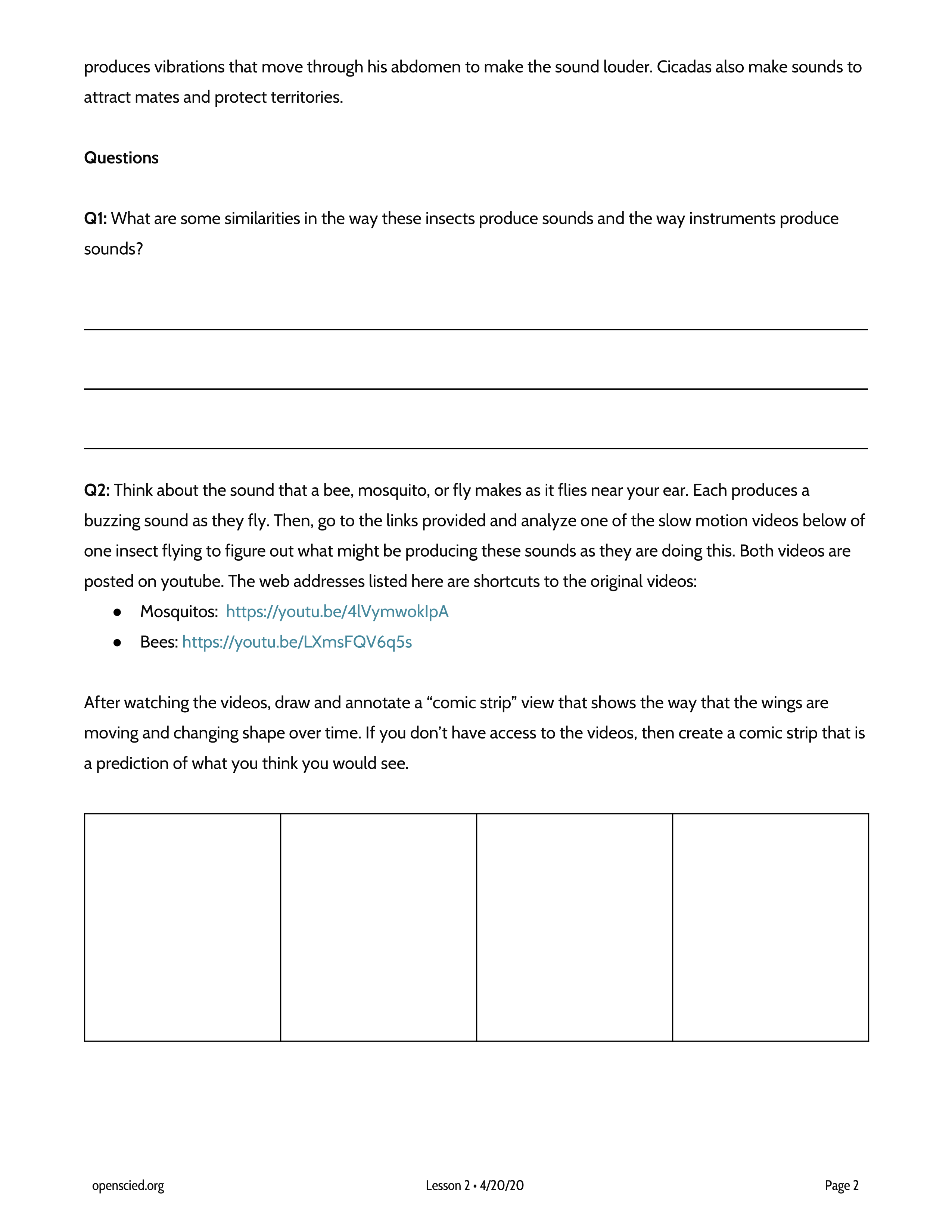
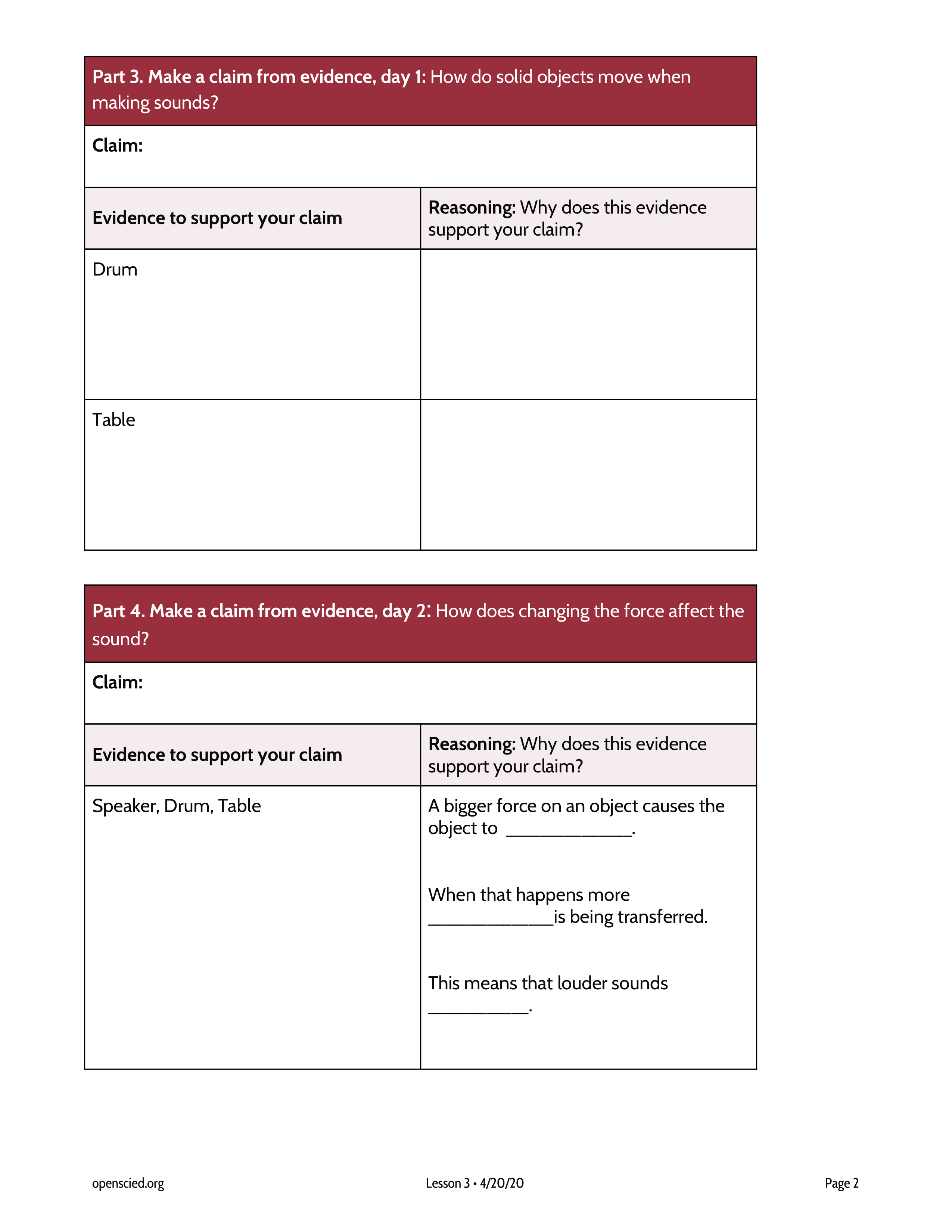
This teacher is walking through two demonstrations to compare them. The first is of the movement of the top of the drum. He shines a laser on it to see if the laser's reflection will move on the wall. He tries to document this.
The second time part of the lab he shines a laser onto a solid table to see if the solid table moves when it is played like an instrument. He tries to document this too.
Write ONE observation below and then answer the questions below.
Watch the following BBC video on sound (only the first 15 minutes). It is TOO COOL.
Ignore the ads - sorry!
What did you learn by watching it?
How do solid objects move when making sounds?
Which claim is the strongest?
Evidence from the drum
How does changing the force (how hard you bang on something) affect the sound?
What evidence from the video do you have?