Behind the Curtain: Lighting Design
star
star
star
star
star
Last updated almost 6 years ago
11 Nsɛmmisa
Hyɛ no nsow a efi ɔkyerɛwfo no hɔ:
Theatre or Drama Classes
1
1
1
1
1
1
1
1
1
1
1
Theatre or Drama Classes
Theatrical Lighting Basics
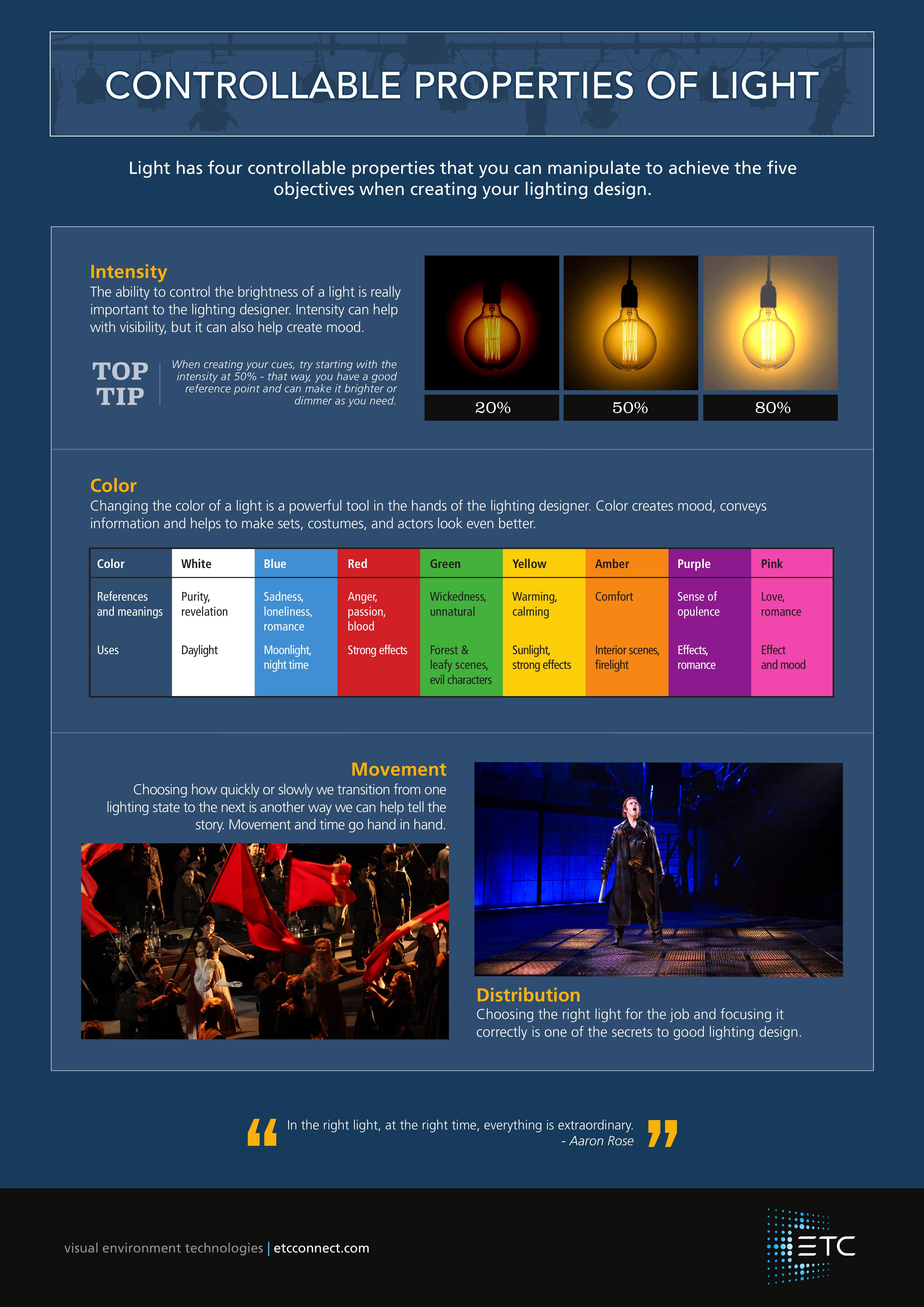
Read over all of the following information and study the images. This information will help you to answer the questions that follow and wil allow you to work creatively with the final lighting project!
Illumination – Primarily, the audience needs to be able to see the actors. This is often achieved with a ‘general wash’ – a lighting state (or picture, if you like) which covers the stage evenly. It can be broken up into a number of areas which make sense in the show.
Focus – lighting can help draw the audiences’ attention to an important part of the stage (and exclude less important areas)
Atmosphere & Emotion – The color of the lighting can convey the atmosphere of the scene (cold / warm)
Flow – A lighting change can punctuate the end of a scene (a sudden blackout, for example) or can make a scene change much smoother by avoiding complete blackouts instead enabling the next scene to start immediately in, for example, a tight spotlight until the stage is set, or shifting the focus away from the stage crew and onto the actors elsewhere on stage.
What are the four functions of stage lighting?
A lighting state that covers the stage in an evenly in light is called a _______________ _____________.
Changing the brightness of a light from dim to full power is controling the __________________.
According to the color chart, which two colors would you use to light a wicked witch who is plotting her revenge on a young girl who dropped a house on her sister? Why?
How does the lighting in this musical match the mood/feeling of a comic book?
Why is it also important to understand the practical design of the atmosphere you are creating? By this I mean consider what in the real world would provide light to occur in the world you are trying to create on stage?
Section 2: Experimenting with Direction of lighting!
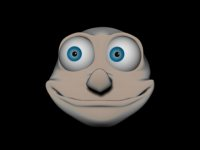
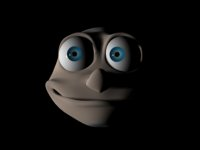
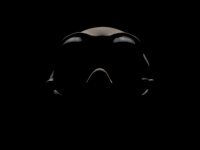
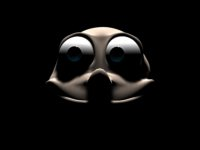
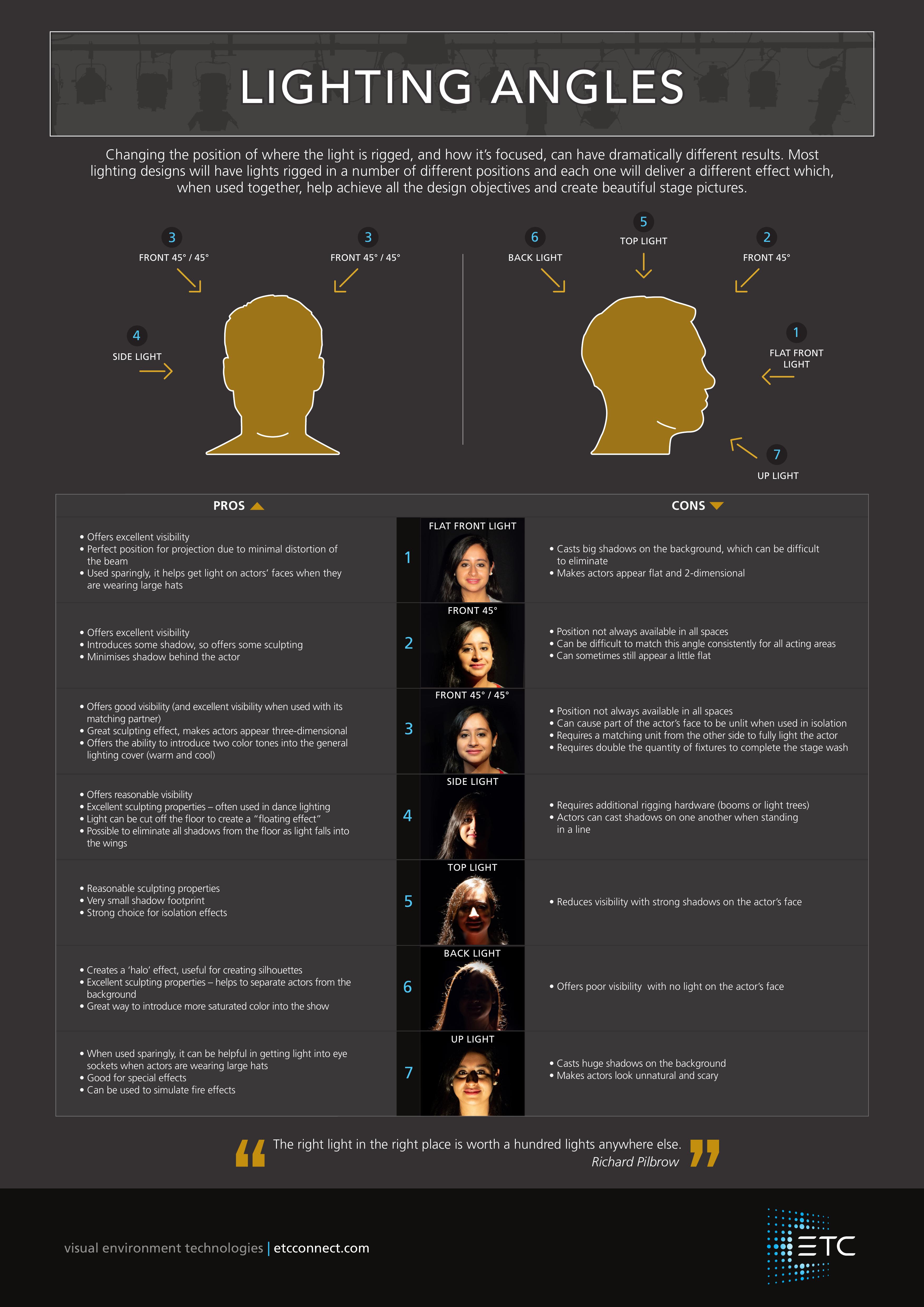
For the next series of images, respond in a short answer format. You will need to use a flashlight in a dark bathroom (with a mirror to see the effect) to recreate the images provided. It will help you to explain what effect the lighting position has.
Investigate the following:
What effects do side, top, back, and bottom lighting have? What do they tell us about character, atmosphere, and mood? How do they do this? How do the different ways someone is lit light change the assumptions we make about them? What power does lighting have?
Front light:
1. Use a light source to recreate the image and determine where this light is coming from in the space around the actor.
2. What effect does this type of lighting have? What mood does it create?
3. What would you use this type of lighting for in a show?
Side Light:
1. Use a light source to recreate the image and determine where this light is coming from in the space around the actor.
2. What effect does this type of lighting have? What mood does it create?
3. What would you use this type of lighting for in a show?
Back Light:
1. Use a light source to recreate the image and determine where this light is coming from in the space around the actor.
2. What effect does this type of lighting have? What mood does it create?
3. What would you use this type of lighting for in a show?
Down Light or Top Light:
1. Use a light source to recreate the image and determine where this light is coming from in the space around the actor.
2. What effect does this type of lighting have? What mood does it create?
3. What would you use this type of lighting for in a show?
Up Light:
1. Use a light source to recreate the image and determine where this light is coming from in the space around the actor.
2. What effect does this type of lighting have? What mood does it create?
3. What would you use this type of lighting for in a show?