Bilingual Plant Evolution Scavenger Hunt
star
star
star
star
star
Last updated about 3 years ago
6 Nsɛmmisa
1
1
1
1
1
1
Plants first evolved over 240 million years ago. They originated from Algae, a plant-like protist that has single celled species (e.g. Chlorella) and multi-cellular species (e.g. seaweeds). The first plants were quite primitive, they did not have seeds, wood, stems, or flowers. Those plant adaptations took millions of years to evolve! The fossil record of plant evolution has been well catalogued across the world, and you can get in on the action at home by finding the decendents of both primitive and more recently evolved groups plants!
Las primeras plantas evolucionaran hace más que 240 millones de años. Se orinaron de las algas, una protista que es como una planta. Las algas son unicelulares (como Chlorella) y multicelulares (como algas marinas). Las primeras plantas eran muy sencillas. No tenían semillas, madera, flores o tallos. Tomaron muchos millones de años para evolucionar. Fósiles de la evolución de plantas ha sido encontrado en muchas partes del mundo. Tu puedes participar en esta investigación de plantas por encontrar decendientes de plantas primitivas y más recientamente evolucionados.
Watch the below video for an introduction to the history of plants and how they evolved:
El video aquí enseña como las plantas se han evolucionado
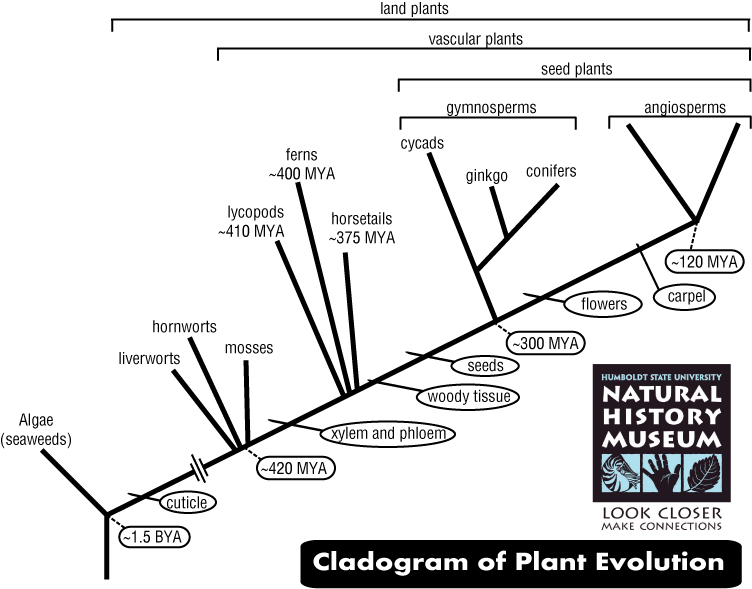
Plant Evolution Cladogram:
Look at the above image, this type of model is called a cladogram. At the bottom is the common ancestor of all plants (algae). Moving up from there, the branches represent different groups of plants that evolved over time. MYA means million years ago and BYA means billion years ago. The traits below the line are the adaptations that all species after that point on the line have. For example, everything after mosses has xylem and phloem (tubes that transport water, nutrients, and food).
Cladograma de la evolución de plantas: este modelo arriba se llama un cladograma. En la parte de abajo es el ancestro común de todas las plantas (alga). Las ramas representan grupos diferentes de plantas que han evolucionado sobre el tiempo. MYA significa hace millones de años y BYA significa hace billones de años. Los rasgos debajo de la línea son las adaptaciones que todos los especies después de este tiempo tienen. POr ejemplo, todos después de los musgos (mosses) tienen xilema (xylem en inglés) y floema (phloem en inglés) (tubos que transportan agua, nutrientes y la comida).
Let's practice reading the above cladogram. According to the cladogram, which groups of plants have seeds and which do not? Vamos a practicar como leer un cladograma. Según el cladograma, ¿cuáles grupos de plantas tienens semillas y cuáles no tienen?
angiosperms
ferns
mosses
conifers
algae
Seeds present (tienen semillas)
Seeds absent (no tienen semillas)
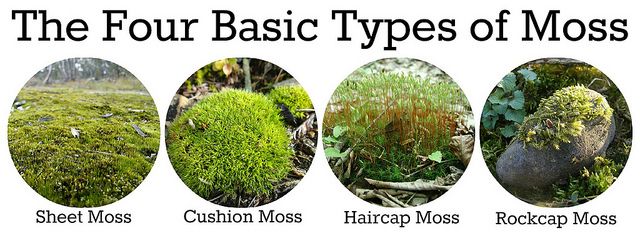
Mosses are one of oldest groups of plants, they evolved approximately 420 million years ago! They are also a very successful group of plants. Mosses are plentiful in Oregon. Take a look at the four main types of moss below.
Los musgos son las plantas más ancianas. Se evolucionaron hace aproximadamente 420 millones de años. También tienen mucho éxito en sobrevivir. Los musgos son abundantes en Oregon. Mira a los cuatro tipos principales de musgos abajo:
Go outside and look for an example of moss and take a photo. Moss can be found on trees, rocks, and soil. Post it here by clicking the picture icon on the whiteboard. Label your picture with which type of moss you think you found (see the above picture for the types).
Vas a ir a fuera (practicando aislamiento social y con el permiso de tus padres). Toma una foto de musgo. Se puede encontrar musgo en árboles, piedras, y la tierra. Aquí puedes poner tu foto. Haces "click" abajo para tomar la foto. Escribe que tipo de musgo piensas que encontraste.
Vascular plants, plants that have tubes to transport xylem and phloem evolved approximately 375 million years ago. Vascular tissues allowed plants to get taller and larger, as they consist of tubes that transport water and nutrients from the roots to the leaves (xylem) and sugars from the leaves to the roots for storage (phloem). The first vascular plant groups to evolve were ferns, horsetails, and lycopods.
Las plantas vasculares tienen tubos que transportan xilema y floema, evolucionaron hace aproximadamnete 375 millones de años. Los tejidos vasculares permiten que las plantas crezcan más alto y más grandes, y tienen tubos que transportan el agua y los nutrientes de las raíces a las hojas (xilema) y azúcares de las hojas hasta las raíces (floema). Este primer grupo de plantas vasculares eran helechos (ferns) , hequisetos (horsetails) y licopodios.
Take a picture of a fern, horsetail, or lycopod and load it below using the picture icon on the whiteboard. You are most likely to find a fern. Sword ferns are the most common in our area. When you check out the fern, look at the underside of a leaf. Take a picture of that! The dots contain spores (which are the reproductive cells, ferns do not have seeds!).
Toma una foto de un helecho, cola de caballo o licopodio y ponlo aquí abajo. A lo mejor vas a encontrar un helecho (fern) porque es lo más común donde vivimos. Cuando miras al helecho, mira atrás para ver las esporas (son las células reporductivas, a veces de color café. Los helechos no tienen semillas.)
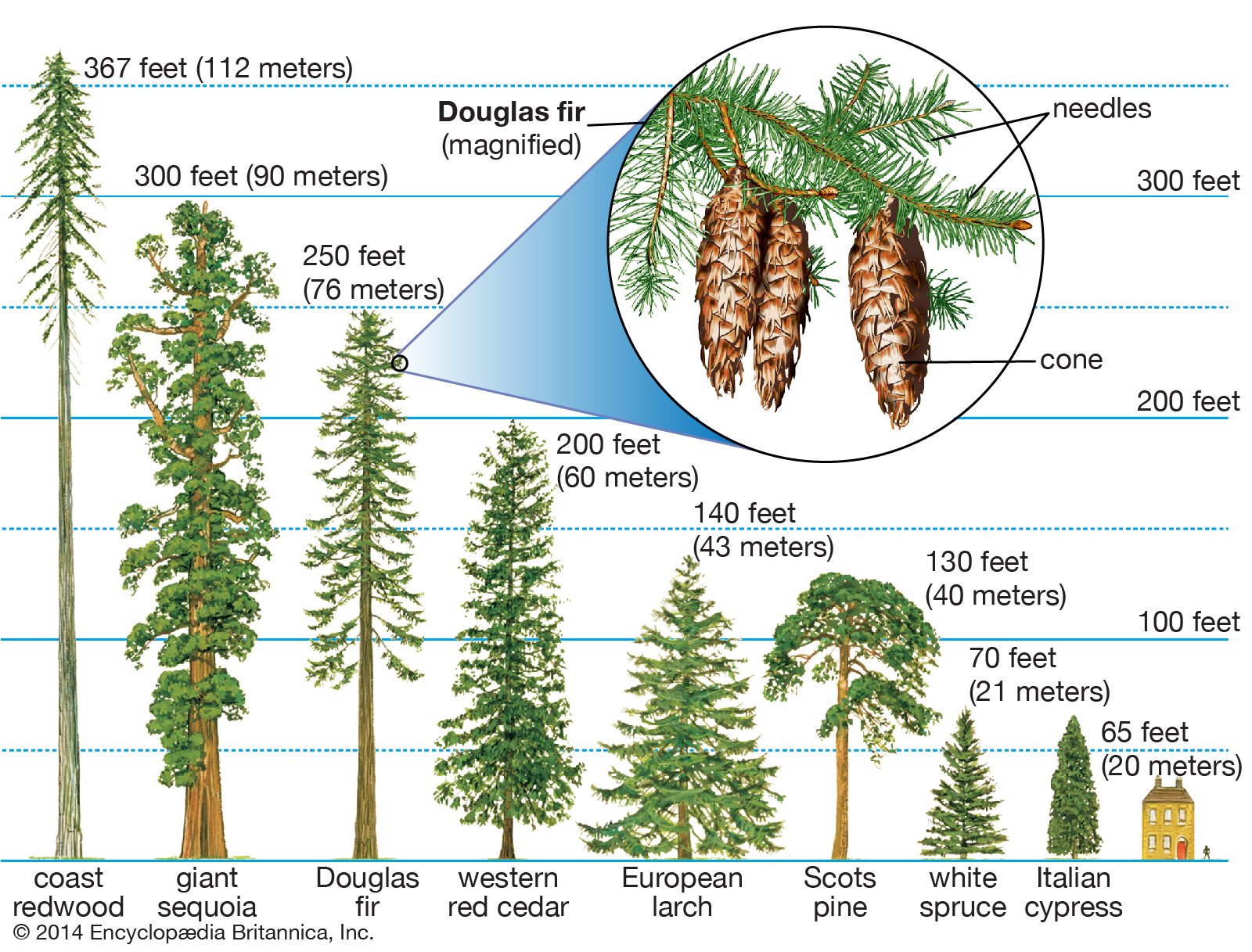
A new group of plants, gymnosperms, evolved next. They developed two new major adaptations, woody stems and seeds! The most plentiful type in Oregon are conifers, which have seed-containing cones. Examples in Oregon include pine , cedar, spruce, and fir trees. Ginkgo trees can also be found in Oregon. Below are several examples of conifers.
Otro grupo de plantas es gimnospermas, y esas plantas evolucionaron después. Tienen dos adaptaciones nuevas: tallos de madera y semillas. En Oregon, los coníferons tienen conos que tienen semillas adentro. Abajo vas a ver unos ejempos de coníferos.
Take a picture of gymnosperm, you will most likely find a conifer of some type (like a pine or cedar tree). Look for trees or shrubs with cones and needles. Load your photo below using the picture icon on the whiteboard. If you can get a closeup, label the needles, cones, and woody branches or trunk. Toma una foto de un gimnospermas. Su puedes hacerlo de cerca, escribe donde están las agujas (needles), conos, ramas y el tronco.
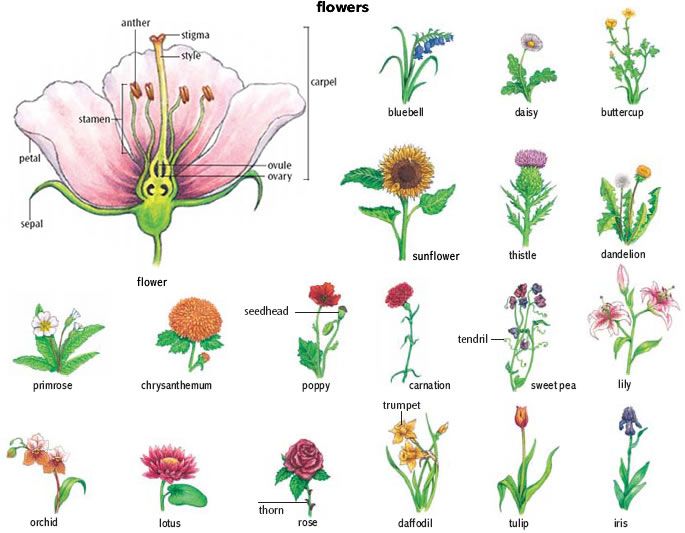
Angiosperms, or flowering plants, evolved most recently (approximately 120 million years ago). However, they are also the most diverse group of plants! This is because they have co-evolved with their pollinators (insects, birds, and mammals). The specificity of their pollinators caused reproductive isolation of different groups of a single species, ultimately causing the formation of new species over time. Many flowering plants are pollinated by just a single species of pollinator (such as a species of moth or a hummingbird). You should have no trouble finding flowering plants, and remember, they don't always have their flowers present. Flowering plants include flowering trees, grasses, shrubs, and the typical types flowers you find in garden stores. Here are some examples of flowering plants, and in the top left the parts of the flower are labeled:
Angiospermas, o plantas que florecientes (tienen flores) , son los que evolucionaron lo más reciente--hace apróximadamente 120 millones de años. Son un grupo muy diverso de plantas. Las angiospermas han co-evolucionados con sus polinizadoras (incectos, mamíferos y pájaros). Aquí hay unos ejemplos de plantas que tienen flores.
Take a picture of a flower close up and do your best to label the visible parts of the flower. See the above picture for the names of the parts. The anthers contain the pollen (which have sperm) and the carpel leads to the ovary (which contains the egg cell that will ultimately be surrounded by a seed once fertilized).
Toma una foto de una flor de cerca y escribe las partes visibles en la flor. Puedes usar los ejemplos de arriba para ayudarte. Las anteras (anthers) tiene el polén (lo que tienen el espermatozoide) y el carpelo (carpel) tiene el ovario (lo que tiene el óvulo, que va a estar cubierto por una semilla cuando está fertilizado).
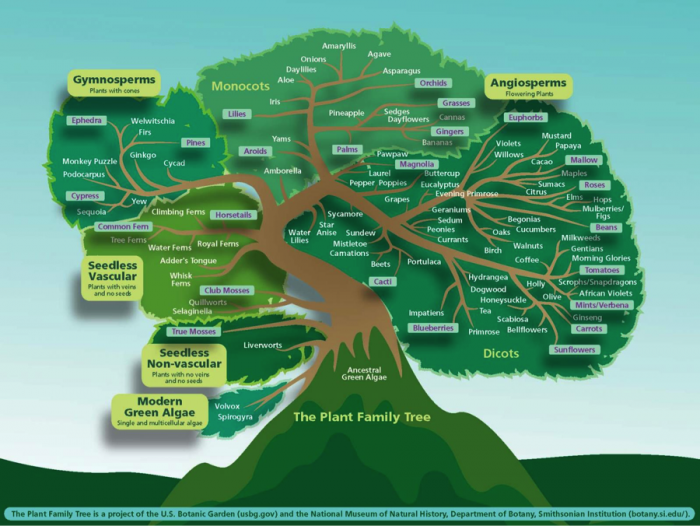
Check out the below image to learn more about the plant family tree. As you can see, the base of the tree (the common ancestor of all plants) is an ancestral green algae. I wonder how many species of plant you can find around your home and neighborhood?
There are about 391,000 species of vascular plants currently known to science, of which about 369,000 species (or 94 percent) are flowering plants, according to a report by the Royal Botanic Gardens, Kew, in the United Kingdom. Many more are yet to be discovered!
¿Cuántos tipos de plantas puedes encontrar cerca de tu casa y en tu barrio/vecindario (neighborhood)?
Based on the plant family tree above, put the plant groups in order of time they first evolved, from oldest at the top to most recent at the bottom.
Basado en el árbol de las plantas que está arriba, pon los grupos de planta en ordén de más anciano (arriba) y más recientes (abajo)
Angiosperms (flowering plants) plantas florecientes
Ferns helechos
Mosses musgos
Conifers coníferos