Drag each relation to the correct category. Click on an image to zoom in.
Drag each relation to the correct category. Click on an image to zoom in.
Function
Not a Function
Drag each relation to the correct category. Click on an image to zoom in.
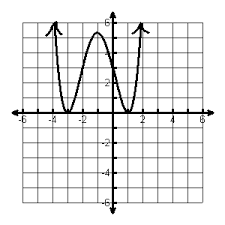
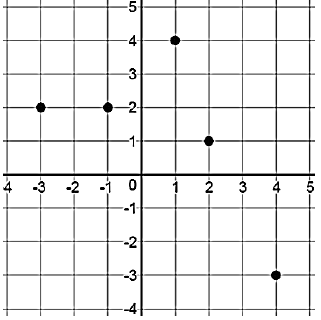

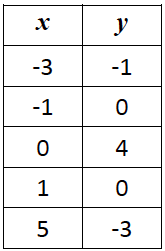
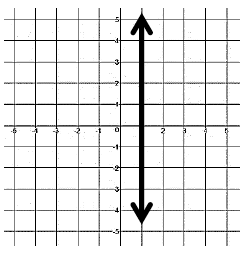
Function
Not a Function
Consider the set of ordered pairs. Which of the following ordered pairs could be added to the set so that the new set of ordered pairs represents a function?
{ (27, 231), (24, 16), (5, 21), (2, 3), (9, 21) }
Consider the relation {(-2, -3), (-1, 4), (0, 5), (1, 6)}.
Identify the domain of the relation.
Consider the relation {(-2, -3), (-1, 4), (0, 5), (1, 6)}.
Identify the range of the relation.
Find the domain and range of the given relation.
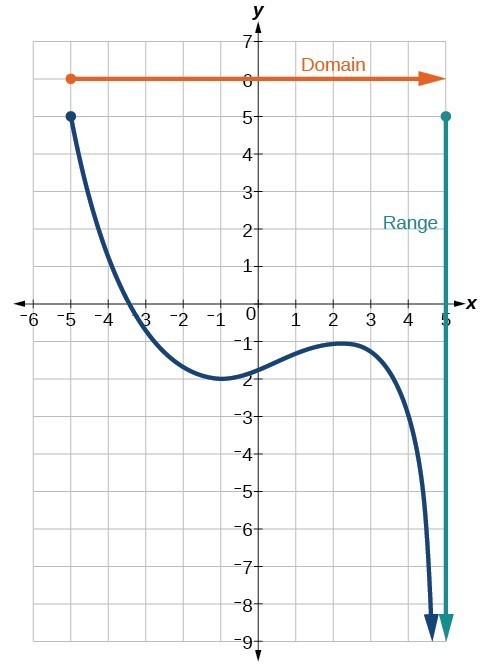
Find the domain and range of the given relation.
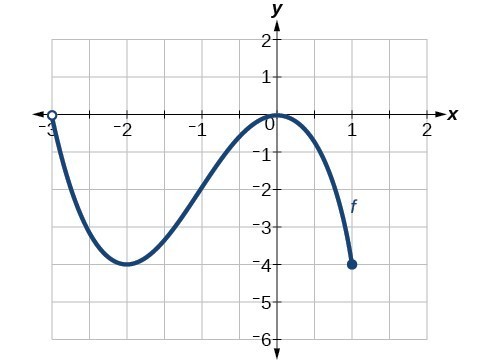
Evaluate the functions for the specified values. Drag each problem to its solution.
| Draggable item | arrow_right_alt | Corresponding Item |
|---|---|---|
| arrow_right_alt | -2 | |
| arrow_right_alt | 30 | |
| arrow_right_alt | -4 | |
| arrow_right_alt | 0 |
Find the average rate of change for each function over the specified interval. Drag each interval to the corresponding average rate of change.
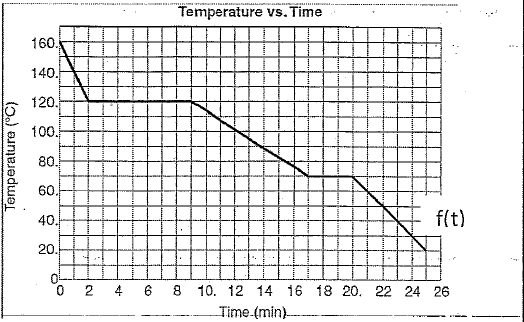
| Draggable item | arrow_right_alt | Corresponding Item |
|---|---|---|
t = 0 to t = 25 | arrow_right_alt | 0ºC/min |
t = 20 to t = 25 | arrow_right_alt | -5.6ºC/min |
t = 2 to t = 8 | arrow_right_alt | -20ºC/min |
t = 0 to t = 2 | arrow_right_alt | -10ºC/min |
This table shows the height of a child at different ages. Find the average rate of change in the height for the interval from 8 to 13 years.
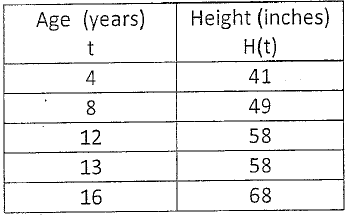
Find the average rate of change of each function over the specified interval.
| Draggable item | arrow_right_alt | Corresponding Item |
|---|---|---|
| arrow_right_alt | 1 | |
| arrow_right_alt | 4 | |
| arrow_right_alt | 3 | |
| arrow_right_alt | -4 |