Asemmisa {{asɛmmisaAhyɛnsode}}
1.
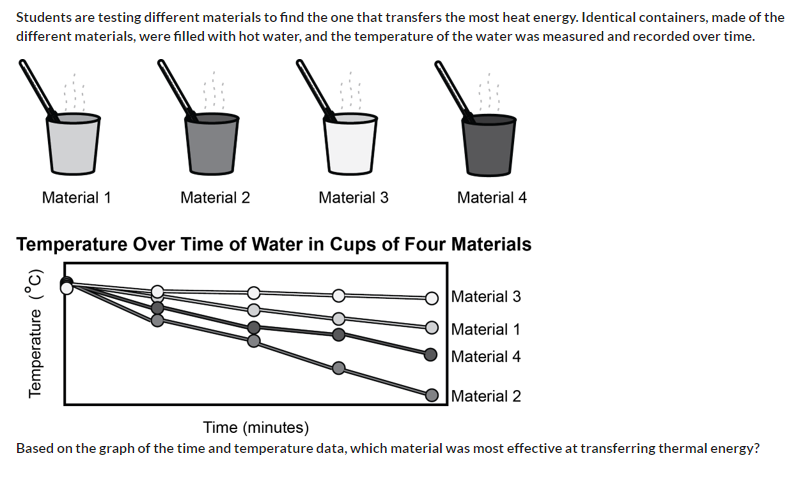
An ivestigation to determine which material can maximize heat energy transfer would mostlikely include which of the following?
When ice cubes melt in a glass of water, a current forms in which heat energy moves from particles with a higher temperature to particles with a ____________ temperature.
The relationship between the temperature and the total energy of a system depends on all of the following EXCEPT–
Convection currents move tectonic plates. Just below the lithosphere is a shallow layer of mantle called the asthenosphere. The partially molten rock in the asthenosphere flows slowly due to a process called convection. Tectonic plates of the lithosphere float on top of the asthenosphere, as they are less dense than the material of the asthenosphere.
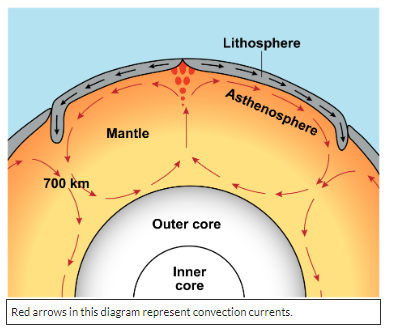
Convection is the process by which hot material rises and cooler material sinks. The molten material of the mantle found deep within Earth heats up and begins to rise toward the crust. As the material gets closer to the crust, it cools down in the asthenosphere, the uppermost layer of the mantle. As it cools, it sinks back toward the core. Eventually, the sinking material heats up and rises again. This produces circular movements called convection currents. Tectonic plates float on top of the asthenosphere as it flows. The asthenosphere is a part of the mantle that is not in the liquid state. The asthenosphere is solid, but it has plasticity. Plasticity is the condition of a solid that allows it to flow like plastic putty.
What is the circular movement through the mantle called?