Mathematical Representations
star
star
star
star
star
Last updated about 6 years ago
7 Nsɛmmisa
1
1
1
1
1




1
1
LESSON OBJECTIVES
Students will:
Demonstrate understanding that fractions can be represented in both numerical and visual representations
Use models to comprehend the different representations of the same fractions
MATHEMATICS STANDARDS
CCSS.MATH.CONTENT.4.NF.A.1
Explain why a fraction a/b is equivalent to a fraction (n × a)/(n × b) by using visual fraction models, with attention to how the number and size of the parts differ even though the two fractions themselves are the same size. Use this principle to recognize and generate equivalent fractions.
CCSS.MATH.CONTENT.4.NF.B.3.B
Decompose a fraction into a sum of fractions with the same denominator in more than one way, recording each decomposition by an equation. Justify decompositions, e.g., by using a visual fraction model. Examples: 3/8 = 1/8 + 1/8 + 1/8 ; 3/8 = 1/8 + 2/8 ; 2 1/8 = 1 + 1 + 1/8 = 8/8 + 8/8 + 1/8.
First Name
Last Name
List different representations for the fraction 3/7.
Why are visual representations important?
What is another representation for 1/2?
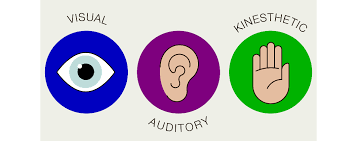
How can different representations help the different learning styles: visual, auditory, kinesthetic (hands-on)?
There is one correct way to solve a problem.