WWI Causes
star
star
star
star
star
Last updated over 4 years ago
10 Nsɛmmisa
1
SS.7.1a
1

1
1
1
1
1

1
1
1
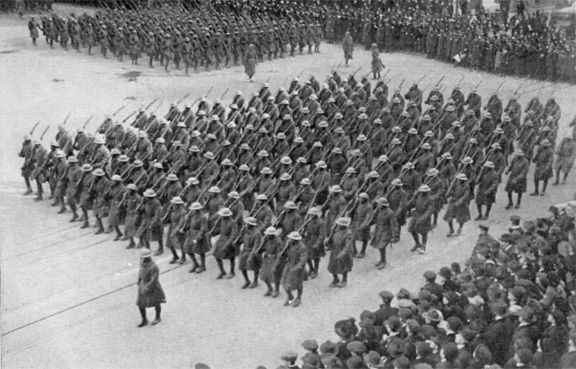
Militarism is the belief that a country should have a strong military capability and be prepared to use it aggressively to defend or promote its interests. Leading up to World War I, imperial countries in Europe were strong proponents of militarism. They spent more and more money on military technology, employing more troops, and training their soldiers. They found that to gain colonies it helped to be militarily superior to the people they colonized and the other industrialized countries they were competing with. As tensions in Europe increased leading up to 1914, European countries raised and prepared large armies, navies, and airforces to protect their homelands.
What is militarism?
What was a reason why countries wanted to be "militarily superior" to other countries?
Which country had the largest increase in military spending from 1900 (the slanted lines) to 1914 (the gray tiny dots)? (Hint: LOOK AT KEY to know which bar represents which year!)
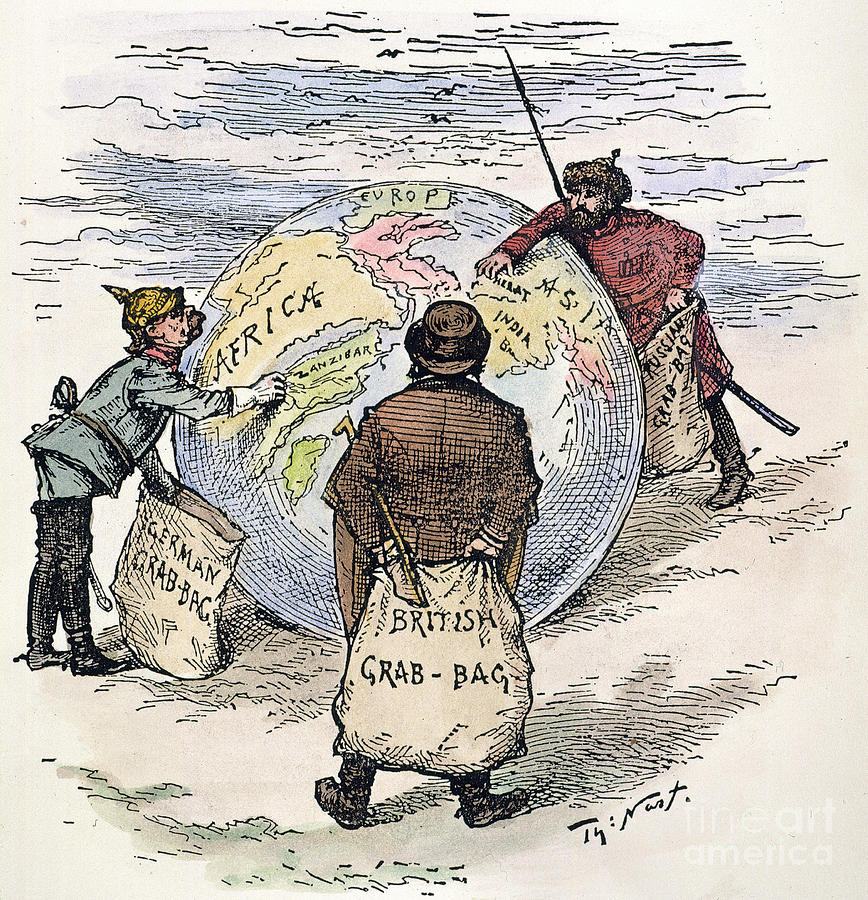
Imperialism is the idea of extending your country's rule by taking over foreign nations, often by military force. European countries competed with each other all over the world in the 1800s and early 1900s. They fought one another at sea and used treaty negotiations to claim colonies and spheres of influence in Africa and Asia. The search for raw materials to fuel industry and markets to buy goods in far-flung corners of the world led to increased tension in Europe.
Why did countries like Britain and France want to take over foreign nations and gain influence in places like Africa and China?
What do you see in the cartoon? (Select ALL that are true)
An alliance is an agreement between two or more countries to help each other. To increase their own nations’ security, European powers signed treaties with one another forming alliances. Alliances are agreements between nations stating that each country will assist the other if they are attacked. On the verge of World War I, there were two large alliances. One alliance was called the Triple Entente (French for alliance), sometimes called the “Allied Powers” and it consisted of the United Kingdom (Great Britain), France, and Russia. In addition, Russia was allied with some Slavic countries in the area of Europe known as the Balkans including Serbia. The other was called the Triple Alliance and is sometimes referred to as the “Central Powers” these included Germany, Austria-Hungary, and Italy. As the war continued, the Ottoman Empire joined this group and Italy left this alliance to join the other Triple Entente.
What is an alliance?
What countries were in the "Central Powers" (also known as Triple Alliance)?
According to the map, which of these statements are true (hint: 3 are true)
Nationalism means you only care about your country and its interests and nowhere else. In the 1700s and 1800s, nationalism brought revolution and unification to Europe. Groups of people with common languages, histories, and cultures like the Italians and Germans fought to create their own countries out of older empires. Leading up to the World War I, people in Europe started to define themselves based on their nation and in opposition to others. Pride in one’s country was at an all time high. Some ethnic groups that wanted to unify but were a part of the few empires left in Europe, like the Austrian Hungarian Empire and the Ottoman Empire, created tension by declaring their desire to rule themselves
What effects did Nationalism have in Europe (2 are correct):
EXIT TICKET: Select all the causes of World War I. (Hint: 5 are correct)