Analysis Lesson: 2020
star
star
star
star
star
Last updated about 6 years ago
16 Nsɛmmisa
2
5
2
5
0
This guided analytical lesson is meant to help you master close and critical reading of a literary text.
Your skill mastery:
(1) Articulate what it means to analyze and evaluate any subject matter.
(2) Closely and critically read a new literary passage with analytical annotations that demonstrate insight
(3) Write an interpretive analytical paragraph that correctly includes textual evidence
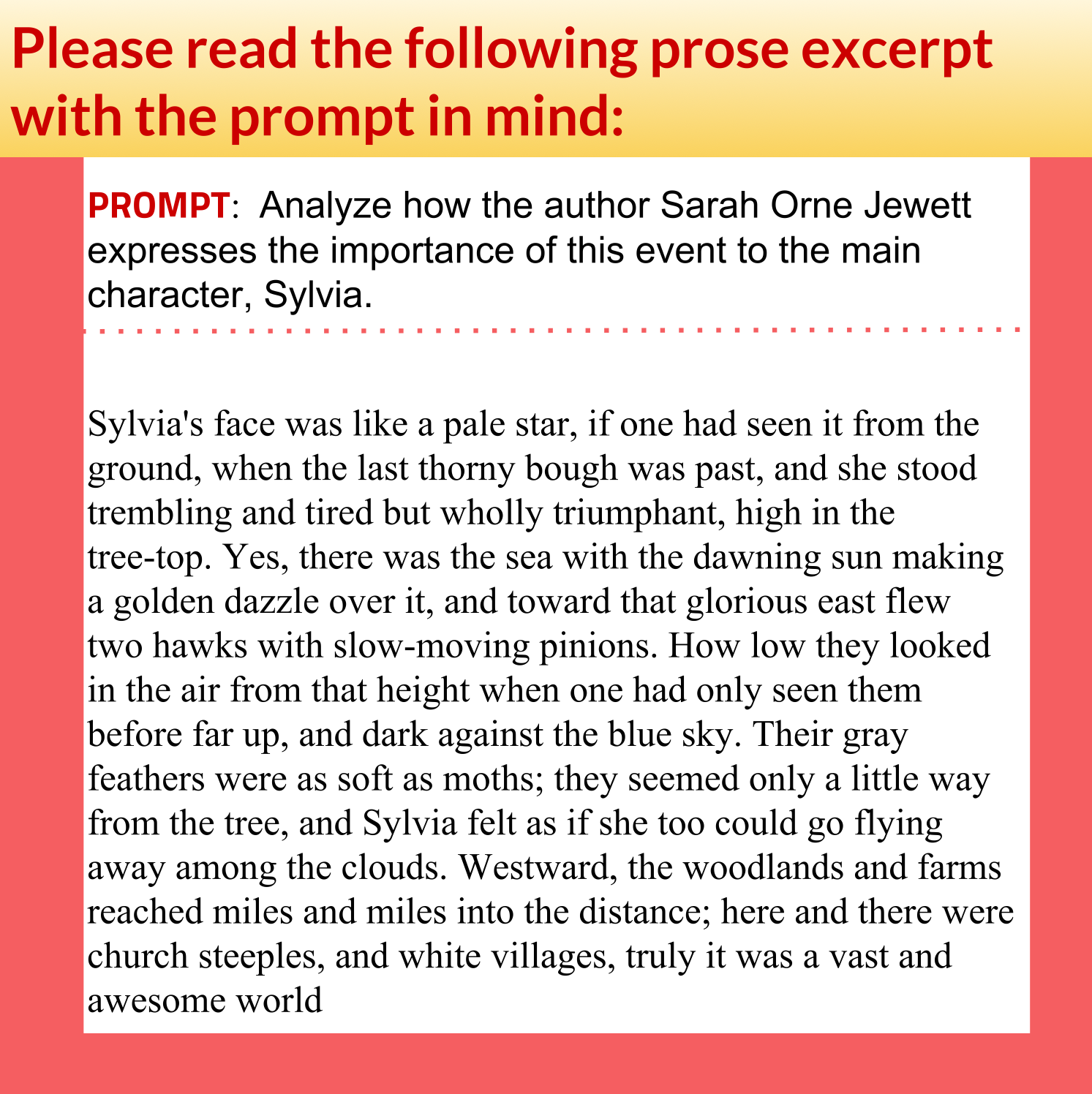
Write your "working thesis" for the Sarah Orne Jewett passage prompt--a ONE sentence thesis.
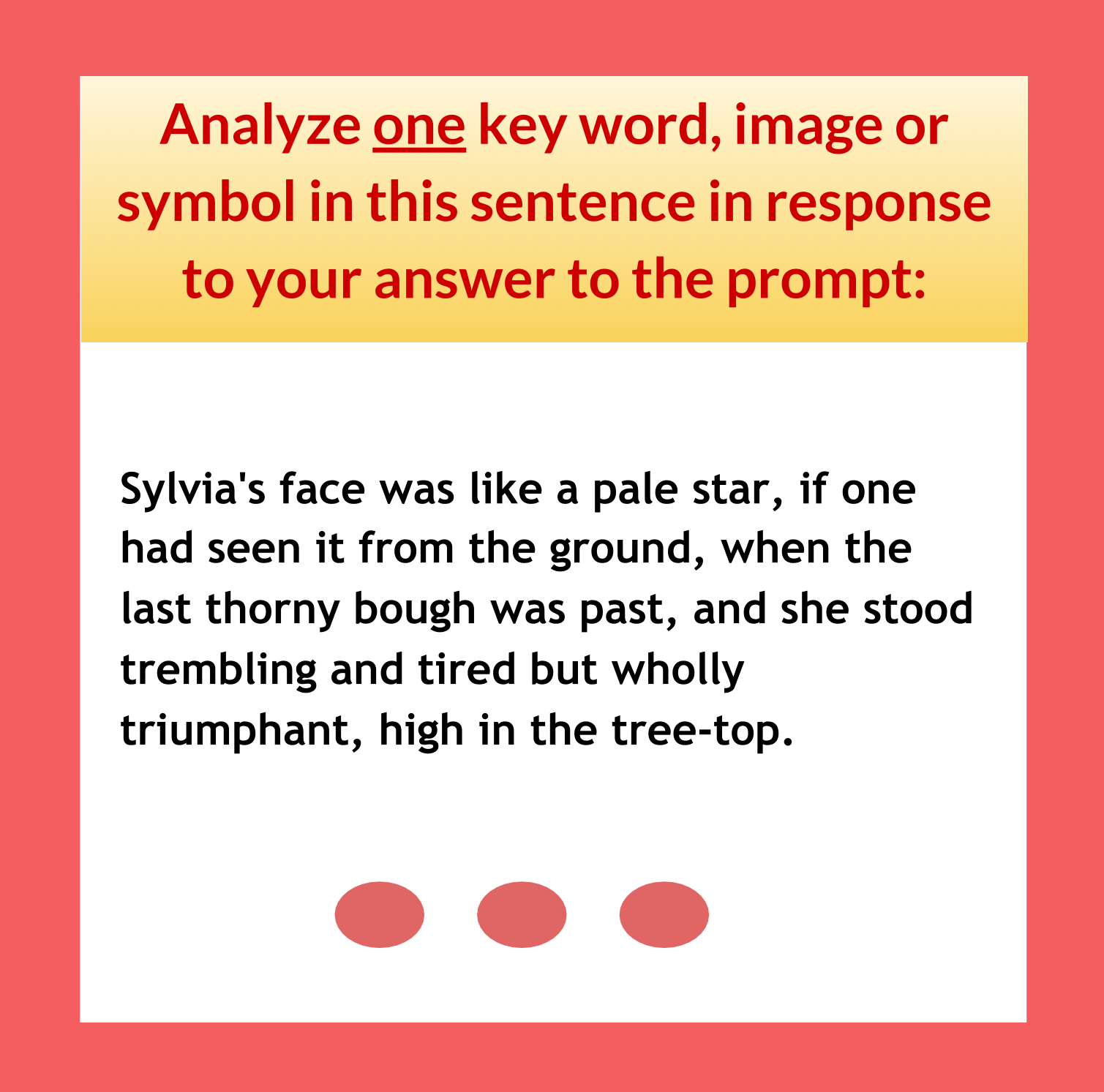
You may analyze a pair of words if they have to stay together contextually. Please write your analysis here:
Please sign in with your LCPS Student ID account and watch the instructive "Analysis Test Remediation" EdPuzzle video and complete the questions and writing requests. Your goal is to learn how to correctly and more astutely analyze a text by watching me analyze and by listening to me explain why my analysis is important to my interpretive answer to the prompt (evaluation). In case the link doesn't work: (https://edpuzzle.com/media/5cba45d3f54d98409a85bb5a). When you finish the video, return here to Part 3.
Look at your Analysis Test response. Is your first sentence your thesis, your overall answer to the prompt? If so, write it below, or revise it and then write it below.
If you did not begin your written response with a thesis, please write one now that responds to your Analysis Test prompt.


Choose one analytical response to self-assess, and show your work on the white board.
Use the questions to guide your self-reflection and self-assessment.
Choose a second analytical response to self-assess, and show your work on the white board.
Use the questions to guide your self-reflection and self-assessment.
Choose a third analytical response to self-assess, and show your work on the white board.
Use the questions to guide your self-reflection and self-assessment.

What does it mean to analyze?
Are you ready to demonstrate correct and insightful analysis of a text by taking a new test with a new passage?
So, list, draw, sketch or diagram, the basic situation of this excerpt: setting, speaker/narrator, character(s), and conflict(s).
Please analyze how the title and first and last sentences work together to help you more accurately and insightfully respond to the prompt.
If you included these elements in your test response, please write it here then analyze.
Choose two options from #6's list that you did not analyze or write about in your test response.
Analyze each choice and let your analysis of the words, images, or symbols reveal nuances that you didn't notice before. If your new analysis reveals that you need to revise your thesis in response to the test prompt, please do so here.
The reader is supposed to be more astute than fictional characters, which is why closely and critically reading the text is a required literacy skill. No one realized the irony because of fast or singular reading, causing a literal understanding of the text.
Closely and critically read this paragraph again and analyze why Munro would use dramatic irony in this smaller contrasting second paragraph.
How does this new analysis of dramatic irony change your original tested understanding of this excerpt and of your written response to the prompt?
What did you first understand or write about what Lonnie was watching?
The narrator assumes, and so readers often agree with her, that Lonnie is watching and judging her mother, but the sentence is open-ended.
Make a list of all of the possible observations that Lonnie could be making by sitting on the couch watching and explain your reasoning (your list shouldn't be all literal observation).
Make note of the observations that you included on your test and include your original reasoning.
What could the physical descriptions of the narrator's mother symbolize? Think of as many answers as you can and analyze how these symbols could add further insight into this passage.
Make a note next to any symbols that you originally included on your test and explain how you analyzed it.
Too many students take this excerpt in a literal and straightforward way instead of critically reading (questioning) and analyzing the words, images, and symbolism to understand the nuances of the text.
Examine your Test Analysis for any commentary or analysis on any of the following (check all that apply):

