Log in
Sign up for FREE
arrow_back
Library

Geometry 4-5 Complete Lesson: Isosceles and Equilateral Triangles

star
star
star
star
star
Last updated almost 4 years ago
31 questions
Note from the author:
A complete formative lesson with embedded slideshow, mini lecture screencasts, checks for understanding, practice items, mixed review, and reflection. I create these assignments to supplement each lesson of Pearson's Common Core Edition Algebra 1, Algebra 2, and Geometry courses. See also mathquest.net and twitter.com/mathquestEDU.
20
10
10
10
5
10
10
10
Question 1
1.

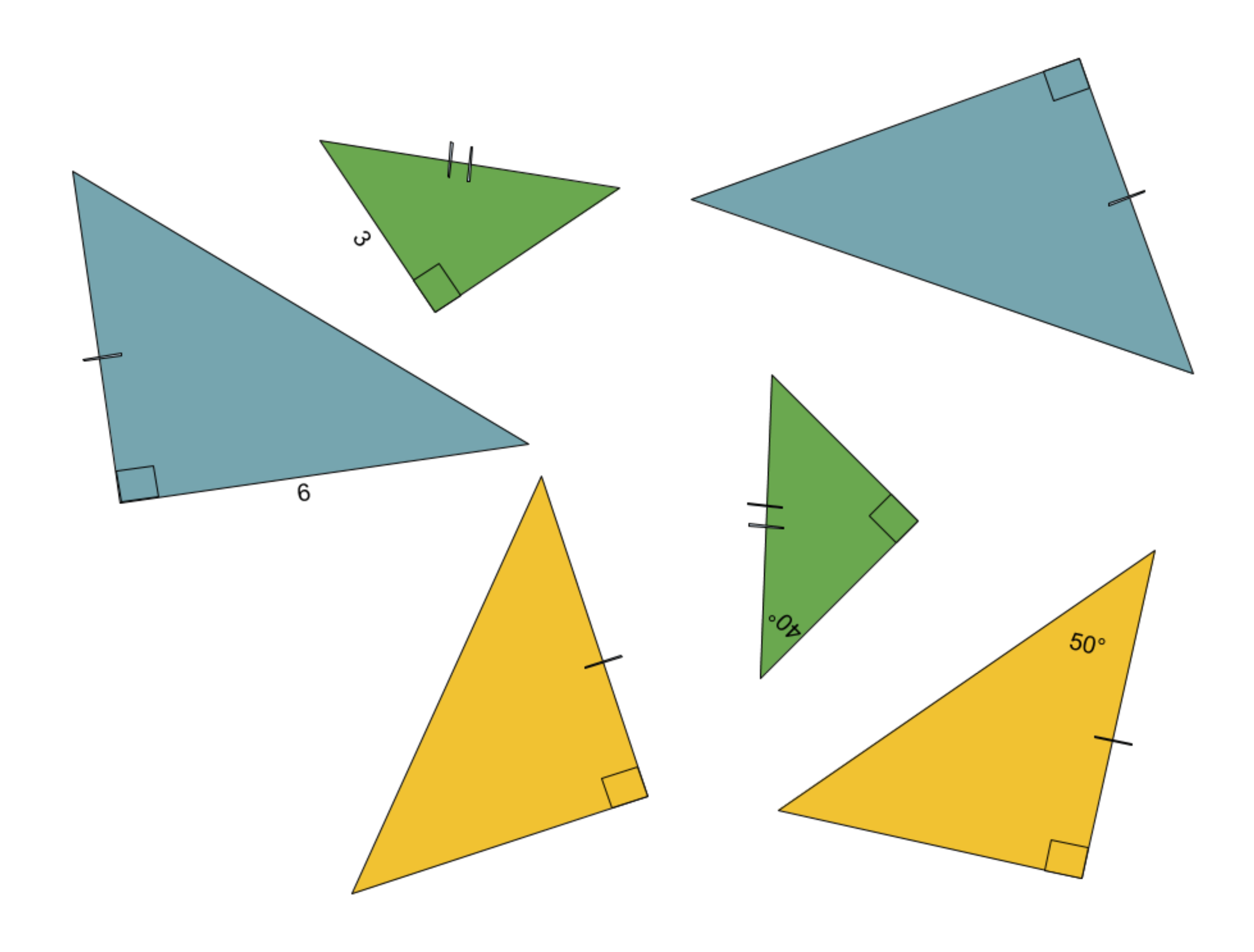
Visit this URL to create a copy of the Google Drawing and complete the item that follows: https://docs.google.com/drawings/d/15TaBfWflkEageasFgoi31Yb9Ql_t1rssKR5yFQhGa5Q/copy

Solve It! The triangles of the same color in the Google Drawing you copied above are congruent. Complete the following steps.

1. Arrange the triangles to form one large triangle using the Google Drawings to drag, flip, and rotate individual triangles, but do not resize them.
2. Take a screenshot of your final triangle and upload the image to the canvas.

Question 2
2.

Solve It! Classify the large triangle you created in the item above by its sides.

Question 3
3.

Solve It! Which of these measurements represent interior angles in the large triangle you created?
Select all that apply.

5
Question 4
4.

Take Note: Describe the vertex angle of an isosceles triangle. You may also illustrate your description on the canvas.

5
5
5
10
10
5
Question 10
10.

Problem 1 Got It? Is ∠WVS congruent to ∠S ?

5
5
10
Question 13
13.

Take Note: Summarize Theorem 4-5. You may use the canvas to help illustrate your description.

10
Question 14
14.

Problem 2 Got It?

10
Question 15
15.

Take Note: Define corollary.

10
Question 16
16.

Take Note: Summarize The Corollary to Theorem 4-3. You may use the canvas to help illustrate your description.

10
10
Question 18
18.

Problem 3 Got It?

10
Question 19
19.
10
Question 20
20.
10
Question 21
21.
10
Question 22
22.
10
Question 23
23.
Question 24
24.

Reasoning: What is the relationship between sides and angles for each type of triangle?

a. isosceles
b. equilateral

10
Question 25
25.

Error Analysis: Claudia drew an isosceles triangle. She asked Sue to mark it. Explain why the marking of the diagram is incorrect.

Question 26
26.

Review Lesson 2-1: Find the next two terms of the sequence.

10
10
Question 29
29.

Vocabulary Review: Respond to each item on the right with the correct item fron the left.

  • 1
  • 2
  • 3
  • acute
  • obtuse
  • right
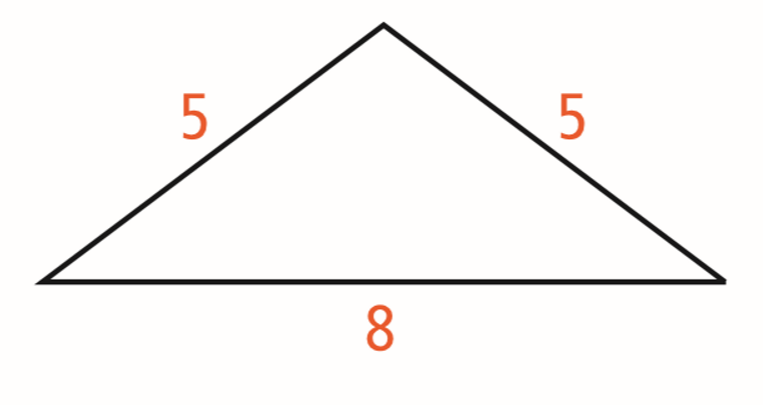
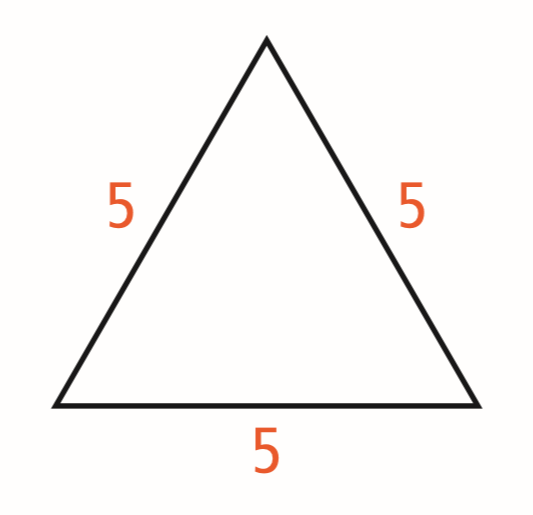
  • An equilateral triangle has __?__ congruent sides.
  • The angles of an equilateral triangle are __?__.
  • This is an example of an equilateral triangle.
Question 30
30.

Use Your Vocabulary: Classify each of the triangles.

Triangles may be placed in more than one category.

  • △A
  • △B
  • △C
  • △D
  • △E
  • Equilateral
  • Isosceles
  • Right
Question 31
31.

Reflection: Math Success

Question 5
5.

Take Note: Describe the base angles of an isosceles triangle. You may also illustrate your description on the canvas.

Question 6
6.

Take Note: Describe the legs of an isosceles triangle. You may also illustrate your description on the canvas.

Question 7
7.

Take Note: Describe the base of an isosceles triangle. You may also illustrate your description on the canvas.

Question 8
8.

Take Note: Summarize The Isosceles Triangle Theorem. You may use the canvas to help illustrate your description.

Question 9
9.

Take Note: Summarize The Converse of the Isosceles Triangle Theorem. You may use the canvas to help illustrate your description.

Question 11
11.

Problem 1 Got It? Is segment TR congruent to segment TS ?

Question 12
12.

Problem 1 Got It? Reasoning: Can you conclude that △RUV is isosceles?

Question 17
17.

Take Note: Summarize The Corollary to Theorem 4-4. You may use the canvas to help illustrate your description.

Question 27
27.

Review Lesson 4-2: Can you conclude that the two triangles are congruent? Explain.

Question 28
28.

Review Lesson 4-2: Can you conclude that the two triangles are congruent? Explain