Geometry 1-1 Complete Lesson: Nets and Drawings for Visualizing Geometry
star
star
star
star
star
Last updated over 4 years ago
20 Nsɛmmisa

10
G.CO.1
10
G.CO.1
10
G.CO.1
10
G.CO.1


10
G.CO.1
10
G.CO.1
10
G.CO.1

10
G.CO.1
10
G.CO.1

5
5
10

10

10
10
1
Solve It! When you shine a flashlight on an object, you can see a shadow on the opposite wall. What shape would you expect the shadows in the diagram to have?
Draw those shadows on the canvas using contrasting colors.

Exploration: Before viewing the video below, consider this net. What three-dimensial object's shape will it most closely resemble?

Take Note: Define net (as it pertains to this lesson).

Problem 1 Got It?
Problem 2 Got It? Complete the items on the canvas.
You may also complete your work on paper or on a whiteboard and upload a clear picture (or pictures) of it to the canvas.

Take Note: Define isometric drawing. Also, create an isometric drawing of a box on the canvas.
You may also complete your work on paper or on a whiteboard and upload a clear picture of it to the canvas.
Problem 3 Got It? Complete the items on the canvas.
You may also complete your work on paper or on a whiteboard and upload a clear picture of it to the canvas.
Problem 4 Got It? Complete the items on the canvas.
You may also complete your work on paper or on a whiteboard and upload a clear picture of it to the canvas.
What is the net for the figure below? Label the net with its dimensions.
You may also complete your work on paper or on a whiteboard and upload a clear picture of it to the canvas.
What is an isometric drawing of the cube structure?
You may also complete your work on paper or on a whiteboard and upload a clear picture of it to the canvas.
What is the orthographic drawing of the isometric drawing below? Assume that there are no hidden cubes.
You may also complete your work on paper or on a whiteboard and upload a clear picture of it to the canvas.
Classify each drawing as isometric, orthographic, a net, or none.
You may need to zoom out to see all of the items. You can also place each item from the left column by selecting it (click it) then selecting (clicking on) the category for it.


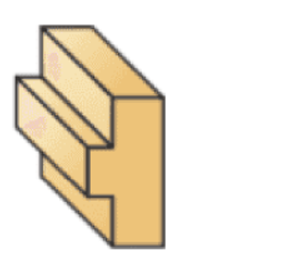

Isometric
Orthographic
A net
None
Compare and Contrast: What are the differences and similarities between an isometric drawing and an orthographic drawing? You may use the canvas to help illustrate your response.
Arithmetic Review: Find the sum. Enter only a number in simplest form.
Arithmetic Review: Find the difference. Enter only a number in simplest form.
Get Ready for 1-2: Categorize each pair of numbers on the left based on its greatest common factor (GCF).
3 and 6
7 and 11
12 and 15
8 and 12
GCF: 1
GCF: 2
GCF: 3
GCF: 4
Vocabulary Review: Categorize each figure on the left as two-dimensional or three-dimensional.


Two-dimensional
Three-dimensional
Use Your Vocabulary: Drag an item from the left to correctly complete each sentence on the right.
curved
triangle
is
straight
three
is not
rectangle
Two
Three
two
A polygon is formed by __?__ or more straight sides.
A circle __?__ a polygon.
A __?__ is a polygon with three sides.
__?__ sides of a polygon meet at the same point.
Use Your Vocabulary: Which of the following are NOT polygons? Select all that apply.
Reflection: Math Success