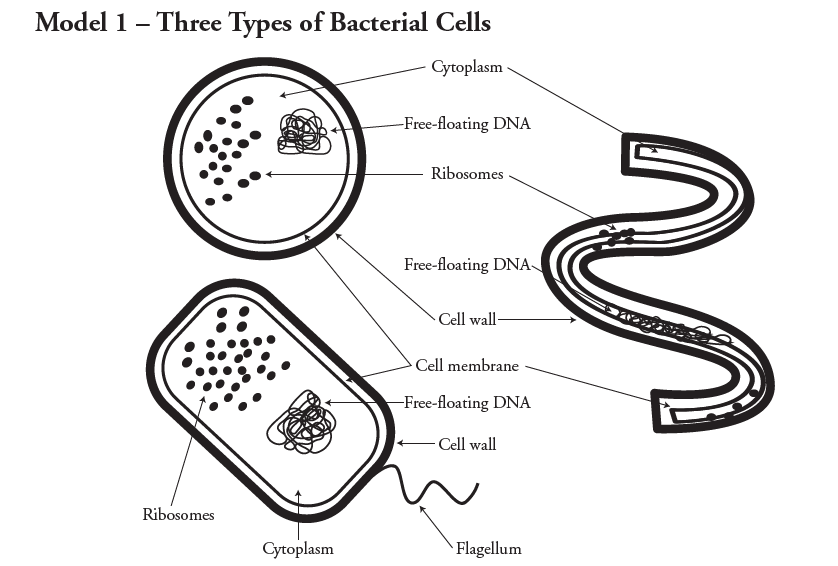
What is represented by the small dots found in each of the bacteria cells?

What is represented by the small dots found in each of the bacteria cells?
worksheet comparing prokaryotes and eukaryotes
What is represented by the small dots found in each of the bacteria cells?
How is the DNA described in bacterial cells?
The picture of the bacteria below has a tail-like structure. What is this structure called?
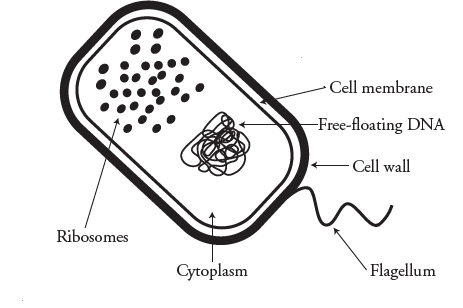
What might be the purpose of this the flagellum (the tail-like structure)?

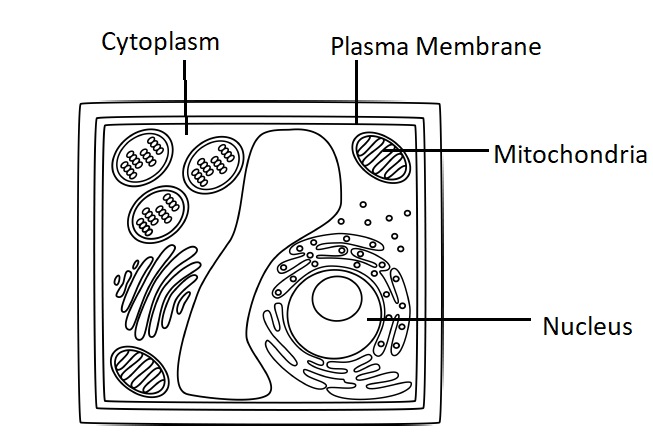
State two structures that are present in plant cells and not animal cells.

Muscle cells are important to motion in the body. They form muscle tissue which contracts to move substances within the body or to help the body move in the environment. Why might muscle cells have more mitochondria than other cells.
A student makes the following statement: "
"Plant cells don't need mitochondria. They have organelles that help them make their own food and so they do not need mitochondria"
Is this a true statement?
A cell from an organism has a nucleus, mitochondria, a cell wall, and chloroplast. The organism is most likely classified as which of the following?
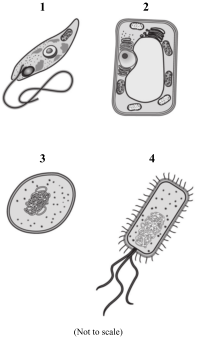
Each of the illustrations shows either a prokaryotic cell or a eukaryotic cell. Each cell is numbered. Which two cells should be classified as prokaryotic cells?
Match the organelle with the analogy
Is like a solar panel because it converts sunlight into energy
Match the organelle with the analogy
Is like a battery because it creates power (ATP) for the cell
Match the organelle with the analogy
Is like Ms. Owens because it controls the classroom activities
Match the organelle with the analogy
Is like the classroom door because it controls what can enter and exit the cell
Match the organelle with the analogy
Is like a trash can because it recycles waste
Match the organelle with the analogy
Is like a locker because it stores things for students
What is the function of ribosomes?
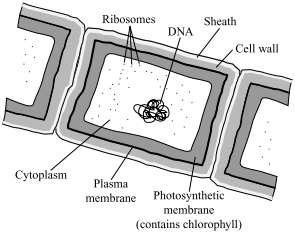
Cyanobacteria are organisms commonly found in streams and ponds as chains of cells. A portion of a chain of cyanobacteria cells is shown in the diagram below. The major parts of a cyanobacteria cell are labeled.
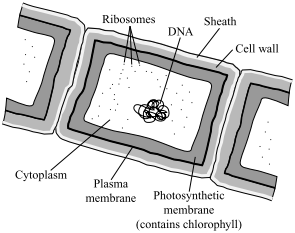
Is cyanobacteria a prokaryotic or eukaryotic cell? How can you tell by looking at the diagram?
Identify one structural characteristic of a cyanobacteria cell that is similar to a characteristic of a plant cell.
Look at the picture of the plant cell. Identify two structures that are not labeled in the plant cell AND describe the functions of the two organelles you identified.