Cellular Respiration
star
star
star
star
star
Last updated over 2 years ago
26 Nsɛmmisa
1
1
1
In an organism, the energy stored in ATP is used for what process? HINT, it is in the paragraph.

Which reactant contains the energy needed for cellular respiration to occur?
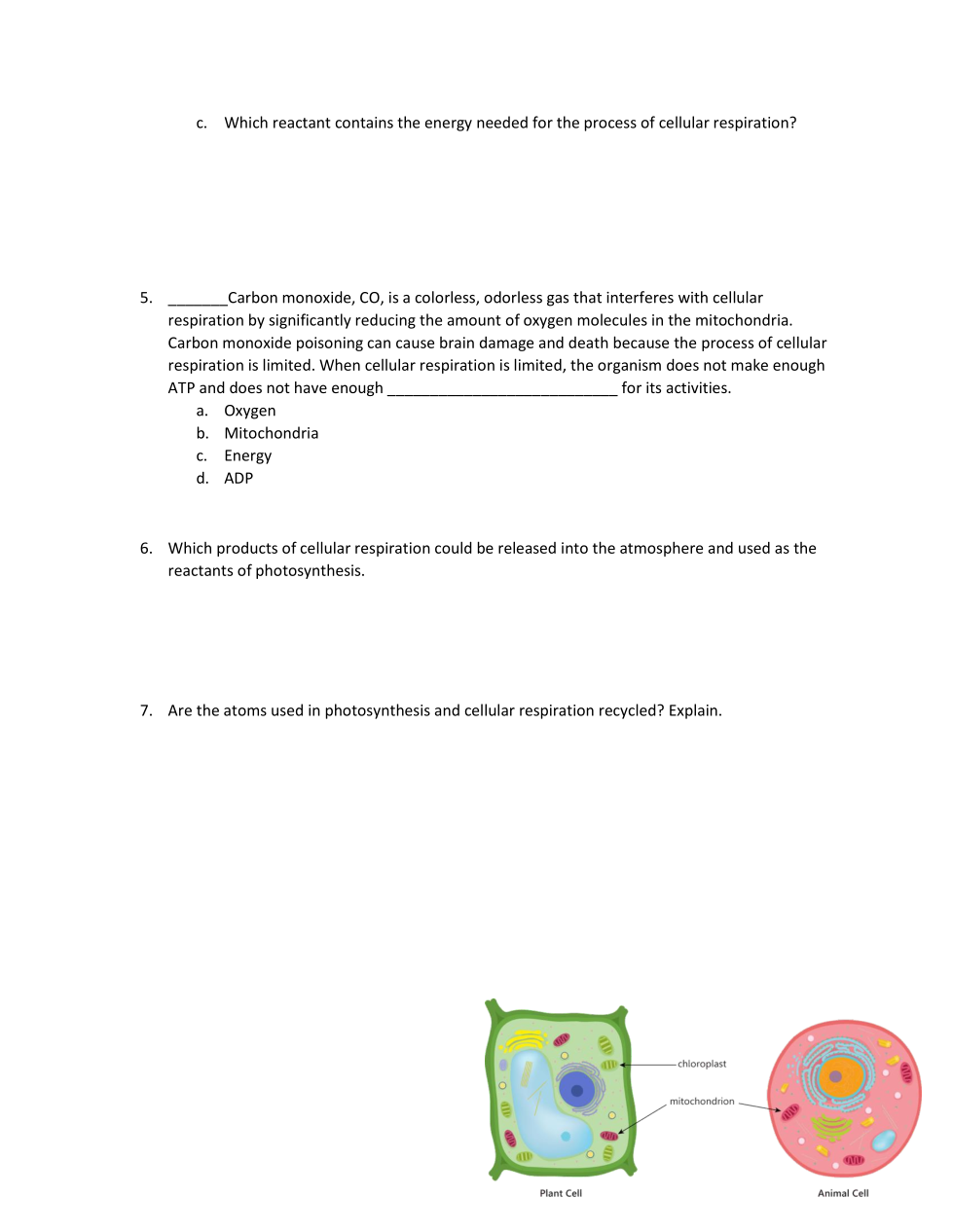
Carbon monoxide, CO, a colorless odorless gas that interferes with cellular respiration by significantly reducing the amount of oxygen molecules in the mitochondria. Carbon monoxide poisoning can cause brain damage and death because the process of cellular respiration is limited. When cellular respiration is limited, the organism does not make enough ATP and does not have enough for its activites
Which products of cellular respiration could be released into the atmosphere and used as the reactants of photosynthesis?
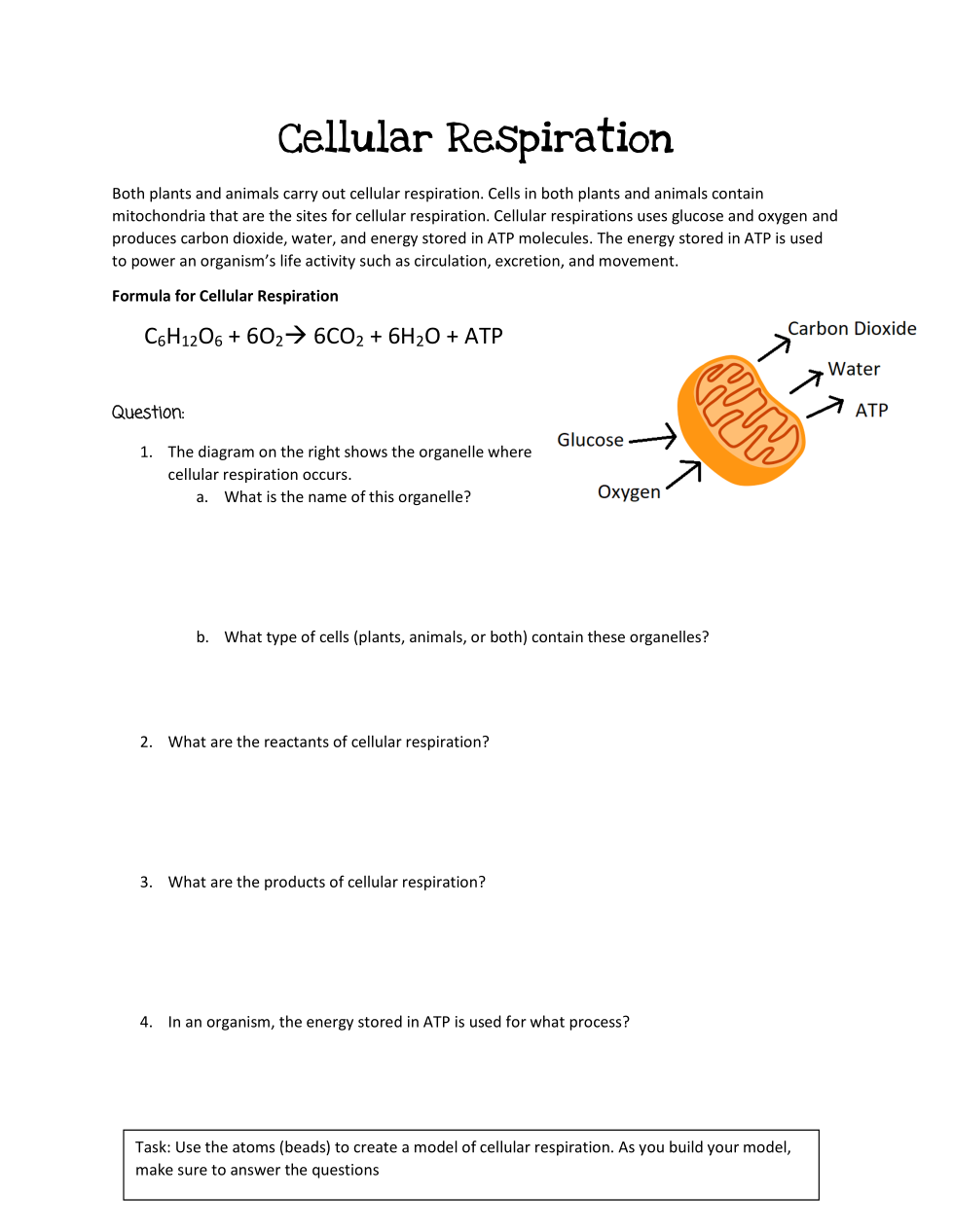
The diagram shows the organellel where cellular respiration occurs. What is the name of this organelle?
What type of cells contain these organelles. CLICK all that apply
What are the reactants of cellular respiration. CLICK all that apply.
What are the products of cellular respiration. CLICK all that apply.
Glucose is an example of
How may carbon atoms are in a glucose molecule?
How may oxygen atoms are in a glucose molecule?
How may hydrogen atoms are in a glucose molecule?
When building the oxygen molecule, how many oxygen atoms are required?
Humans breathe in oxygen. Oxygen moves from a high concentration in the lungs into the blood and body tissues without energy. What type of membrane transpot moves oxygen in the body?
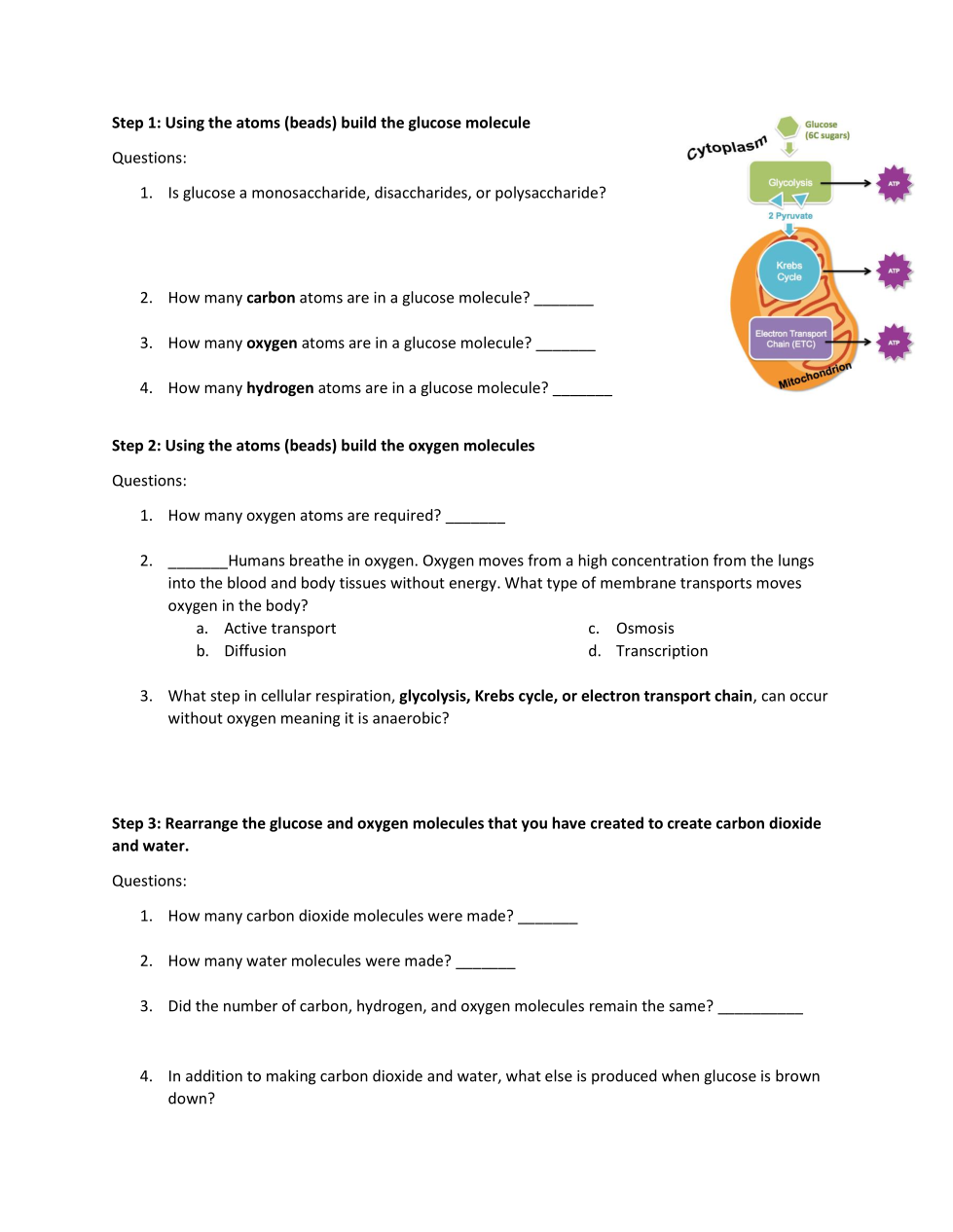
What step in cellular respirations can occur without oxygen meaning it is anaerobic?
How many carbon dioxide molecules were made?
How many water molecules were made?
Did the number of carbon, hydrogen, and oxygen molecules remain the same?
In addition to making carbon dioxide and water, what else is produced when glucose is broken down during cellular respiration?
What gas product of cellular respiration is released into the environment and could be used in the process of photosynthesis?
What process created the oxygen necessary for cellular respiration?
Identify the molecule in the picture. Hint it is a reactant of cellular respiration.
Identify the molecule in the picture. Hint it is a reactant of cellular respiration.
Identify the molecule in the picture. Hint it is a product of respiration and the gray circles indicate oxygen
Identify the molecule in the picture. Hint it is a product of respiration and the white circle represents hydrogen
What does the X in the model represent?