Types of Matter Activity
star
star
star
star
star
Last updated about 6 years ago
28 Nsɛmmisa

1
1
1
1
1
1
1
1
1
1
1
1
1
1
1
1
1
1
1
1
1
1
1
1
1
1
1
1
WHY?
Look at the things around you. They are all matter. That matter may be pure or it may be a mixture. Can you tell by looking at it? What if you looked at it under a microscope? Then could you tell? Something that looks pure may not really be pure. It depends on what type of particles an object or substance is made of. In this activity we will explore how the smallest chemical units of matter determine whether something is classified as an element, a compound, or a mixture.
In your own words, how would you describe an atom? How would you describe a molecule?
Locate the circled molecule of RSq in Model 1.
How many atoms are in a molecule of RSq?
Find a molecule of TSq2R in Model 1.
How many different types of atoms are found in a molecule of TSq2R?
How many Sq atoms are in a molecule of TSq2R?
Locate the drawing labeled SqR3 & TSq in Model 1.
How many different types of atoms are found in the sample of SqR3 & TSq?
In the drawing labeled SqR3 & TSq, how many different types of molecules are found in the sample
When two atoms are touching in the drawings of Model 1, what is holding the atoms together?
As a group, discuss the following question and record your answer(s):
Can a particle be a single atom?
As a group, discuss the following question and record your answer(s):
Can a particle be a molecule?
As a group, discuss the following question and record your answer(s):
How many total particles are in the drawing representing T & RSq & R in Model 1?
What is your group’s definition of the word “particle” as it is used in chemistry?
Compare the codes listed at the top of each drawing in Model 1 with the shapes in that box.
What do the letters R, Sq, and T in the codes represent?
Compare the codes listed at the top of each drawing in Model 1 with the shapes in that box.
What do the small numbers (subscripts) in the codes represent?
Compare the codes listed at the top of each drawing in Model 1 with the shapes in that box.
When atoms are touching, how is that communicated in the code?
Compare the codes listed at the top of each drawing in Model 1 with the shapes in that box.
What is the common characteristic of the samples in which an ampersand (&) is used?
In Model 1 there are three drawings that are labeled with a question mark. What is the code to properly label this drawing?
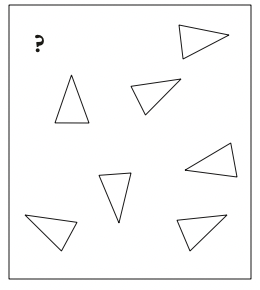
In Model 1 there are three drawings that are labeled with a question mark. What is the code to properly label this drawing?

In Model 1 there are three drawings that are labeled with a question mark. What is the code to properly label this drawing?

Which of the drawings from Model 1 represent pure substances? (where the particles are the same type
Which of the drawings from Model 1 represent mixtures? (where there are different types of particles)
Which of the drawings from Model 1 represent elements? (where there is only one type of atom)
Which of the drawings from Model 1 represent compounds? (where there are multiple types of atom)
How are the codes (chemical formulas) for elements different from those for compounds?
Use what you have just learned about chemical formulas to identify if Br2 is an element, a compound or a mixture.
Use what you have just learned about chemical formulas to identify if NaHCO3 is an element, a compound or a mixture.
Use what you have just learned about chemical formulas to identify if C6H12O6 & H2O is an element, a compound or a mixture.
Explain the difference between and atom and an element.
Explain the different between a molecule and a compound.