9/14 Step 2 Hydrologic Cycle Reading AP
star
star
star
star
star
Last updated about 1 year ago
13 Nsɛmmisa

1
1
1
1
1
1
1
1
1
1
1
1
1
The Hydrologic (Water) Cycle
Water is the most plentiful substance in living things. For example, the human body is made up of about 70% water, and jellyfish are about 95% water. Water participates in many important steps of many biochemical cycles, including photosynthesis, digestion, and cellular respiration. It is also that habitat for many species of plants, animals, and microorganisms, and it participates in the cycling of all the materials used by living things. Water is distributed through the biosphere in a cycle known as the water, or hydrologic cycle. In this article, we will examine some aspects of that cycle.
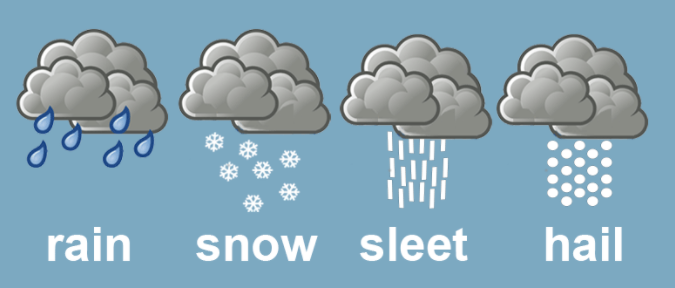
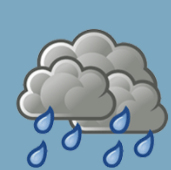
The hydrologic (water) cycle is a sun driven cycle. Depending on the sun's location, it determines the temperature which affects the state which water is in. We start by looking at the atmosphere, which includes the clouds. Condensation is the process of water vapor turning back into liquid water, with the best example being those big, fluffy clouds floating over your head. When water vapor cools, it condenses and falls to Earth as rain. For instance, precipitation over land; gravity draws the water back to Earth in the form of rain, sleet, and snow. Precipitation also occurs over oceans.
The living things on Earth are represented in the diagram as trees. Water is absorbed by the roots of the trees and used in photosynthesis, but it is also lost from their leaves through the process of transpiration. Water also returns to the atmosphere through evaporation from the soil and from numerous other sources. In general, the amount of precipitation received by an area helps determine what types of plants will grow there. The nature of the vegetation, in turn, determines the types of animals that inhabit a region.
Water from the land enters the ocean through infiltration; it percolates from the surface down to the water table. This water-saturated zone of soil and rock is called an aquifer, and water seeps from the aquifer to the ocean. Water also reaches the ocean as runoff from the surface. Runoff from the surface includes flow from rivers as well as melting snow and glaciers.
The major reservoirs of water on Earth are the oceans. Oceans cover about three-quarters of Earth’s surface and contain about 97% of its water. Solar radiation causes water’s evaporation from the ocean. Over 80% of the evaporated water in the hydrologic cycle enters the atmosphere in this way, and about 50% of this falls back into the oceans in the form of rain. The remainder stays in the atmosphere as clouds, ice crystals, and water vapor and then precipitates over land. On a global scale, the quantity of ocean water that evaporates each year is equivalent to a layer that is 120 cm deep and covers the entire surface of the ocean.
Water is found as freshwater in multiple places. The majority is found as frozen water in ice caps and glaciers. The next biggest reservoir of freshwater is groundwater. Finally, freshwater is found as rivers, lakes, streams, and ponds.
Define each step of the water cycle. Use the "T" tool to type into the box.
What is the major driver of the water cycle?
What is the major reservoir for the water cycle?
What is the major reservoir of freshwater in the water cycle?
The picture above best represents what step of the water cycle?
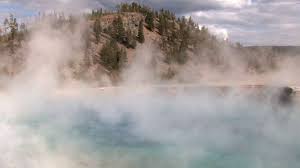
The image above shows the water on the top of a lake turning into a gas and rising as the sun heats it. What step of the water cycle does this represent?
Besides PRECIPITATION, what other step of the water cycle could this picture represent?
Mr. Beeler asked the class to explain what infiltration is. Below are 3 students answer:
Alma: Infiltration is when plants lose water from their leaves
Charlotte: Infiltration is when water soaks into the soil
Xavier: Infiltration is when water on the surface of the runs into a body of water like a lake
Which student do you agree with?
When water is lost by a plant, this is known as evaporation.
Rain water flows off the side of a hill into the ocean. This is an example of runoff.
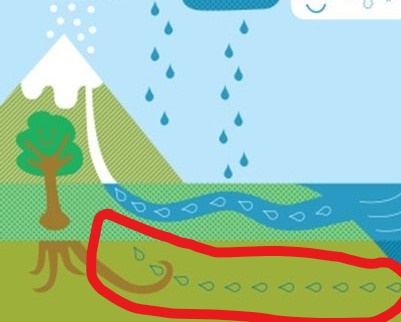
What step of the water cycle is represented by the part of the diagram circled in red? (precipitation, evaporation, transpiration, runoff, condensation, infiltration)

What step of the water cycle is represented by the part of the diagram circled in red showing water moving from the surface to a body of water?
(precipitation, evaporation, transpiration, runoff, condensation, infiltration)
What is infiltration?