Samples and Surveys
star
star
star
star
star
Last updated about 3 years ago
9 questions
2
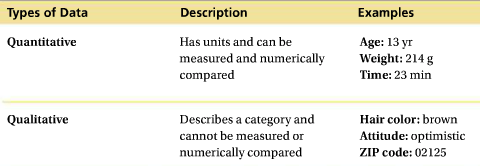
Is each data set qualitative or quantitative?
- number of students taking Spanish in 7th grade
- the time it takes for each student to run a mile
- postal code
- Jersey numbers for all NHL members
- favorite movie
- qualitative
- quantitative
2
Is each data set univarite or bivariate?
- the edge lengths and volumes of triangular prisms
- average number of YouTube videos your classmates watch per day
- circumference and radii of pizzas
- the atomic mass of the elements in the periodic table
- lengths and weights of reptiles
- univariate
- bivariate
2
Determine whether each sampling method is random, systematic, or stratified.
- You survey every seventh student who enters the cafeteria.
- You draw student ID numbers out of a hat and survey those students.
- You survey two students ata random from each class.
- A factory tests the quality of every 40th cell phone made.
- A pollster randomly selects 100 people from each town in a certain canidate's district to see if they support the canidate.
- random
- systematic
- stratefied
3
Determine whether the question is biased. Explain your answer. Do you prefer shopping alone online or the excitement of going to stores with friends?
Determine whether the question is biased. Explain your answer.
Do you prefer shopping alone online or the excitement of going to stores with friends?
3
A classic radio station posts an online poll asking their listeners to vote for the best band of all time. After 2 weeks, the radio station analyzes the results and determines 54% of its viewers voted for the same band. The station releases an article announcing the band as the best band of all time. Is the conclusion valid? Explain.
HINT: A valid conclusion is affected by bias.
A classic radio station posts an online poll asking their listeners to vote for the best band of all time. After 2 weeks, the radio station analyzes the results and determines 54% of its viewers voted for the same band. The station releases an article announcing the band as the best band of all time. Is the conclusion valid? Explain.
HINT: A valid conclusion is affected by bias.
3
Classify the data as qualitative or quantitative, and as univariate or bivariate.
- hours of daylight per day in Anchorage, Alaska
- the batting averages and RBIs for members of a baseball team over 5 seasons
- the color of your classmate's livingroom
- qualitative
- quantitative
- univariate
- bivariate
1
Determine whether the sampling method is random, systematic, or stratefied.
- Every student whose driver's license ends in an odd number is asked to complete a survey on safe driving habits
- You ask 15 of the residents on your street whether they support the local bond issue to build a community center across town
- A bottle manufacturer checks the quality of every third bottle it makes
- random
- systematic
- stratefied
2
Pick one of the sampling methods from question 7. Identify the method and:- Determine whether the method will produce a good sample.
- Explain your answer.
Pick one of the sampling methods from question 7. Identify the method and:
- Determine whether the method will produce a good sample.
- Explain your answer.
5
You want to find out how much time people in your town spend doing volunteer work. You call 100 homes in the community during between 10 am and 3 pm on Mondays and Wednesdays. Of those surveyed, 85% are over the age of 60.- How might this create bias in your survey results?
- Describe a survey method that could reduce bias.
You want to find out how much time people in your town spend doing volunteer work. You call 100 homes in the community during between 10 am and 3 pm on Mondays and Wednesdays. Of those surveyed, 85% are over the age of 60.
- How might this create bias in your survey results?
- Describe a survey method that could reduce bias.