Ch. 1 & 2 Test

Last updated over 4 years ago
20 questions
4

AHHS administrators collect data on students attending the school. Which of the following variables are quantitative?
Select all that are quantitative.

4

The SPCA collects the following data about the dogs they house.
Which are categorical?
Select all that are categorical

4

To determine if people’s preference in dogs had changed in the recent years, organizers of a local dog show asked people who attended the show to indicate which breed was their favorite.
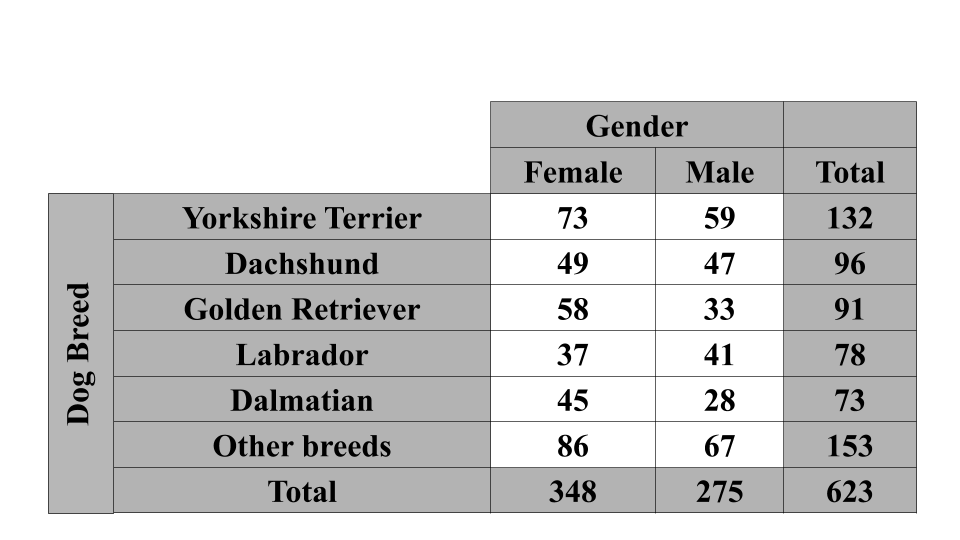
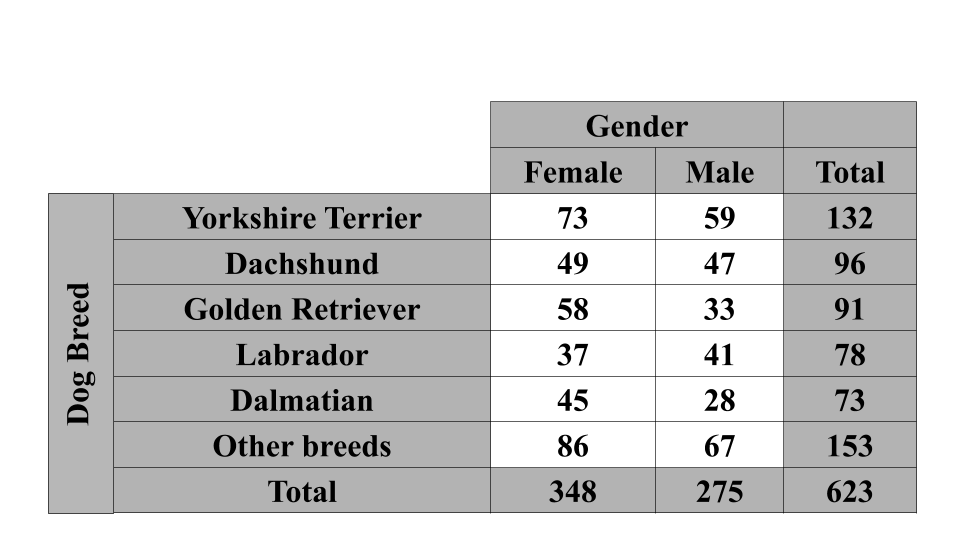
This information was compiled by dog breed and gender of the 623 people who responded. The table summarizes the responses.
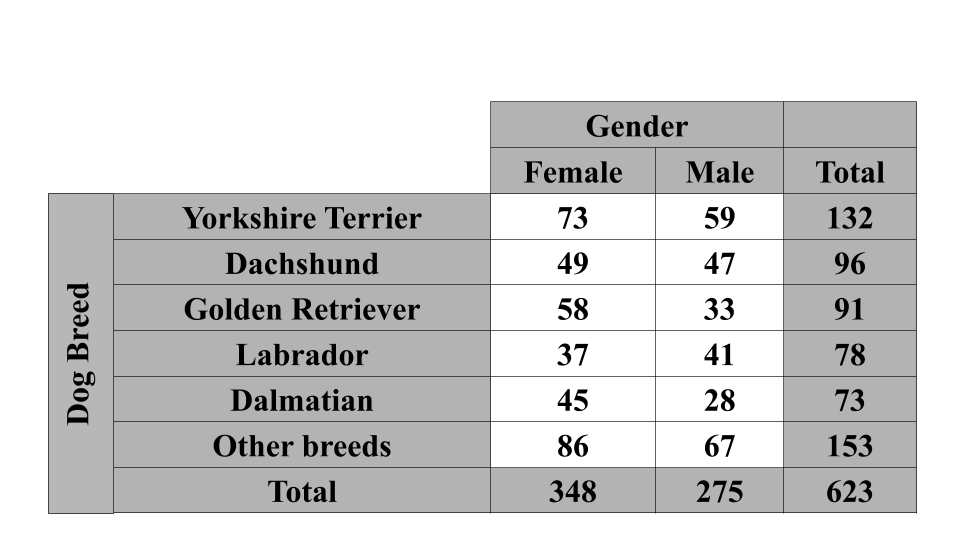


What is the population for this study?
Select the correct answer.
4

To determine if people’s preference in dogs had changed in the recent years, organizers of a local dog show asked people who attended the show to indicate which breed was their favorite.
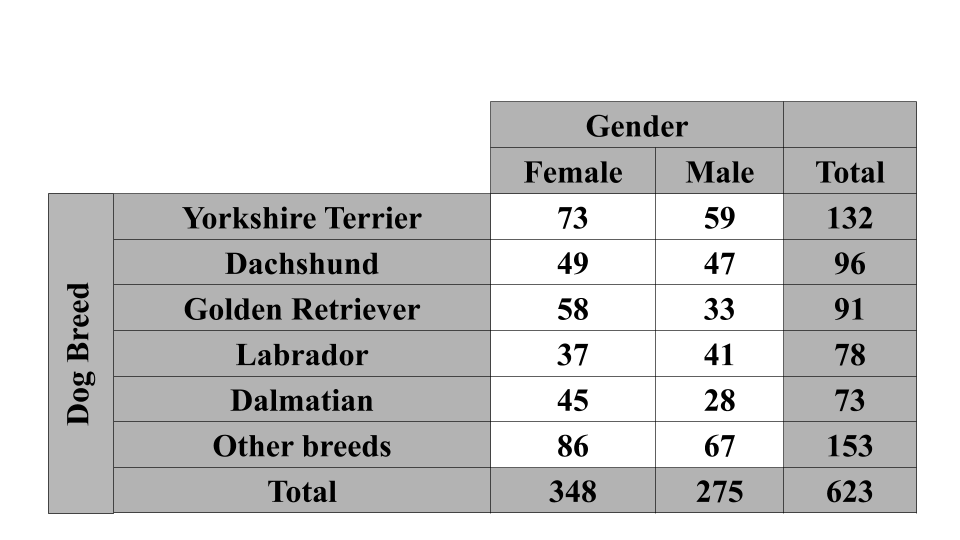
This information was compiled by dog breed and gender of the 623 people who responded. The table summarizes the responses.


What is the sample for this study?
Select the correct answer.
4

To determine if people’s preference in dogs had changed in the recent years, organizers of a local dog show asked people who attended the show to indicate which breed was their favorite.
This information was compiled by dog breed and gender of the 623 people who responded. The table summarizes the responses.


What are the variables being compared in this study?
Select both variables.

4

To determine if people’s preference in dogs had changed in the recent years, organizers of a local dog show asked people who attended the show to indicate which breed was their favorite.
This information was compiled by dog breed and gender of the 623 people who responded. The table summarizes the responses.


What percent of all the people who responded were males who favor Labradors?

Round your percent to one place past the decimal.
Ex. 32.5%

4

To determine if people’s preference in dogs had changed in the recent years, organizers of a local dog show asked people who attended the show to indicate which breed was their favorite.
This information was compiled by dog breed and gender of the 623 people who responded. The table summarizes the responses.


What percent of the males favor Labradors?

Round your percent to one place past the decimal.
Ex. 32.5%

4

To determine if people’s preference in dogs had changed in the recent years, organizers of a local dog show asked people who attended the show to indicate which breed was their favorite.
This information was compiled by dog breed and gender of the 623 people who responded. The table summarizes the responses.


What percent of the people who chose Labradors were males?

Round your percent to one place past the decimal.
Ex. 32.5%

4

To determine if people’s preference in dogs had changed in the recent years, organizers of a local dog show asked people who attended the show to indicate which breed was their favorite.
This information was compiled by dog breed and gender of the 623 people who responded. The table summarizes the responses.
Circle the marginal distribution of breeds on the table

4

To determine if people’s preference in dogs had changed in the recent years, organizers of a local dog show asked people who attended the show to indicate which breed was their favorite.
This information was compiled by dog breed and gender of the 623 people who responded. The table summarizes the responses.
Circle the marginal distribution of gender on the table

4

To determine if people’s preference in dogs had changed in the recent years, organizers of a local dog show asked people who attended the show to indicate which breed was their favorite.
This information was compiled by dog breed and gender of the 623 people who responded. The table summarizes the responses.

Calculate the marginal distribution of gender using information in the table.

Use the format: Female:space percent space Male: space percent
Round percents to one place past the decimal.

Ex. Female: 21.3% Male: 25.6%

4

To determine if people’s preference in dogs had changed in the recent years, organizers of a local dog show asked people who attended the show to indicate which breed was their favorite.
This information was compiled by dog breed and gender of the 623 people who responded. The table summarizes the responses.

Circle the Conditional Distribution of dog breed for females using the table below.

4

To determine if people’s preference in dogs had changed in the recent years, organizers of a local dog show asked people who attended the show to indicate which breed was their favorite.
This information was compiled by dog breed and gender of the 623 people who responded. The table summarizes the responses.

Circle the Conditional Distribution of gender for golden retrievers using the table below.

4

To determine if people’s preference in dogs had changed in the recent years, organizers of a local dog show asked people who attended the show to indicate which breed was their favorite.
This information was compiled by dog breed and gender of the 623 people who responded. The table summarizes the responses.


Calculate the Conditional Distribution of gender for golden retrievers using the table above.

Use the format: Female:space percent space Male: space percent

Ex. Female: 24.5% Male: 12.4%

Round percents to one place past the decimal

4

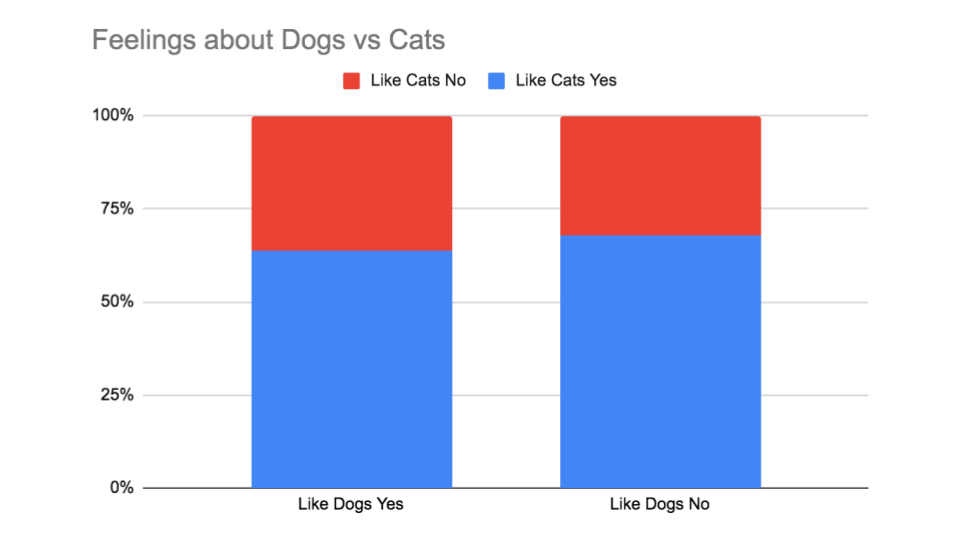
Using the side by side segmented bar charts above, what are the 2 variables that are being compared (not the categories)?
Select both variables.

4

Using the side by side segmented bar charts above, are the two variables associated or independent?
Select one answer.

4

Using the side by side segmented bar charts above, if the two variables associated, what is a possible association?
Select one answer.

4

In a study on animal preferences, two of the questions adults were asked were:
1. Do you like dogs?
2. Do you like cats?
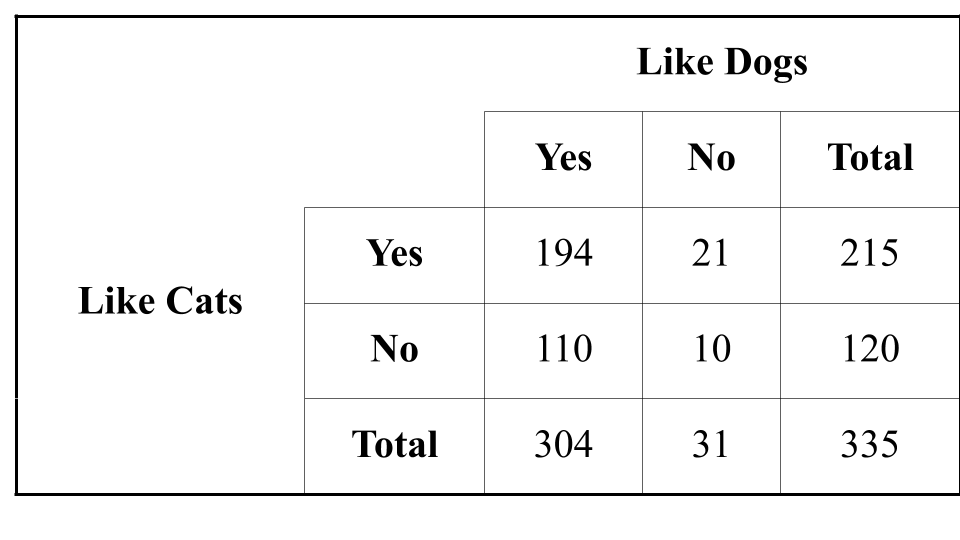
The data is summarized in the table below:
How many adults were part of the sample for this study?

4

In a study on animal preferences, two of the questions adults were asked were:
1. Do you like dogs?
2. Do you like cats?
The data is summarized in the table below:
What graphical displays would be helfpul when trying to determine if the variables of 'feelings about cats' and 'feelings about dogs' are associated or independent?
Choose all that apply:

4

In a study on animal preferences, two of the questions adults were asked were:
1. Do you like dogs?
2. Do you like cats?
The data is summarized in the table below:
The side by side bar charts below compare peoples feelings about dogs and cats. Based on the data distributions, are people's feelings about dogs and their feelings about cats associated or independent?
Hint: does a person's feelings about dogs make them more or less likely to like or dislike cats?


Base your answer on the bar charts (similarity vs different), and if they are associated, give a possible association. If they are independent what does this mean?