Locke's Second Treatise

Last updated about 5 years ago
7 questions
Note from the author:
A guided reading of Lockes Second Treatis on Government - designed for a foundaitons in government unit in a US Government Class.

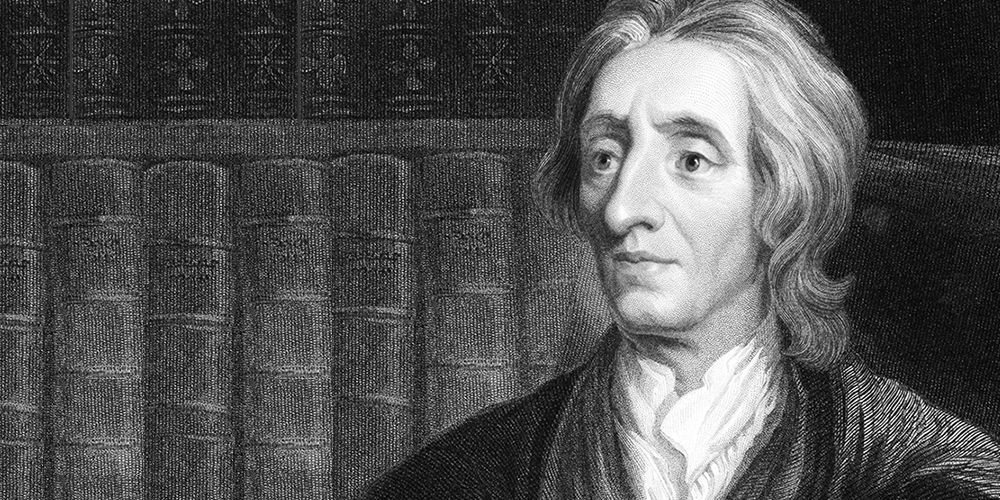
John Locke's Second Treatise


DIRECTIONS: There are 4 short written responses and 3 multiple choice questions you will answer as you read an except from John Locke's "Second Treatise on Government." You can read the whole thing in one go - or read it in the sections into which it is seperated with questions. Do you best and remember to always back up you answers with specific information from the text!!!

You can do it!
<3 Ms. Rogers
1

****************************************************

Getting Started

Before you read, answer this question to focus your thoughts...
FOCUSING QUESTION: Is it ever okay to limit someone's freedom?  Explain why you think that.

If you need inspiration, check out the padlet we did on this question... (this is JUST TO LOOK AT FOR HELP, you dont have to add anything!)


Answer here. This doesn't have to be backed up or argued - just tell me what you think. This helps me understand where you are coming from and helps YOU focus yourself before you read:)

****************************************************

Full Text - Locke's Second Treatise

You can scroll down and read as you answer questions, or read uninterrupted here. You're choice!

"On the Original State of Man
TO understand political power aright, and derive it from its original, we must consider, what state all men are naturally in, and that is, a state of perfect freedom to order their actions, and dispose of their possessions and persons as they think fit, within the bounds of the law of nature, without asking leave, or depending upon the will of any other man."


"On the State and Society
IF man in the state of nature be so free, as has been said; if he be absolute lord of his own person and possessions, equal to the greatest, and subject to no body, why will he part with his freedom? Why will he give up this empire, and subject himself to the dominion and control of any other power?"

"TO which it is obvious to answer, that though in the state of nature he hath such a right, yet the enjoyment of it is very uncertain, and constantly exposed to the invasion of others: for all being kings as much as he, every man his equal, and the greater part no strict observers of equity and justice, the enjoyment of the property he has in this state is very unsafe, very insecure."

This makes him willing to quit a condition, which, however free, is full of fears and continual dangers: and it is not without reason, that he seeks out, and is willing to join in society with others, who are already united, or have a mind to unite, for the mutual preservation of their lives, liberties and estates, which I call by the general name, property."

"The great and chief end, therefore, of men's uniting into commonwealths, and putting themselves under government, is the preservation of their property."

****************************************************
*****************************************************
Questions and Reading Chunks

INSTRUCTIONS: Below I have broken the reading up into sections and I will ask you a question about each section. I have also read the section for any of you who are struggling with the language. 17th centrury phrasing can be really difficult to understand sometimes. I wont do this always, just being nice today;)

SECTION ONE
"On the Original State of Man
TO understand political power aright, and derive it from its original, we must consider, what state all men are naturally in, and that is, a state of perfect freedom to order their actions, and dispose of their possessions and persons as they think fit, within the bounds of the law of nature, without asking leave, or depending upon the will of any other man."
1

What does Locke mean by the state all people are "naturally in"?

SECTION TWO
"On the State and Society
IF man in the state of nature be so free, as has been said; if he be absolute lord of his own person and possessions, equal to the greatest, and subject to no body, why will he part with his freedom? Why will he give up this empire, and subject himself to the dominion and control of any other power?"
1

Here, Locke kind of asks the same question in different ways but it's basically the same question.  Can you restate Locke's central question in this section in your own words?

SECTION THREE
"TO which it is obvious to answer, that though in the state of nature he hath such a right, yet the enjoyment of it is very uncertain, and constantly exposed to the invasion of others: for all being kings as much as he, every man his equal, and the greater part no strict observers of equity and justice, the enjoyment of the property he has in this state is very unsafe, very insecure."
1

Explain the problem Locke tells us about the "state of nature".

SECTION FOUR
"This makes him willing to quit a condition, which, however free, is full of fears and continual dangers: and it is not without reason, that he seeks out, and is willing to join in society with others, who are already united, or have a mind to unite, for the mutual preservation of their lives, liberties and estates, which I call by the general name, property."
1

Given the problems with the "state of nature," what do people often "seek out"?

SECTION 5
"The great and chief end, therefore, of men's uniting into commonwealths, and putting themselves under government, is the preservation of their property."
1

Two-Part Question!!!
1) What is Locke's final claim here?
2) How would John Locke answer our FOCUS QUESTION ("Is it ever okay to limit someone's freedom?" ).

Ok... Almost done. I have one more old guy to throw at you before we are finished...

SECTION SIX
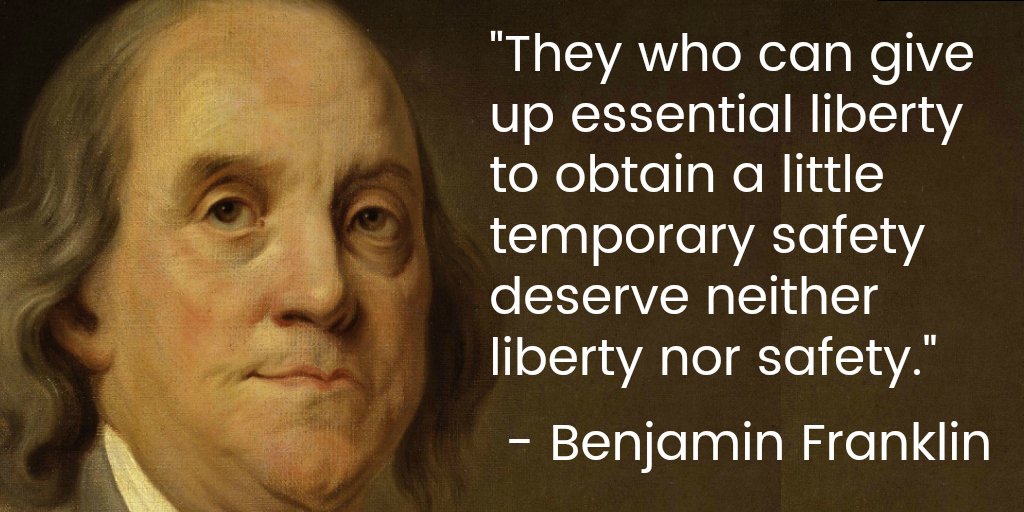
Check out the quotation below by one of the United States founding fathers, Benjamin Franklin. Locke and Franklin never met. Locke died in England in 1704, just a year and a half before Franklin was born in Boston in 1706. However, Franklin would have read Locke's work in school - just like you. It helped shape the debates Franklin had with others as they wrote the Consitution much later in his life in 1787.

This is one of Franklin's most famous quotations...
1

How is Franklin's view of freedom in this quotation different from Locke's view of freedom?

*****************************************************
Great! LAST thing!

For next time, answer this question... Why are governments formed?

This one is just what you think - You don't have to back it up or present an argument.

We will be discussing this at the beginning of next class before we learn about some of the types of governments people form. Answer this question in just a sentence or two in the padlet below. We will start our next class here using this to jump start our discussion!