Grade 11 Urbanization Problems
star
star
star
star
star
Last updated almost 6 years ago
15 Nsɛmmisa


6
1
1
1
1
1
10
5
8
4
2
3
1
2
2
Why are people attracted to the city?
Cities attract mainly old people.
Urban sprawl occurs where there are no laws to control what and where people can build.
Construction of 'park and ride' facilities on the fringe of the CBD can help traffic congestion.
Overcrowding is not a problem for most urban areas.
Urbanization is the result of population migration from rural to urban areas.
(a) Discuss the problems created in SA cities by the previous governments policy of "apartheid development".
(b) What can be done to solve these problems.
Many functions in the city have moved to the rural-urban fringe. Briefly explain the cause of this movement.
· Urban decay – oldest part of city – inner city/transition zone, old industrial areas and derelict dock areas
· Inadequate Road Systems and consequent traffic problems – traffic congestion in Cap Town
· Poor provision of public services – adequate supplies of drinkable water, effective waste disposal
· Uncontrolled expansion into unsuitable sites
· Effects of natural disasters – floods/earthquakes/drought/mudslides
· Decline in inner city/ transition zone industries and consequent unemployment – move to the edge of city
· Decline in traditional manufacturing industries – new technologies and mechanization taking over
· Suburbanization of industries leads to conflict for land on edge (rural urban periphery) of cities – farm land/conservation land/recreational land vs industry
· Industrial growth and pollution – water pollution/air pollution – huge cost
· Administrative fragmentation – lack of decision making as too many and disjointed interest parties
· Tension between planners and entrepreneurs ( would like uncontrolled development)
· Social justice problems – decisions made on existing power and wealth with no regard for all communities
· Conflicting interest groups – genuine disagreements between parties – new development areas for high income ‘yuppies’ or low income workers
· Lack of service delivery - Inability of municipalities to provide basic services such as sanitation (clean drinking water, sewage/refuse disposal) and electricity.
· In-equality - huge divide between rich and poor can lead to unrest
· Contrast between suburban growth (urban sprawl) and inner city decay
· Urbanization and problems relating to multi-cultural populations – ghetto formation
· Urbanization and housing shortages resulting in squatter settlements
Population Shifts
· Immigrants form ghettos in inner city/transition zones
· Urbanization and Informal settlements/Shanty Towns
· Urbanization occurring rapidly and on vast/massive scale
· Don’t have wealth or skilled labour to tackle problems efficiently or swiftly
· Lack of advanced technology and modern economic infrastructure to respond to crisis – famine/drought/flooding
· Lack of wealth and international power means LEDCs react according to the will of the investor and creditor nations and multi-national corporations
What are the advantages of a sustainable city?
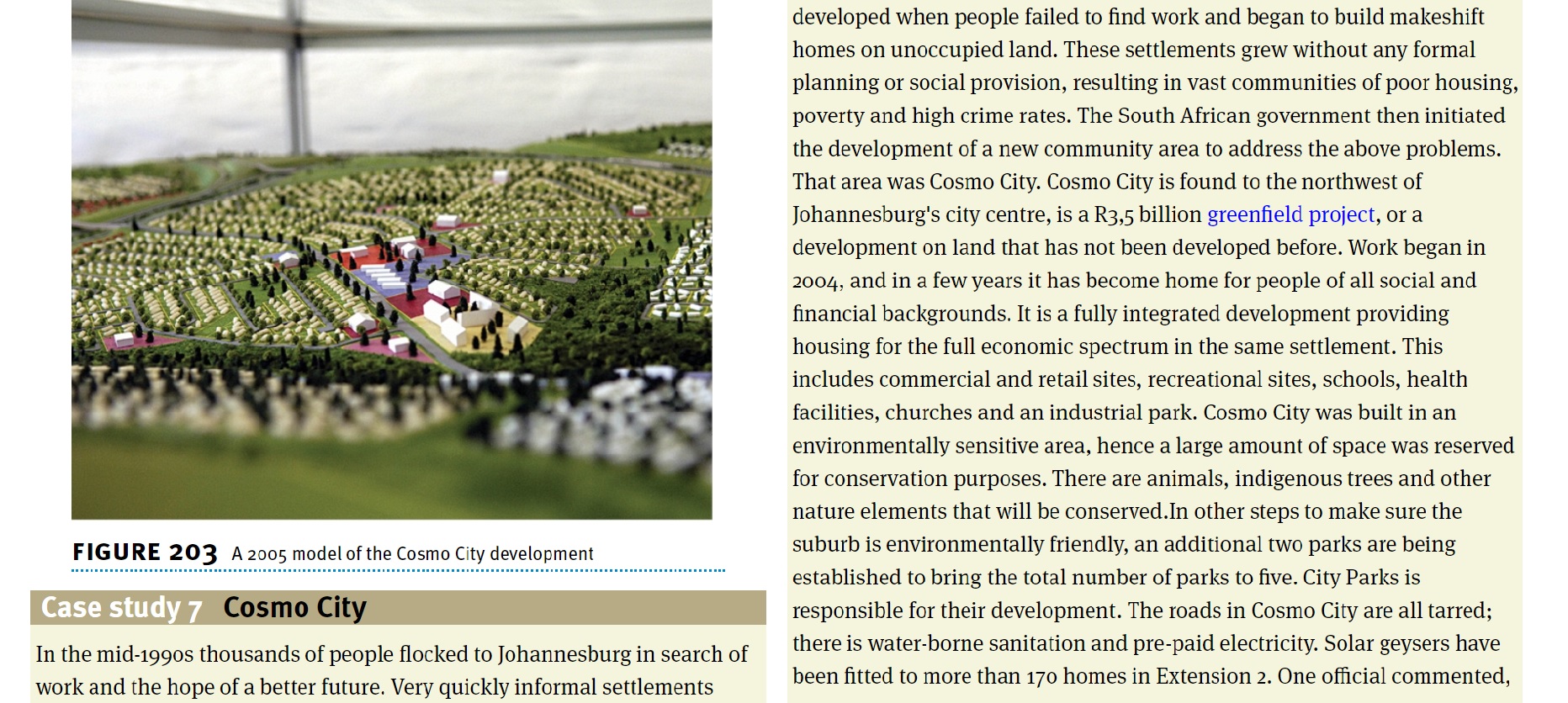
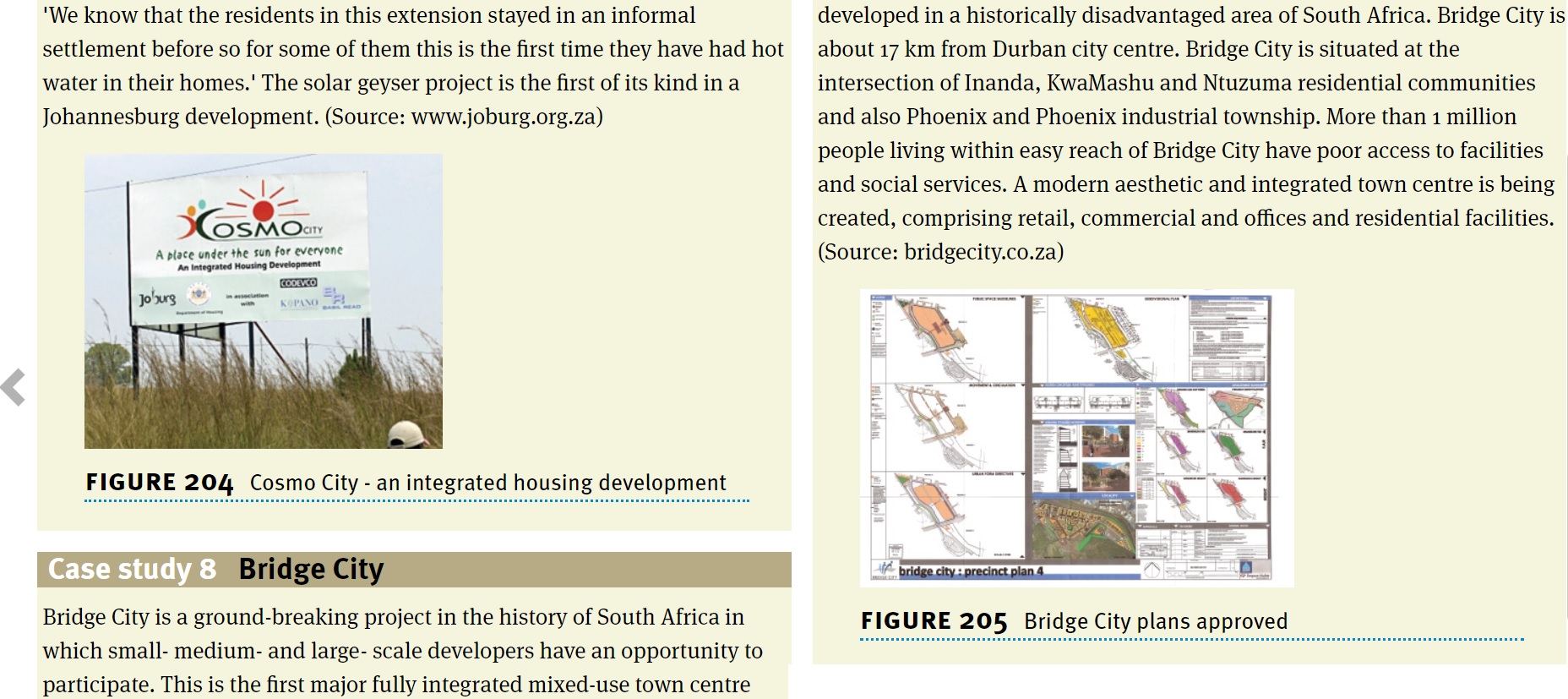
Name 4 characteristics of new towns such as Bridge city and Cosmo City.
How will Bridge City impact on the socio-economic needs of people living within the surroundings?
How did urban planners handle the environment in developing Bridge City and Cosmo City?
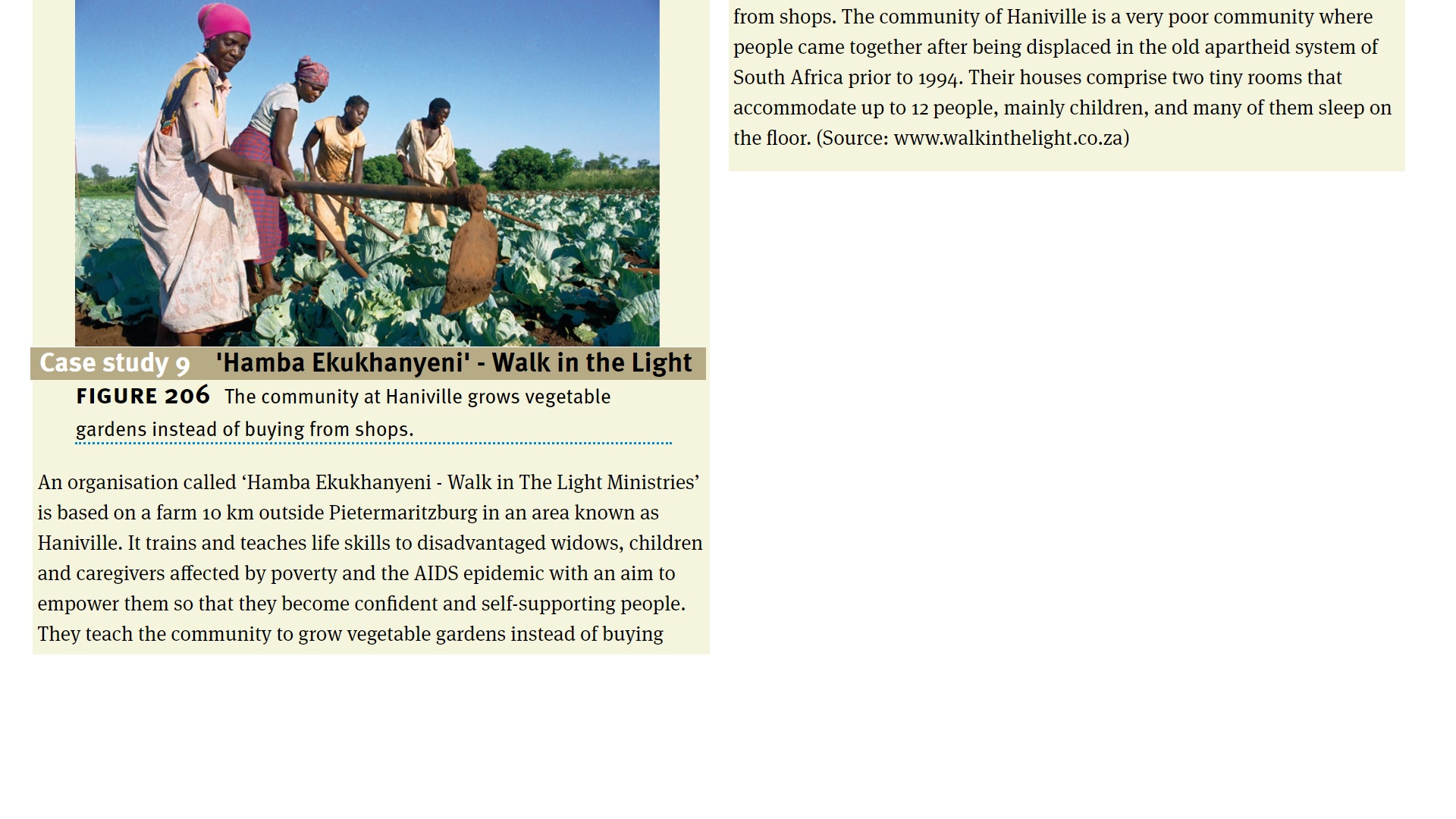
How does an organization like Hamba Ekukhanyeni help people to become self supporting?
Would you say people living in Haniville stay in a middle-income area or informal settlement? Give a reason for your answer.
What are the advantages of having an organisation like Hamba Ekukhanyeni?