Digital Media
star
star
star
star
star
Last updated almost 6 years ago
24 Nsɛmmisa
1
1
1
1
1
1
1
1
1
1
1
1
1
1
1
1
1
1
1
1
1
1
1
1
(Digital Media and Your Brain) Which of the following best describes a feedback loop?
(Digital Media and Your Brain) Which of the items below are examples of Humane Design?
(Digital Media and Your Brain) Which of the items below are examples of Addictive Design?
(Digital Media and Your Brain) Marie downloaded an app that lets her connect with friends who like to run. The app has a leaderboard, and each person gets points based on how much they run during the week. What should Marie consider when thinking about whether to receive notifications from the app?
(Digital Media and Your Brain) Lin wants to play an online game with her friends. She reads the description of the game and realizes it contains features like rewards for completing levels and penalties for quitting the game early. She likes the game, but doesn't want to get sucked in and skip her homework. (This has happened before!) What can Lin do to balance playing the game and doing her homework?
(Being Aware of What You Share) Which of the following is the definition of a privacy policy?
(Being Aware of What You Share) Which of the following helps you adjust what information a website or an app collects and what is visible to others?
(Being Aware of What You Share) Maya and a group of friends are organizing a play for one of their classes. The group uses an app to communicate with each other about what materials to get for their costumes. After their chat, Maya starts seeing ads for some of the materials the group decided to get. Why might Maya be seeing these ads?
(Being Aware of What You Share) Josh wants to sign up for a gaming website to download free games. He can't find a privacy policy. Should he join the website?
(Digital Footprints) What are the three Rings of Responsibility you should consider when you use social media?
(Digital Footprints) Andrew was excited to go on a field trip to a national park. He decided to document the trip on social media. During the trip, he posted selfies and pictures of his classmates. A few weeks later, Andrew found out that some of his friends were annoyed that his posts included photos of them. Which Ring of Responsibility did Andrew forget?
(Digital Footprints) Ethan thought it would be funny to take a video of himself pulling a prank on his little brother. He said a bowl of mayonnaise was vanilla pudding. His little brother hates mayonnaise and was very upset after putting a spoonful of it in his mouth when he expected pudding. His little brother was yelling and crying. Ethan thinks the video is hilarious. Is it OK to post it online?
(Digital Footprints) Chloe is posting some pictures from the school's dance on her social media account. In one photo, her friend Jordan is acting pretty crazy. What should Chloe do?
(Cyberbullying) Which scenario is an example of hate speech?
(Cyberbullying) If a comment is posted anonymously, it can't be considered hate speech or cyberbullying.
(Cyberbullying) Francis and his friends have social media profiles that don't identify them personally, but they follow each other's accounts. A new student from a different country recently joined their grade. One of Francis's friends posted a photo of a group of monkeys eating bananas and wrote: "It's gross how the foreign students always bring smelly lunches to school. They're like animals and should be put in cages." Is this an example of hate speech?
(Cyberbullying) Imagine you see online hate speech or cyberbullying toward someone you know. Which of the following actions is an example of how you could be an upstander?
(Sexting) Which of the following best describes the concept of self-disclosure?
(Sexting) What should you do if you receive a sext?
(Sexting) Eddy and Marcy have been dating for a couple months. Eddy's best friend has been pressuring him to sext Marcy. Eddy feels uncomfortable with the idea of sexting. Should he listen to his best friend's advice?
(Sexting) Jordan and Sam are chatting online and flirting. They've been good friends for a while, and they both like each other. Sam wants to surprise Jordan, and his mind is racing because he's thinking about sending a sext. Based on the Feelings & Options steps, what should Sam NOT say or do in this red flag moment?
Refering to the video above, write the response Abi should have written back to Josh in response for the naked picture. (school appropriate please)
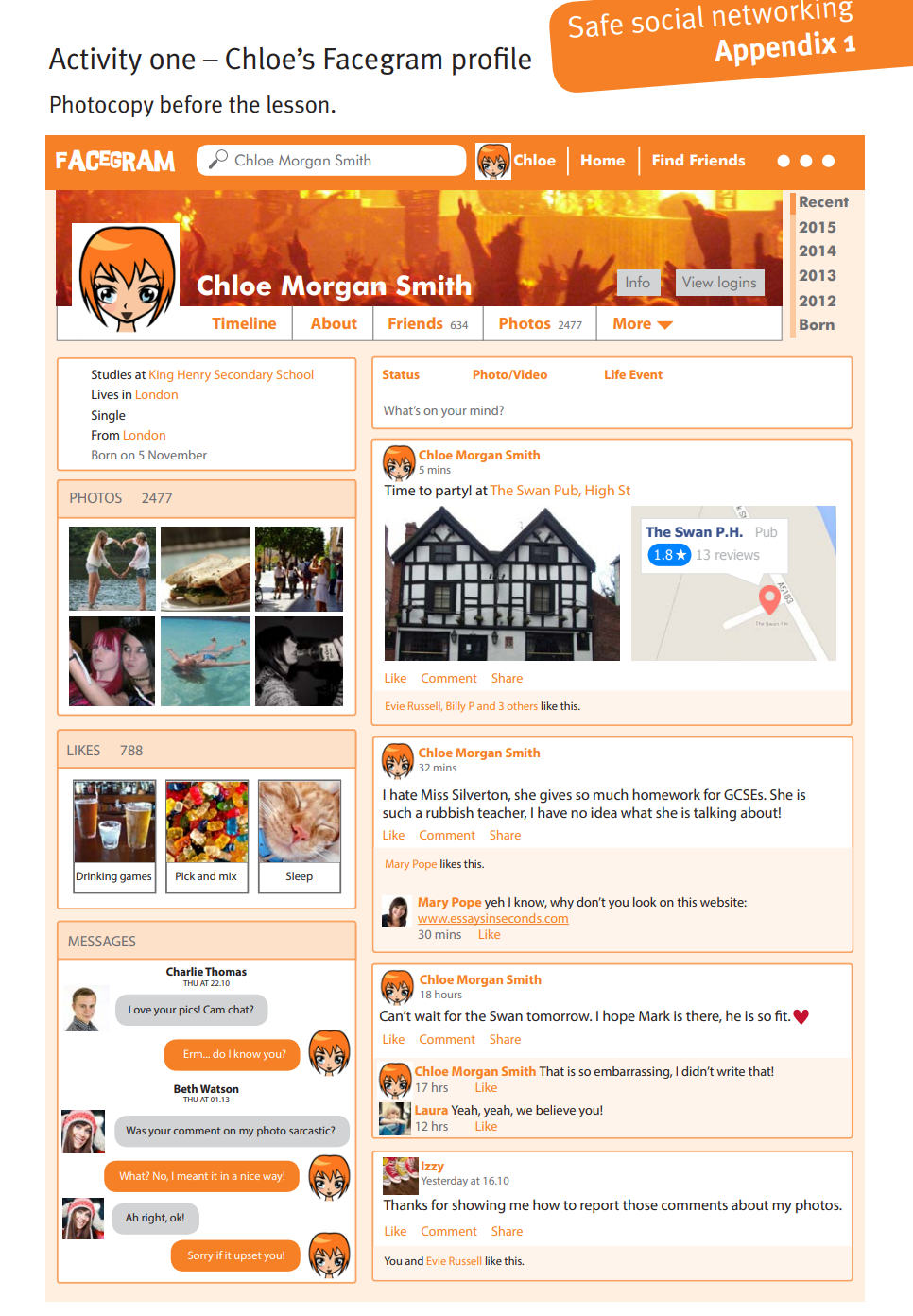
How could Chloe's profile page hurt or help her digital footprint? (couple sentences)
Choose an event you have been studying in American History and explain how social media could have helped the situation. Mention what type of social media would be most beneficial and why. Don't forget to tell me what event you have chosen. (paragraph)