Ecology quiz 2 (energy transfer/succession)
star
star
star
star
star
Last updated almost 6 years ago
15 Nsɛmmisa
Hyɛ no nsow a efi ɔkyerɛwfo no hɔ:
Ecology-Food Webs and Succession
1
1

1
1
1

1
1
1
1
1
1
1
1
1
1
Ecology-Food Webs and Succession
If a bird eats a mouse that eats grass, the bird is a(n)
The first organism in a food chain is typically a(n)
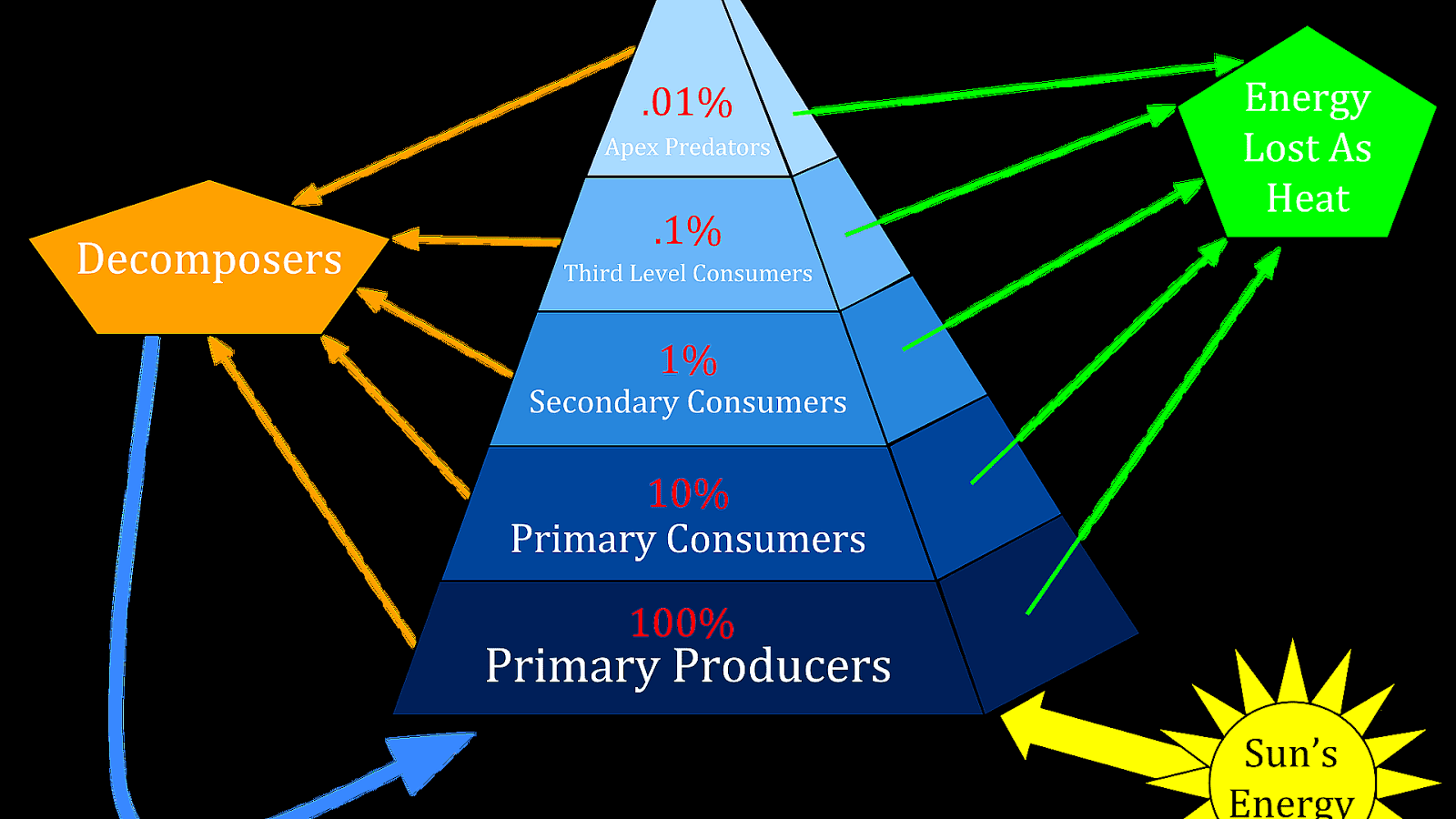
In an energy pyramid, which level has the most available energy?
The many overlapping food chains in an ecosystem make up a(n)
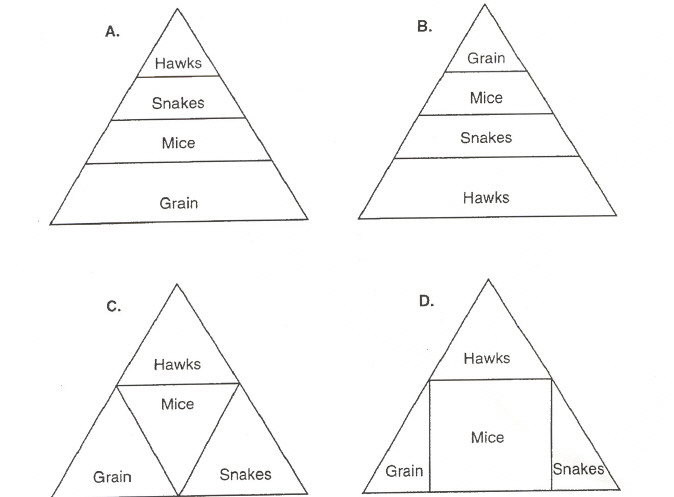
The movement of energy in an ecosystem can be shown by an energy pyramid. An energy pyramid shows the amount of energy available at each level of a food chain. A food chain is made up of grain plants, mice, snakes, and hawks. Which of the following diagrams correctly represents the energy available at each level in this food chain? Use the image above
Looking at the model above, if the hawks are increased, what will happen to the grass? Please explain your reasoning.
Describe the role of decomposers in an ecosystem.
Which type of succession takes longer and why?
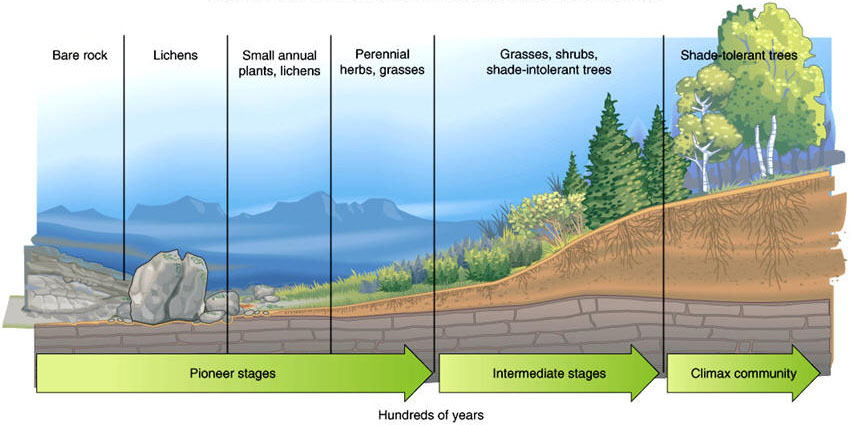
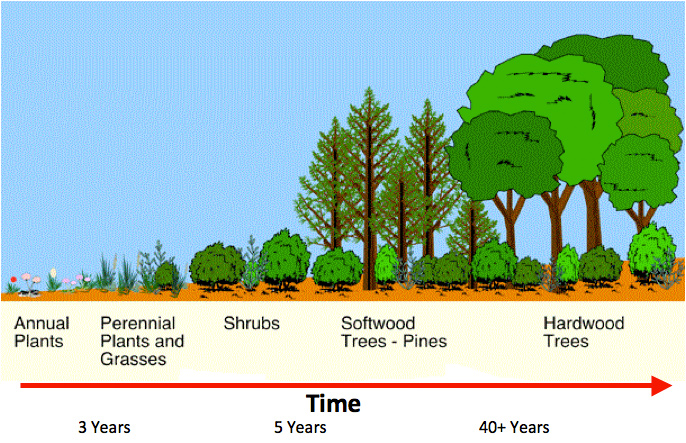
Which of the following represents a climax community in Michigan?
What would most likely be the dominant community found in stage I?
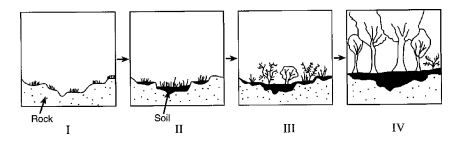
What are the functions of the pioneer community?
In succession, plant populations precede, which means to come before, animal populations.
Primary and secondary succession are different because secondary succession has what at the start?
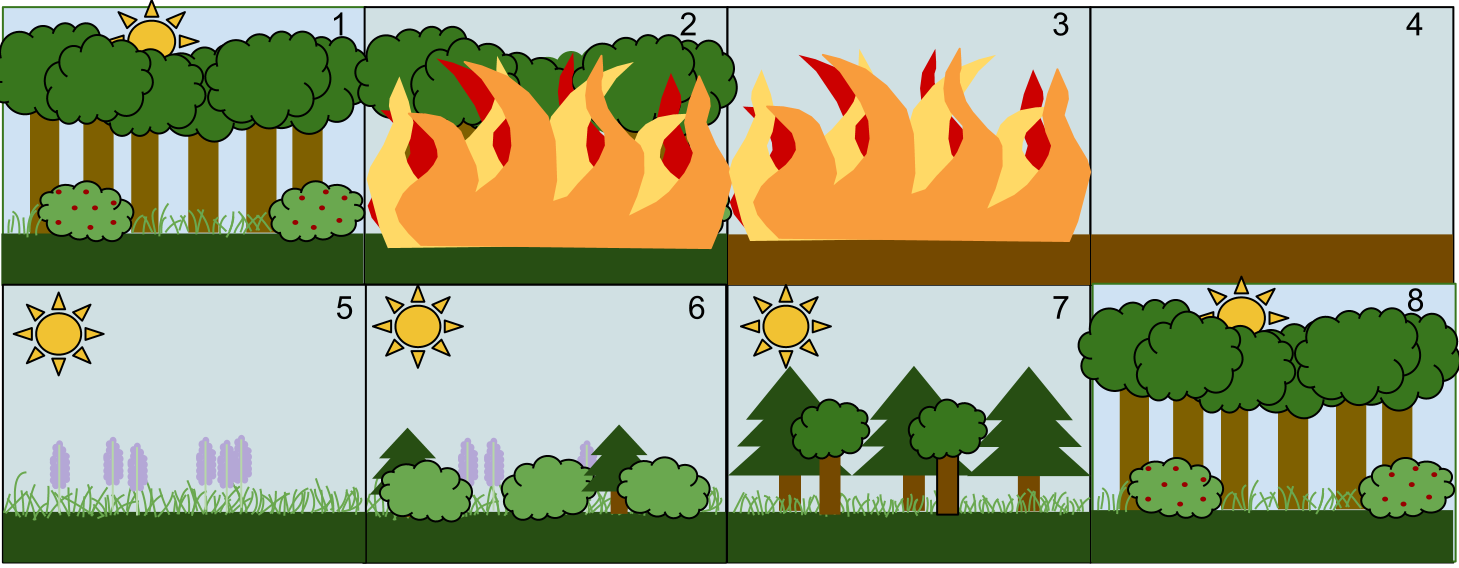
Is the above image an example of primary or secondary succession?
Is the above image an example of primary or secondary succession?