Log in
Sign up for FREE
arrow_back
Library

Punnett Practice Part 2

star
star
star
star
star
Last updated about 5 years ago
31 questions
1
1
1
1
1
1
1
1
1
1
1
1
1
1
1
1
1
1
1
1
1
1
1
1
1
1
1
1
1
1
1
Background Information for questions 1-6:
Farmers wanting certain traits in their crops or animals have used selective breeding. With selective breeding, farmers would choose individuals with the desirable traits and cross them (allow them to mate) with the hope that their offspring will show the desired traits. For example, turkeys have been selectively bred to produce more white meat, racehorses are selectively bred for speed, and wheat is selectively bred to produce larger heads of grain.

Farmer Joe gets two pea plants from his neighbor. He is hoping to have a whole generation of TALL F1 offspring.
T= tall
t= short
Question 1
1.

Question 2
2.

Question 3
3.

Question 4
4.

Question 5
5.

Punnett Square Problem: (use for questions 6-8)
After finding out he may get some short pea plants from the 2 plants he got from his neighbor. He goes to the story and gets 2 more pea plants. This time, one of farmer Joe’s pea plants is homozygous dominant and the other is a heterozygous. Use T's to represent the alleles for pea plant height. He hopes that maybe this time there will be greater chances of all tall pea plants in the F1 generation
Question 6
6.

Question 7
7.

Question 8
8.

There are so many different patterns of inheritance that traits can follow. So far we have looked at traits that follow a pattern called "complete dominance. Most human traits don't follow this pattern and are far more complex. Another pattern of inheritance is called Codominance.
Question 9
9.

Codominance is when one both alleles show up in the heterozygous form. For example if in monsters P= purple fur and G= green fur, the possible monster genotypes and phenotypes are:
PP- purple fur
PG- purple and green spotted fur or something like that
GG- green fur
Notice since both alleles are dominant, they both get their own capital letter.
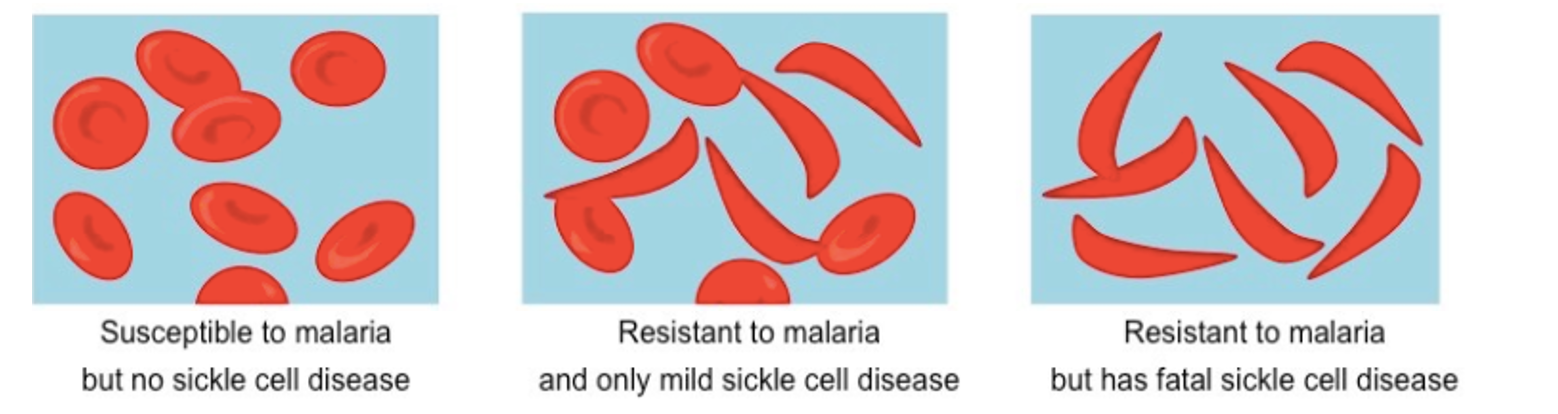
Background Codominance Problems (use for 10-13): Sickle cell anemia, as we have learned about before, is a genetic disorder that can be passed on to offspring. If a child receives the allele for normal red blood cells from either parent they will show the phenotype of normal red blood cells. If a child receives the allele for sickled red blood cells from either parent they will show the phenotype of sickle red blood cells. If they get one allele for sickle and one for normal, they will show both the phenotypes for sickle cells and normal red blood cells. In other words, alleles are never hidden, whatever is present, shows. Red blood cell type has been found to be linked with malaria resistance as shown below.
Question 10
10.

Question 11
11.

Question 12
12.

Question 13
13.

Background Codominance Problems (use for 14-17 ) Horse fur follows the same pattern as blood cell shape- codominance. If horses inherit the allele for white fur (W) from both parents they will show white hair. If horses inherit the allele for brown hair from both parents they will show brown hair (B). If a horse inherits the allele for white hair from one parent and brown from the other they will show both brown and white hairs scattered throughout their coat. This is called a roan horse.
Question 14
14.

Question 15
15.

Question 16
16.

Question 17
17.

Question 18
18.

Incomplete is when a mix of the alleles shows up in the heterozygous form.
For example if in monsters R= red fur and R'= yellow fur, the possible monster genotypes and phenotypes are:
RR= red
RR'= orange purple and green spotted fur or something like that
R'R'= yellow

Notice since neither allele is fully recessive or dominant, we use one letter, all capital, one allele gets a prime symbol '
Background Incomplete Problems (use for 19-22 ) Hair texture follows a new pattern of inheritance. If a child receives a curly hair allele from both parents they will have curly hair (C). If a child receives a straight hair allele from each parent they will have straight hair (C'). If a child receives a curly hair allele from one parent (C) and a straight hair allele from the other (C') than they will have wavy hair (a mix as in incomplete dominance BOTH traits show in the heterozygote).
Question 19
19.

Question 20
20.

Question 21
21.

Question 22
22.

Background Incomplete Problems (use for 22-25 ) Tulip color follows the same pattern of inheritance as hair texture (incomplete dominance). If a tulip receives an allele for white color from each parent, it will be white (R’). If a tulip receives an allele for red color (R) from each parent it will be red. If a tulip receives a red allele from the mom and a white allele from the dad then the tulip will be pink.
Question 23
23.

Question 24
24.

Question 25
25.

Question 26
26.

CHALLENGE:
Background Incomplete Problems (use for 26-30): Some traits are sex linked...this means they are found on the sex chromosmes X or Y. This makes them a little more complex to follow! See if you can complete this challenge! Important: XX= femalechromsomes, XY= male. When examining sex linked traits we put the alleles linked to the chromsome they are on!

Color blindness (b) is far more common in men than woman. It is a recessive trait so only shows when an individual is homozygous recessive. It is passed down on chromosome number 23, the sex chromosome. Only on the X chromosome. An exponent is attached to the X chromosome because this is an X-linked disease with either the dominant (B= normal eye sight) or recessive form (b= color blind).

Color blind female XbXb
Normal vision female XBXB or XBXb
Color blind male XbY
normal vision male XBY
Question 27
27.

Question 28
28.

Question 29
29.

Question 30
30.

Question 31
31.

If a plant has the genotype TT what will the their phenotype?
tall
short
If a plant has the genotype Tt what will the their phenotype?
tall
short
If a plant has the genotype tt what will the their phenotype?
tall
short
Joe finds out the pea plants he got are both heterozygous. What is the genotype for both parents?
TT
Tt
tt
What is the chance Farmer Joe has pea plants that are tall after mating these two parents? Start by writing the parent genotypes from question 4 along the blanks at the top. Then complete the punnett square and phenotype and genotype ratios along the side.
0%
25%
50%
75%
100%
What is the genotype of the homozygous dominant pea plant?
TT
Tt
tt
What is the genotype of the heterozygous pea plant?
TT
Tt
tt
What is the chance Farmer Joe has pea plants that are tall after mating these two parents? Start by writing the parent genotypes from questions 6 and 7 along the blanks at the top. Then complete the punnett square and phenotype and genotype ratios along the side.
0%
25%
50%
75%
100%
Based on its name codominance is most likely
When one allele masks the other in the heterozygous form (ex: red x white flower= red)
When one both alleles mix and show in the heterozygous form (ex: red x white flower = pink)
When both alleles are present in the heterozygous form (ex: red x white flower = spotted red and white)
S represents the allele for sickle red blood cells. N represents the allele for normal red blood cells.
If a person has the genotye SS what is their phenotype?
normal red blood cells- susceptible to malaria but on sickle cell disease
sickled red blood cells- resistant to malaria but fatal sickle cell disease
both normal and sickled red blood cells- resistant to malaria and mild sickle cell disease
S represents the allele for sickle red blood cells. N represents the allele for normal red blood cells.
If a person has the genotye NN what is their phenotype?
normal red blood cells- susceptible to malaria but no sickle cell disease
sickled red blood cells- resistant to malaria but fatal sickle cell disease
both normal and sickled red blood cells- resistant to malaria and mild sickle cell disease
S represents the allele for sickle red blood cells. N represents the allele for normal red blood cells.
If a person has the genotye NS what is their phenotype?
normal red blood cells- susceptible to malaria but on sickle cell disease
sickled red blood cells- resistant to malaria but fatal sickle cell disease
both normal and sickled red blood cells- resistant to malaria and mild sickle cell disease
Perform a cross between a normal red blood cell mom and a heterozygous. What is the probability this set of parents has a child with fatal sickle cell disease (SS)?
0%
25%
50%
75%
100%
If a horse has the genotye WW what is their phenotype?
White
Roan
Brown
If a horse has the genotye BB what is their phenotype?
White
Roan
Brown
If a horse has the genotye BW what is their phenotype?
White
Roan
Brown
Perform a cross between a roan female horse and a white male horse. What is the probability this set of parents has an offspring with brown fur?
0%
25%
50%
75%
100%
Incomplete domiance is a third pattern of inheritance traits can follow. Based on its name incomplete dominance is most likely
When one allele masks the other in the heterozygous form (ex: red x white flower= red)
When one both alleles mix and show in the heterozygous form (ex: red x white flower = pink)
When both alleles are present in the heterozygous form (ex: red x white flower = spotted red and white)
If a person has the genotype CC what is their phenotype for hair texture?
Straight
Curly
Wavy
If a person has the genotype C'C' what is their phenotype for hair texture?
Straight
Curly
Wavy
If a person has the genotype CC' what is their phenotype for hair texture?
Straight
Curly
Wavy
Perform a cross between a curly haired father and straight haired mother. What is the chance of the offspring having curly hair like their father? Use a Punnett Square to provide evidence for your answer.
0%
25%
50%
75%
100%
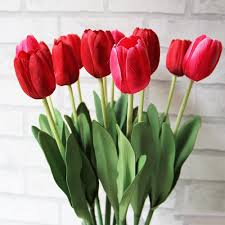
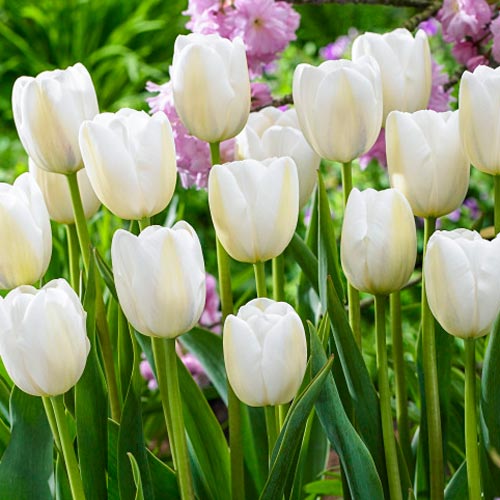
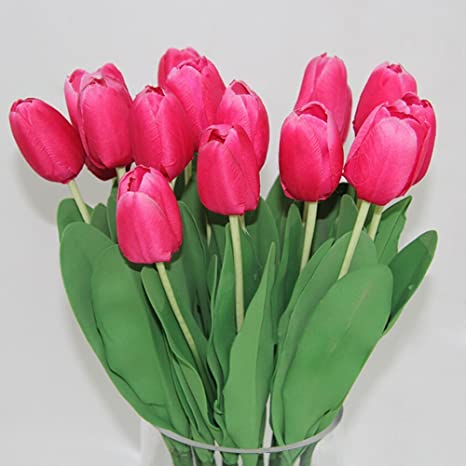
What is the genotype of the tulip shown ?
RR
RR'
R'R'
What is the genotype of the tulip shown ?

RR
RR'
R'R'
What is the genotype of the tulip shown ?


RR
RR'
R'R'
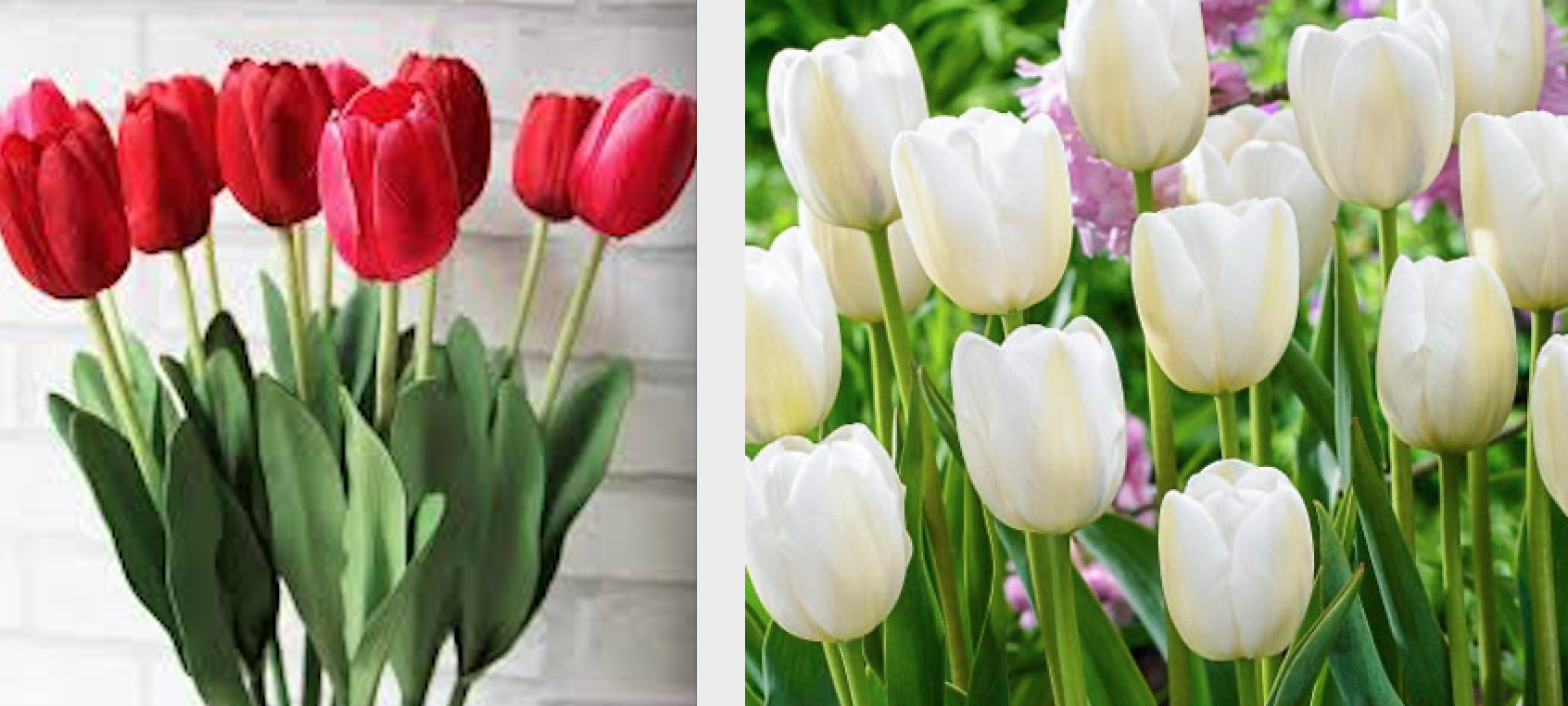
Perform a cross between the parent tulips shown. If these plants where cross pollinated.......What is the predicted percentage of pink F1 tulips?
0%
25%
50%
75%
100%
If an individual has the chromosome pair XX
they are female
they are male
If an individual has the genotype XBXB
they are female with normal eye sight
they are male with normal eye sight
they are a color blind female
they are a color blind male
If an individual has the genotype XbY
they are female with normal eye sight
they are male with normal eye sight
they are a color blind female
they are a color blind male
If dad has normal eye sight (XBY) and mom is color blind (XbXb)....what is the percent chance this parent set has an offspring that is a color blind female? Use a punnett square to show your work.
0%
25%
50%
75%
100%
Use your punnett square from question 29....what is the percent chance this set of parents has an offspring that is a colorblind male?
0%
25%
50%
75%
100%