Practice Quiz Objective 19

Last updated over 4 years ago
6 questions
Background:
Tony Allison first noticed a connection between malaria and the sickle cell trait while working in East Africa in the 1950s. The story of his discovery stands as one of the best understood examples of natural selection in humans in which the selective agent, adaptive mutation, and molecule involved are all known. The protection against malaria provided by the sickle cell mutation demonstrates how evolution does not necessarily result in optimal solutions for the species but proceeds in response to selective pressures by utilizing what variation is available. He noticed that where there was a high incidence of malaria there were also high levels of sickle cell disease. Where there was low amounts of malaria there was also low levels of sickle cell disease.
1

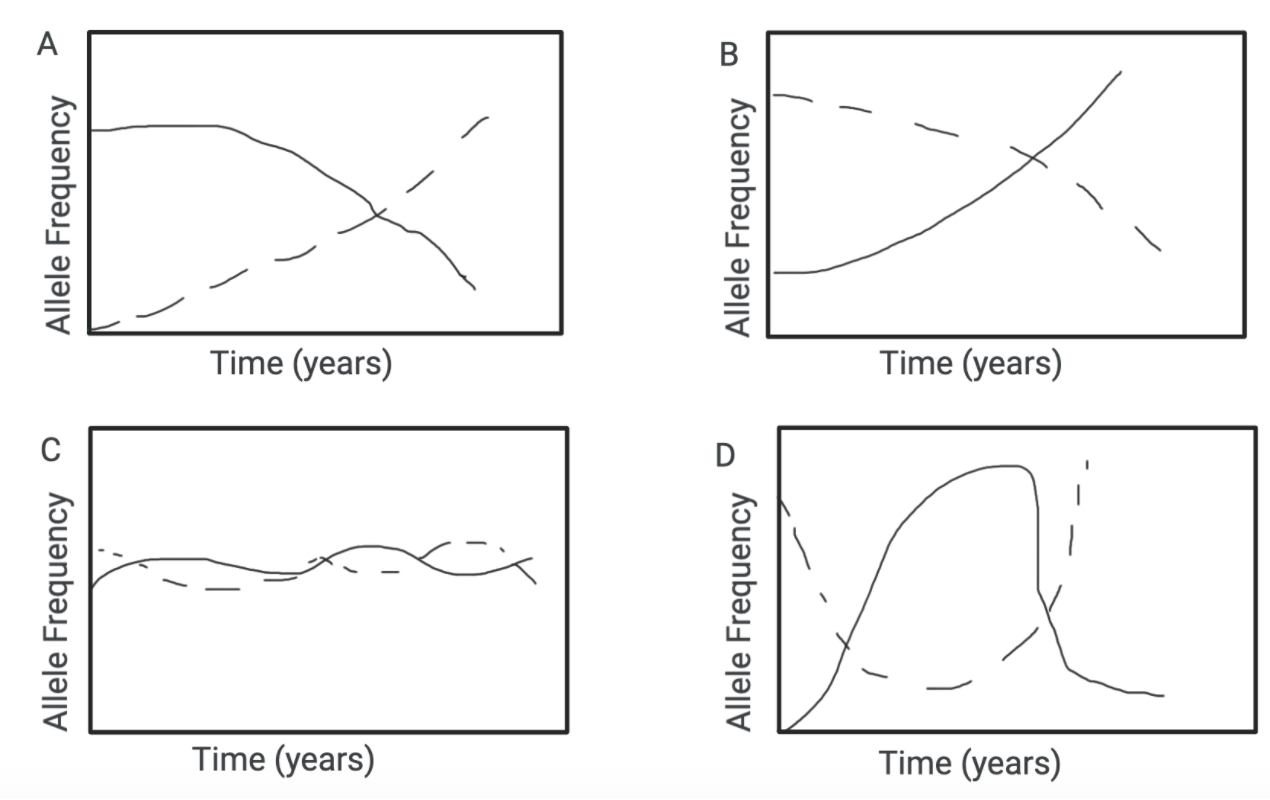
Based on knowledge from the lab, which graph do you think best predicts what will happen to the relative frequency of Alleles A and S in the population of Nairobi individuals over many generations if Malaria IS present? NOTE: Dashed line = Allele for Normal RBC, Solid line = Allele for Sickled RBC
1

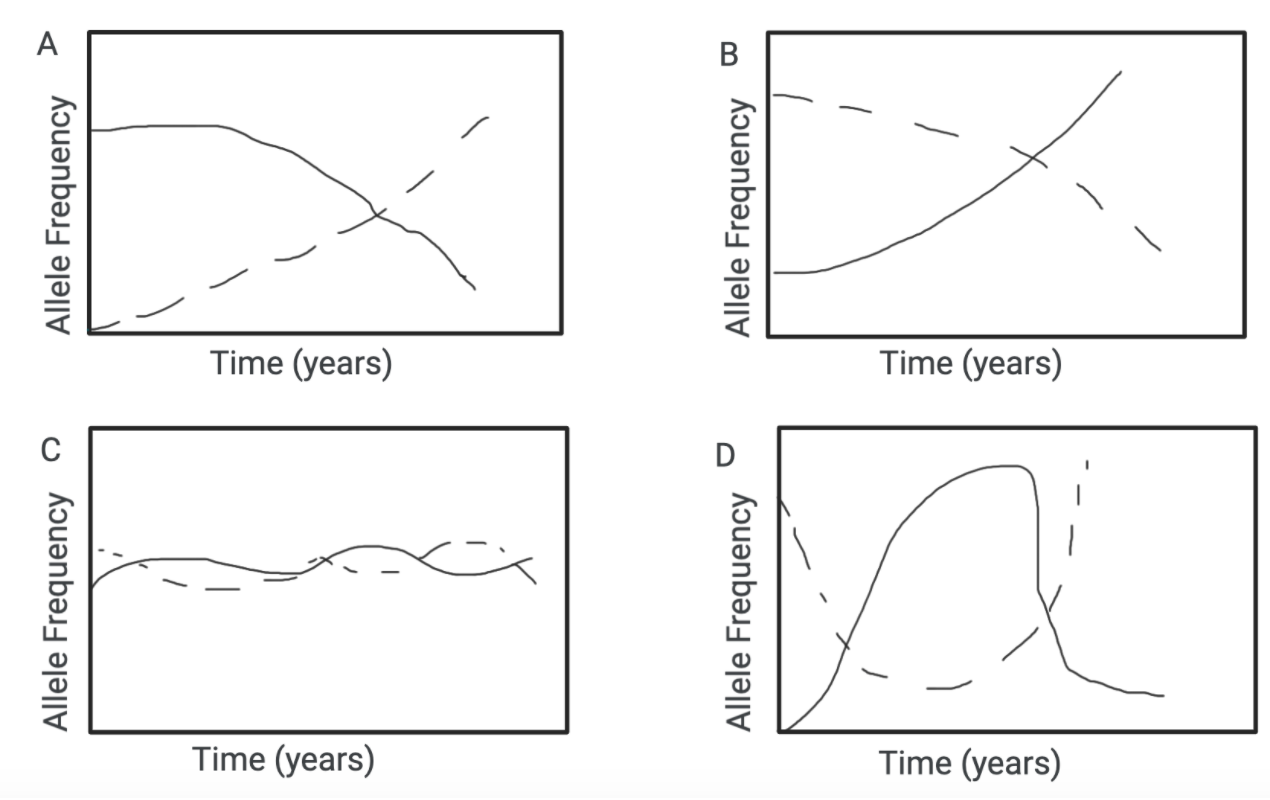
Which graph do you think best predicts what will happen to the relative frequency of Alleles A and S in the population of Stockton individuals over many generations? NOTE: Dashed line = Allele for Normal RBC, Solid line = Allele for Sickled RBC
1

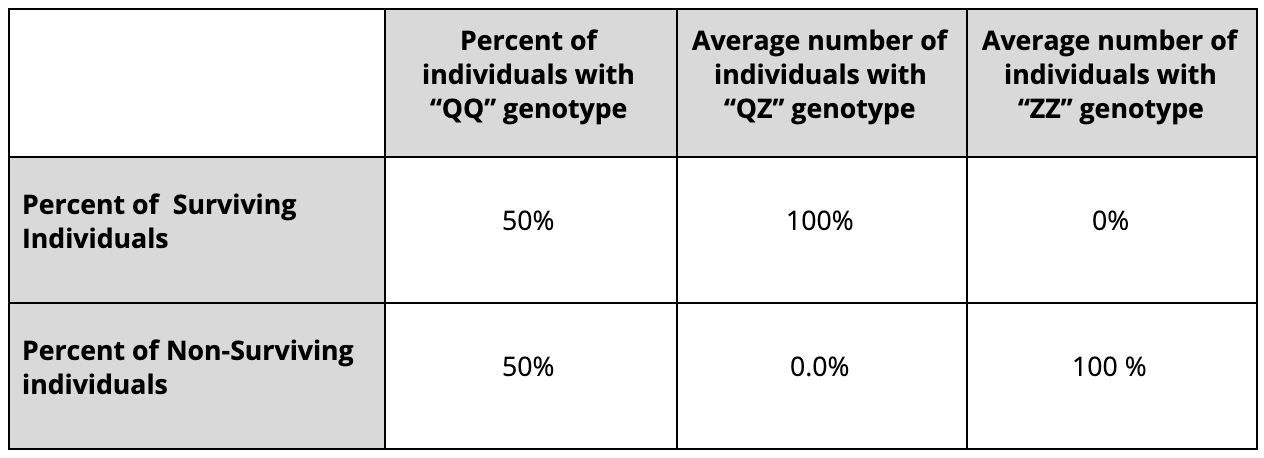
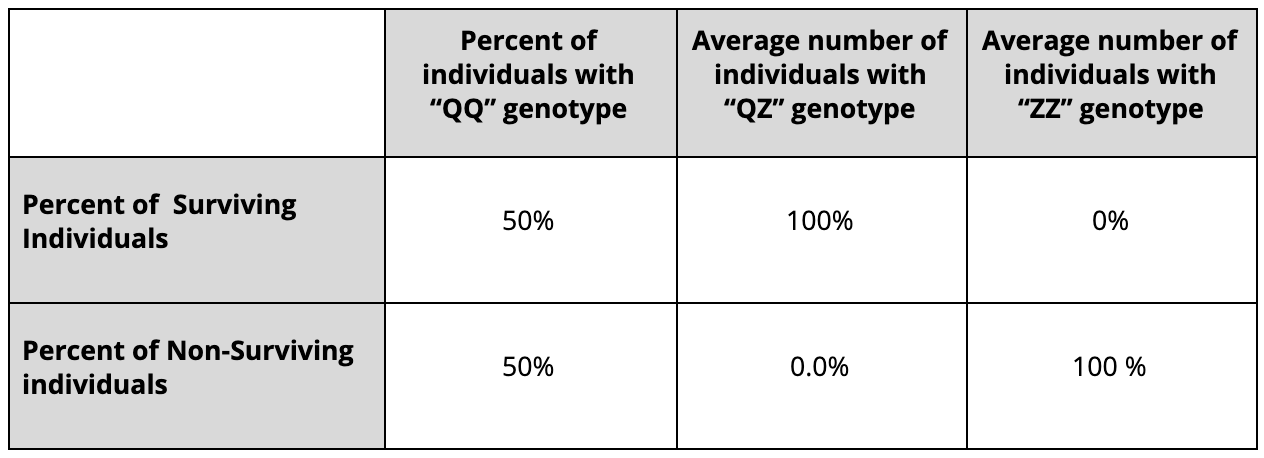
Recent scientific studies have documented variation in the alleles of Nairobi individuals. The alleles being studied are indicated as Q and Z below and represent alternative versions of a trait that affects red blood cell shape in individuals in an area with high malaria presence. (I picked random letters so you don't automatically know which represents cikled and which represents normal)

First: Select a claim to answer the question: Which allele codes for sickled red blood cells (hemoglobin S)?

1

Then: Provide evidence from the table below and an explanation, to support the claim you selected in question 4.

1

Table 2. Percent survival of individuals when Malaria IS present and a threat in Nairobi.

If a vaccine comes out for people in Nairobi, that protects from malaria, for the next 1,000 years...
  1. predict how the proportion of Q alleles of the population, living in the area, will change (increase, decrease) and
  2. justify your predictions using evidence from the table above.
Copy and complete the following, to guide your response: I predict the proportion of individuals in Nairobi with the Q allele will INCREASE/DECREASE (pick one) because:

1

Is the scenario presented in question 5 above, microevolution or macroevolution? How do you know? Be VERY specific. `