Experimental Variable Questions: Correct answers to the questions in this section show mastery of the learning target below.
-I understand what experimental variables are and how to apply them.
1 point
1
Question 1
1.
Draggable item
arrow_right_alt
Corresponding Item
Independent Variable
arrow_right_alt
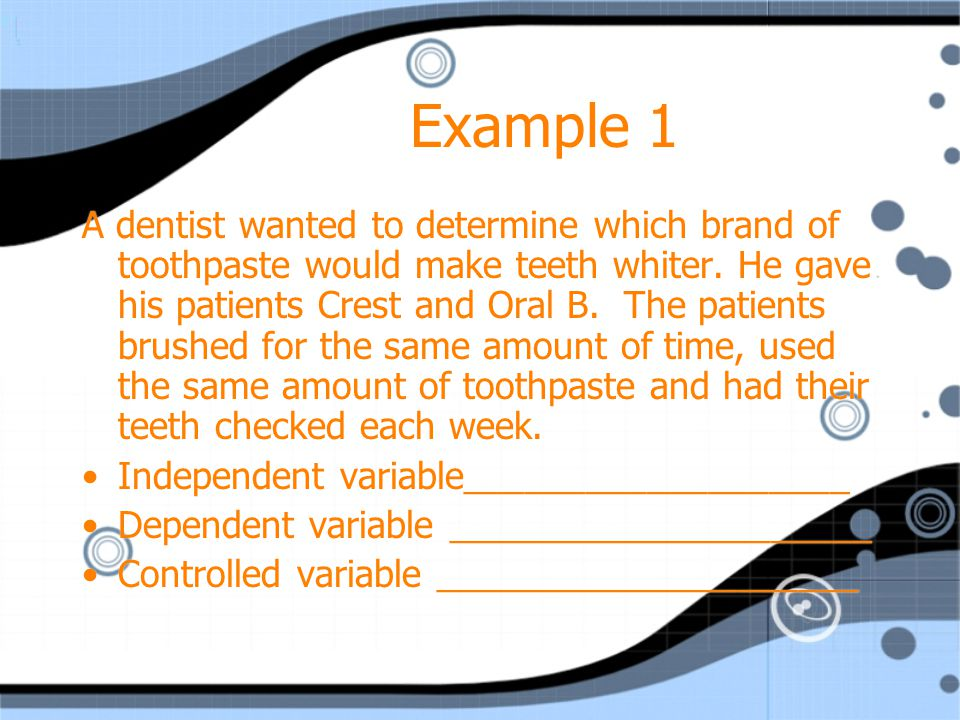
Brand of toothpaste
Dependent Variable
arrow_right_alt
How white your teeth can get
Constant
arrow_right_alt
Brushing the same amount of time and using the same amount of toothpaste
1 point
1
Question 2
2.
You give four sunflowers different watering with either pure water or different concentrations of salt solutions. After a two-week period, the height of the sunflowers is measured.
Draggable item
arrow_right_alt
Corresponding Item
Two week period
arrow_right_alt
Independent Variable
Different watering- water or different concentrations of salt water
arrow_right_alt
Dependent Variable
Height of sunflowers
arrow_right_alt
Constant
1 point
1
Question 3
3.
Mosquito repellant is sprayed on one arm and the other arm is not sprayed. The number of mosquito bites is counted after 2 hours. What is the independent variable?
1 point
1
Question 4
4.
Draggable item
arrow_right_alt
Corresponding Item
Independent variable
arrow_right_alt
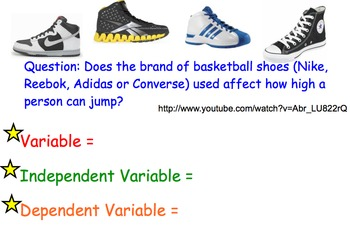
Type of Shoes
Dependent variable
arrow_right_alt
How high a person can jump
1 point
1
Question 5
5.
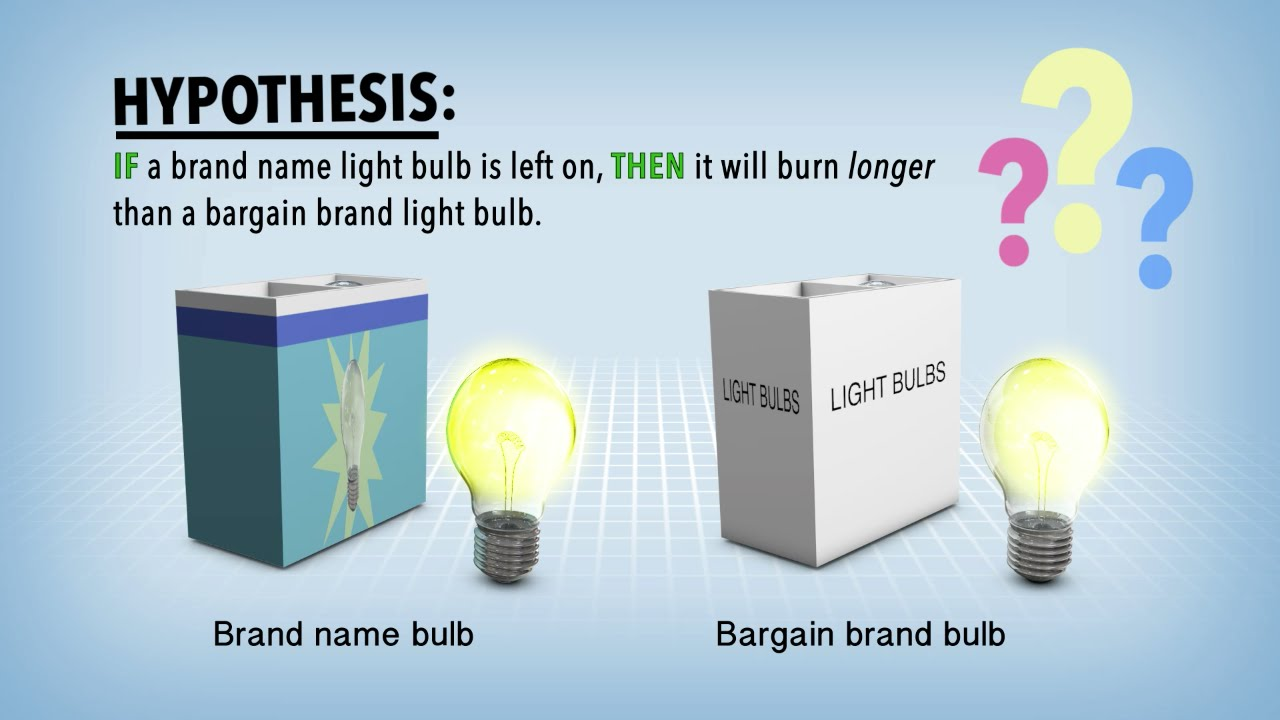
If the independent variable is the type of light bulb then which axis would you graph this on?
Energy Unit Test Part 1: Correct answers to the questions in this section show mastery of the learning targets below.
- I understand what energy is.
- I understand the difference between kinetic and potential energy.
1 point
1
Question 6
6.
Which of the statements below is TRUE about energy (this means THREE of the statements below are FALSE, do not choose one of these FALSE statements).
1 point
1
Question 7
7.
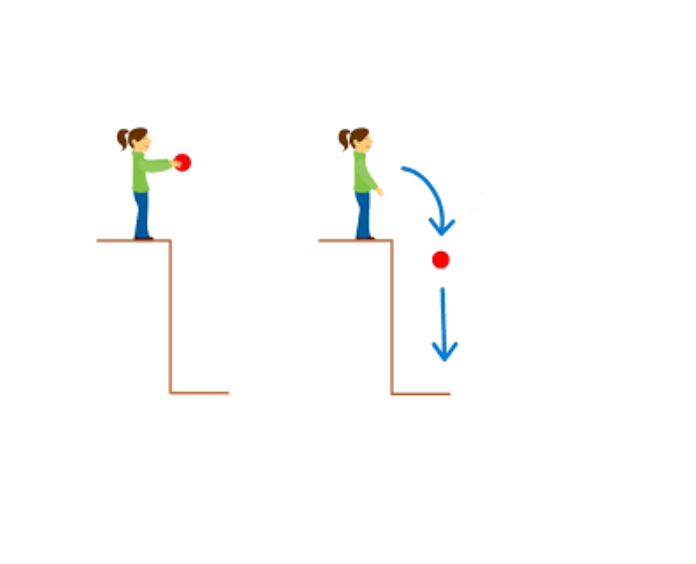
In the image above, which ball above best represents potential energy?
1 point
1
Question 8
8.
Which of the following BEST demonstrates kinetic energy?
1 point
1
Question 9
9.
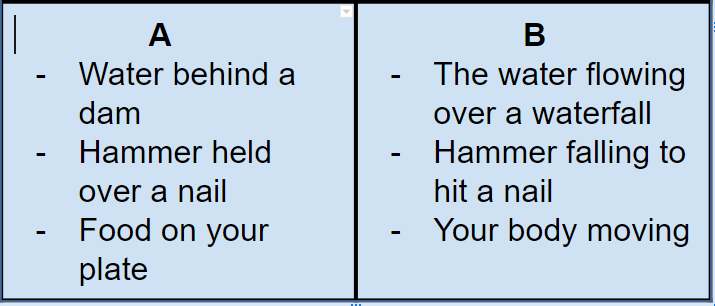
Do the examples in box A or box B represent kinetic energy?
Energy Unit Test Part 2: Correct answers to the questions in this section show mastery of the learning targets below.
- I understand how energy can be transferred from one object or system to another.
1 point
1
Question 10
10.
Which of the statements below is a TRUE statement and best describes the Law of Conservation of Energy?
1 point
1
Question 11
11.
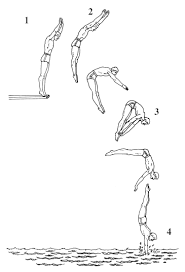
At which point does this diver have the MOST kinetic energy, and the LEAST potential energy?
1 point
1
Question 12
12.
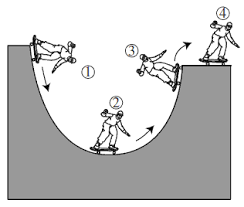
True or False: The skateboarder above has transferred potential energy to kinetic energy, and back to potential energy again in this image from point 1 to point 4. Also, this skateboarder has the same amount of TOTAL energy no matter which position he is on the ramp. *Hint: Remember Law of Conservation of Energy!*
1 point
1
Question 13
13.
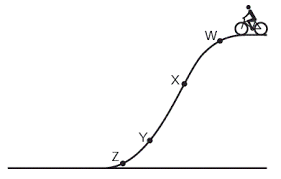
The diagram above represents a bicyclist at the top of a hill, with four points labeled W, X, Y, and Z.
From point W to point Z, how will this bicyclist tranfer their energy.
1 point
1
Question 14
14.
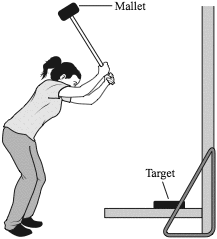
While playing a game at a fair, a person lifts a mallet above her head. She then lets the mallet fall toward a target, as shown below.
Which of the following statements describes an energy change that takes place as the person lifts the mallet and then lets it fall toward the target.
1 point
1
Question 15
15.
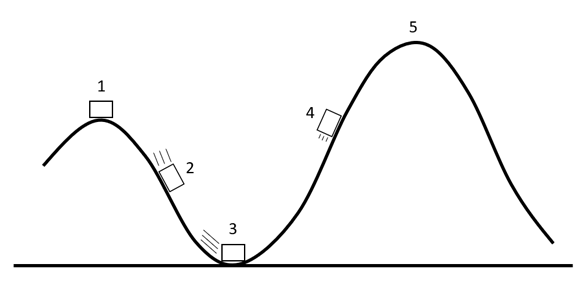
A rollercoaster moves on a roller coaster track through positions 1, 2, 3, 4, and 5. At what position will the roller coaster most likely have the greatest kinetic energy?
1 point
1
Question 16
16.
What happens to the kinetic energy and potential energy of a ball that is being held but then let go into a free fall?
1 point
1
Question 17
17.
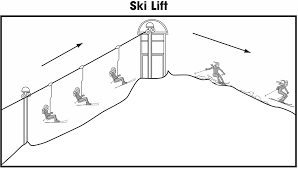
The picture below shows the different positions of a skier as she is lifted to the top of a slope and then skis down the other side.
Which statement best explains the change in the skier's kinetic and potential energy?
Energy Unit Test Part 3: Correct answers to the questions in this section show mastery of the learning targets below.
- I understand the relationship of kinetic energy to the mass of an object and the speed of an object.
1 point
1
Question 18
18.
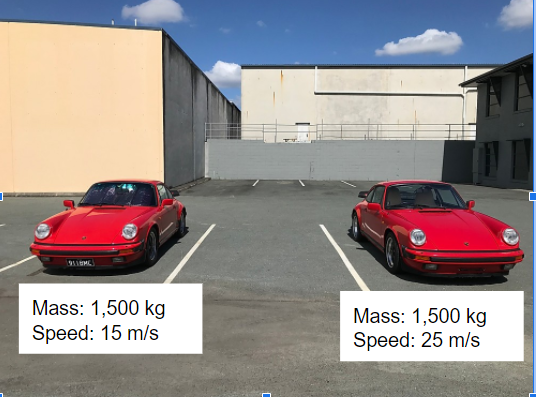
Two cars have the same exact mass. When the two cars begin traveling, one of the cars has a speed of 15 m/s, and the other car has a speed of 25 m/s. Which car has the greatest amount of kinetic energy?
1 point
1
Question 19
19.
The faster an object moves, the ____________ kinetic energy it will have.
1 point
1
Question 20
20.
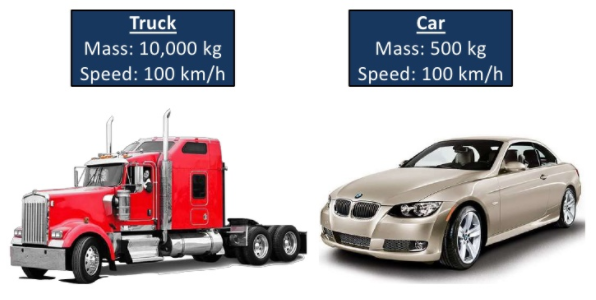
If two different objects are moving at the SAME speed, but are different masses, which of the objects below would have the greatest amount of kinetic energy?
1 point
1
Question 21
21.
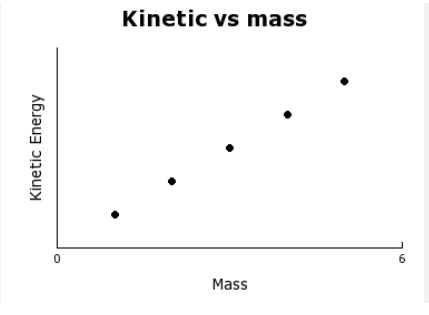
How would you describe the relationship between the mass of a car and its kinetic energy by looking at the graph below?
Energy Unit Test Part 4: Correct answers to the questions in this section show mastery of the learning targets below.
- I understand what happens to the amount of potential energy stored in a system when the arrangement of objects interacting at a distance changes.
1 point
1
Question 22
22.
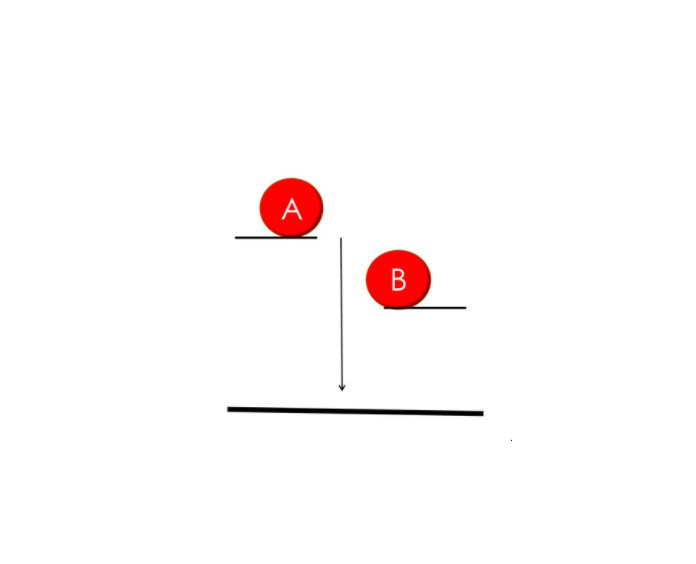
Which ball (A or B) has the most potential energy?
1 point
1
Question 23
23.
At which point would potential energy be the greatest?
1 point
1
Question 24
24.
The __________ something is the more energy it stores as potential energy.
1 point
1
Question 25
25.
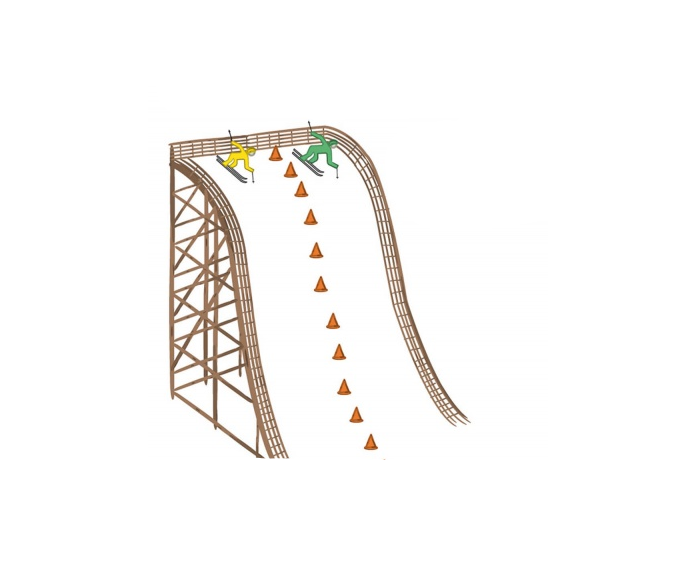
The green skier weighs MORE than the yellow skier. Which skier has the greatest amount of potential energy?