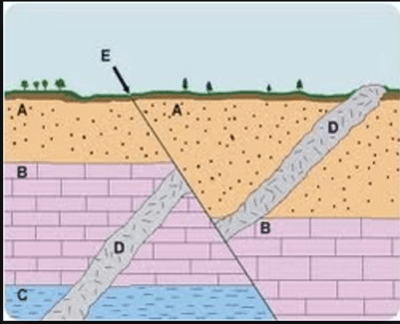
Which of the following orders the rock layers accurately from youngest to oldest?
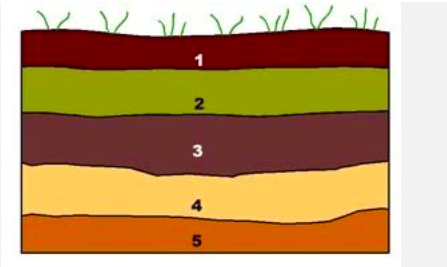
Which of the following orders the rock layers accurately from youngest to oldest?
Which of the following orders the rock layers accurately from youngest to oldest?
According to the law of superposition, the oldest fossils are found?

Which fossil is relatively the oldest?
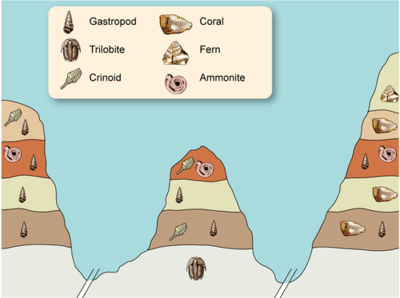
Analyze the seashell found in the white layer. Which statement is true of the rock layer that contains this fossil?
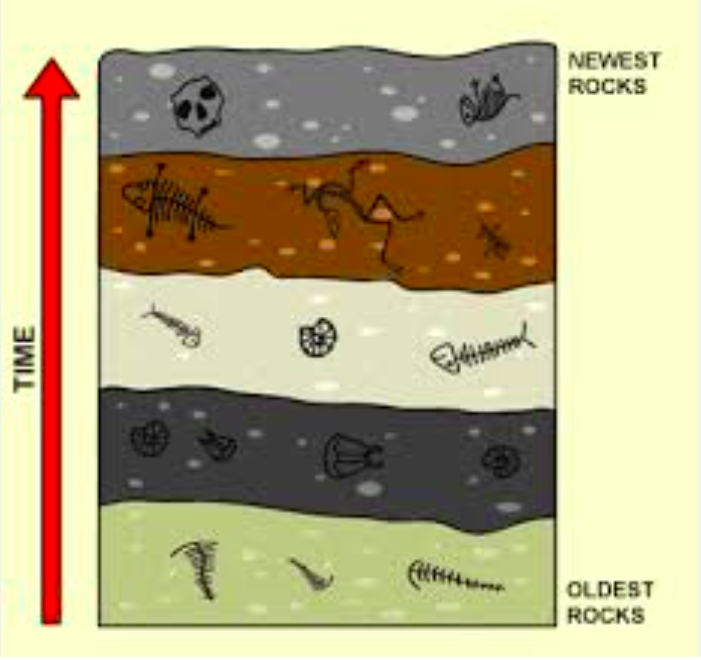
In order to qualify as a fossil, an object must be
Paleontologists consider fossils as
Order the events of how a fossil is made
| Draggable item | arrow_right_alt | Corresponding Item |
|---|---|---|
Step 3 | arrow_right_alt | An animal dies and is buried quickly |
Step 4 | arrow_right_alt | Decomposers break down the animals skin, muscles, and organ cells |
Step 2 | arrow_right_alt | Over time more layers develop over the sediment. |
Step 1 | arrow_right_alt | Layers of sediments cause pressure to squeeze water out of the bones |
Plants leave fossil remains known as
In this rock layer diagram there are two strange formations. The first is an earthquake fault at E. The second is an intrusion at D. Which occurred first? How do you know?