Weather Common Assessment

Last updated about 5 years ago
9 questions
Note from the author:
This assessment is designed to assess student knowledge of the heating and cooling of atmosphere and how this can cause land and sea breezes.
Weather Common Assessment

Standard: MS-ESS2-6: Develop and use a model to describe how unequal heating and rotation of the Earth cause patterns of atmospheric and oceanic circulation that determine regional climates.
Task:
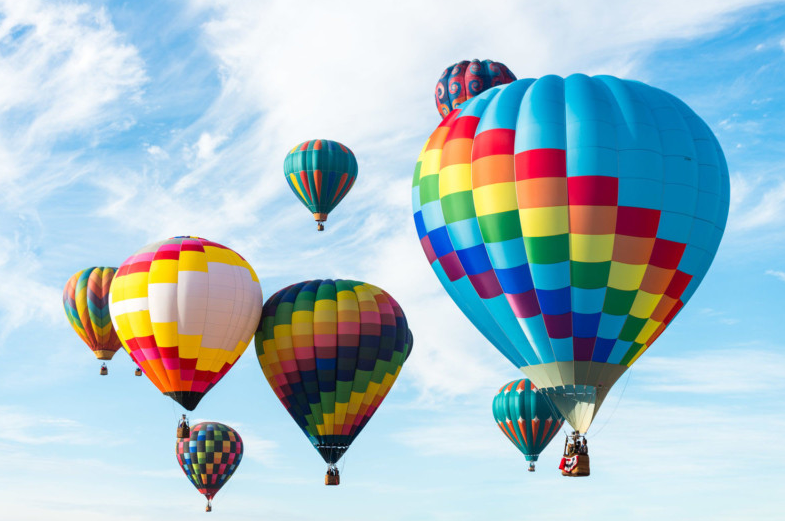
You want to take a ride in a hot air balloon when you go to the beach. You don’t want to end up in the ocean, so you need to figure out when the air will be moving between the ocean and the land.

During the day, the air will be moving one way, and during the night the air moves the opposite way.

Use what you know about the difference in heating of surfaces, and convection currents to figure when you want to go up in the balloon.
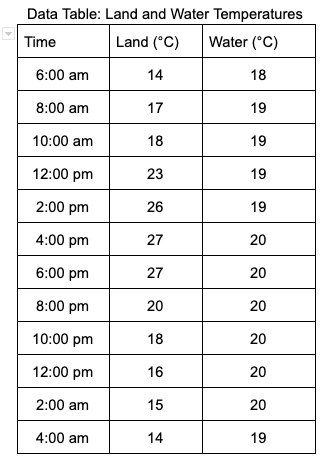
Use the data table below to answer Questions 1- 4.
1

During the day (6 am to 6 pm) which surface heats up more?

1

What evidence can you provide that supports your answer?

1

During the night (6 pm - 4 am) which surface cools down more?

1

What evidence can you provide that supports your answer?

In a hot air balloon, the air is heated by a flame at the bottom of the balloon. To rise faster you turn up the flame, making the air inside hotter. To fall, you turn off or lower the flame.

Draw a model of what is happening inside and outside the balloon that allows it to go up and down. In your model, show where energy transfer and transformation are occurring.
1

Create a model that shows: Why does the balloon go up when it is heated?

Here is a model checklist to help you when you create your model:
  • Air particles in the air
  • Air particles in the balloon
  • Arrows that show how the air particles move
  • more dense air
  • less dense air
  • hotter air
  • cooler air
  • energy transfer
  • energy transformation

1

Create a model that shows: Why does the balloon go down when you turn off the flame?

Here is a model checklist to help you when you create your model:
  • Air particles in the air
  • Air particles in the balloon
  • Arrows that show how the air particles move
  • more dense air
  • less dense air
  • hotter air
  • cooler air
  • energy transfer
  • energy transformation

Unequal heating of air over land and water results in breezes near shorelines. Draw a model that shows how the air moves in different directions at different times of the day. Remember to label the parts of your model, and indicate air flow using arrows:
1

Create a model that shows: How does air move over land and sea during the day.

Here is a model checklist to help you when you are creating your model:
  • land temerpature
  • water temerpature
  • air rising
  • air falling
  • hotter air
  • cooler air
  • arrows that show the movement of air
  • convection currents

1

Create a model that shows: How does air move over land and sea during the night?

Here is a model checklist to help you when you are creating your model:
  • land temerpature
  • water temerpature
  • air rising
  • air falling
  • hotter air
  • cooler air
  • arrows that show the movement of air
  • convection currents

1

Written Explanation
You want to go up in a hot air balloon at the beach.
  • What time of the day do you think would be the best time to take a ride in the balloon?
  • Take into consideration how the air will be moving at the beach.
  • Explain your answer using evidence from the model.