Log in
Sign up for FREE
arrow_back
Library

Biology Unit 1 Review

star
star
star
star
star
Last updated over 5 years ago
11 questions
1
1
1
1
1
1
1
1
1
1
1
Question 1
1.

Why are enzymes essential for digestion?

Question 2
2.

Which enzyme is produced by salivary glands and breaks down lipids?

Question 3
3.

Which enzyme is produced by salivary glands and breaks down carbohydrates?

Question 4
4.

Which enzyme is produced in the stomach and breaks down proteins?

Question 5
5.

What organ is responsible for breaking down proteins, glycogen, & starch?

Question 6
6.

What enzyme is produced in the small intestine and breaks down lactose?

Question 7
7.

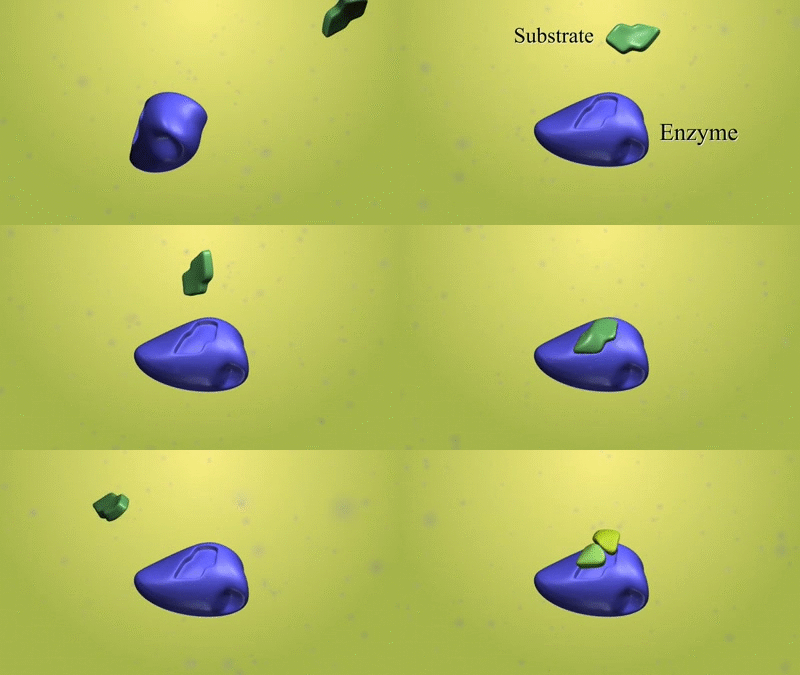
Question 8
8.

What is this model called?

Question 9
9.

Which of the following are true?

Use the whiteboard below to compare the 4 major macromolecules. Include information like structure, function, sources, elements, & monomer/polymer. You should have at least 5 characteristics listed under each macromolecule.
Complete the two quizlet matching sets below, with the goal of completing them in 10 seconds or less.
Label each cell on the whiteboard using the following terms (some may be used more than once): nucleus, nucleolus, nuclear membrane, cytoplasm, Golgi body, smooth ER, rough ER, lysosome, ribosome, chloroplast, mitochondria, cell membrane, cell wall, flagellum, cilia, centriole, capsule, vacuole, nucleoid
Question 10
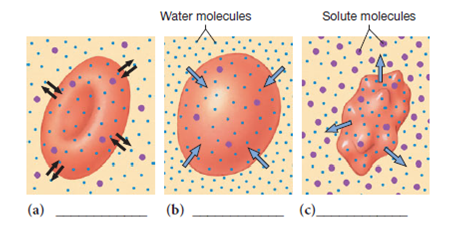
10.

Which choice below correctly identifies each solution?

Use the whiteboard below to label the hydrophilic phosphate head & hydrophobic lipid tail and explain how this structure helps the phospholipid serve as a component of the cell membrane.
Question 11
11.

What structural component serves as a means of transport across the cell membrane?

What is true about the graph?
Trypsin works best at a neutral pH
Pepsin works best at an acidic pH
Amylase works best at a basic pH
Trypsin has an optimum pH of 9
Pepsin has an optimum pH of 11
Amylase has an optimum pH of 7
pH has no effect on enzyme activity
The enzyme can be reused
A reaction occurs when the substrate is bound to the enzyme
The substrate remains unchanged
a)hypotonic b)hypertonic c)isotonic
a)isotonic b)hypotonic c)hypertonic