Practicing CRAAP!
star
star
star
star
star
Last updated almost 6 years ago
14 Nsɛmmisa
1
1
1
1
1
1
1
1
1
1
1
1
1
8
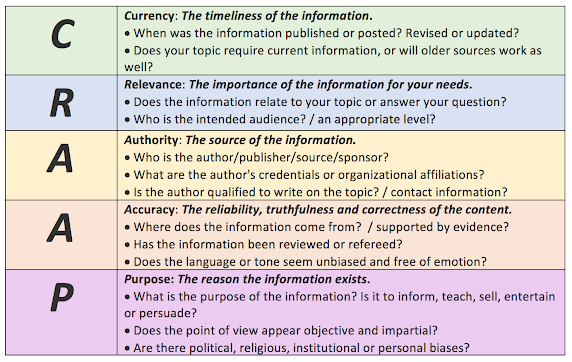
Now that we know what CRAAP is and how to evaluate sources, let's practice!
1. Choose one source from below. Analyze it and the topic it is presenting.
2. Answer the questions below in complete sentences.
3. Restate the question.
4. Check spelling and grammar.
5. Make sure to read all parts of the question (and analyze any pictures presented).
⬇️ ⬇️ ⬇️ ⬇️ ⬇️ ⬇️ ⬇️
Sources (choose one):
1. https://www.artinstitutes.edu/about/blog/the-history-and-evolution-of-cell-phones
2. https://www.washingtonpost.com/news/the-switch/wp/2014/09/09/the-history-of-the-mobile-phone/
3. https://www.battlefields.org/learn/civil-war/battles/gettysburg
4. https://www.historycrunch.com/causes-of-the-french-revolution.html#/
5. http://en.chateauversailles.fr/discover/history#louis-xiii-and-versailles1607---1638
6. http://www.minot.com/tom/SocialMedia.pdf
7. https://www.socialmediatoday.com/news/the-history-of-social-media-infographic-1/522285/
8. https://www.mentalfloss.com/article/73450/11-facts-about-alexander-hamilton-his-birthday
Which source did you choose?
What is the topic of the source?
CURRENCY: When was the informationpublished/posted? Revised/updated?
If there is no date, explain that. Think about WHY there is not a date.
CURRENCY: Does your topic requirecurrent information, or will older sources work as well?
RELEVANCE: Do you understand what the source is telling you about the topic?
RELEVANCE: Who is the intended audience of this source?
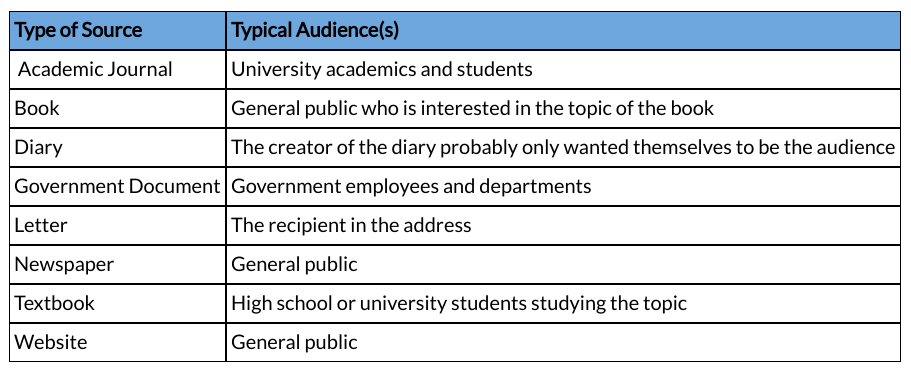
(Be more specific than general public - gender, age group, interest group.)
AUTHORITY: Who is the author of the source? If there is no author, why not?
AUTHORITY: What does the URL (web address) reveal about the source?
AUTHORITY: What are the author's/website's credentials*?
*Definition: qualification, achievement, personal quality, or aspect of a person's background, typically when used to indicate that they are suitable for something
ACCURACY: Does the source seem unbiased and free of emotion? If not, what is the bias?
ACCURACY: Is the information supported by evidence or other sources?
ACCURACY: Can you verify (confirm) the information using other sources?
PURPOSE: What is the purpose* of this source? How can you tell?
*Inform, teach, entertain, sell, or persuade.

EVALUATE YOUR SOURCE: Is this source reliable for research? Why or why not?
Restate the question.
Write in complete sentences.
At least 4 reasons why/why not reliable.
Proper spelling and grammar.