Modeling Molecules and Substances
star
star
star
star
star
Last updated almost 6 years ago
21 Nsɛmmisa
Hyɛ no nsow a efi ɔkyerɛwfo no hɔ:
This is a lesson on modeling molecules and classifying matter.
1
1
1
1
1
1
1
1
1
1
1
1
1
1
1
1
1
1
1
1
This is a lesson on modeling molecules and classifying matter.
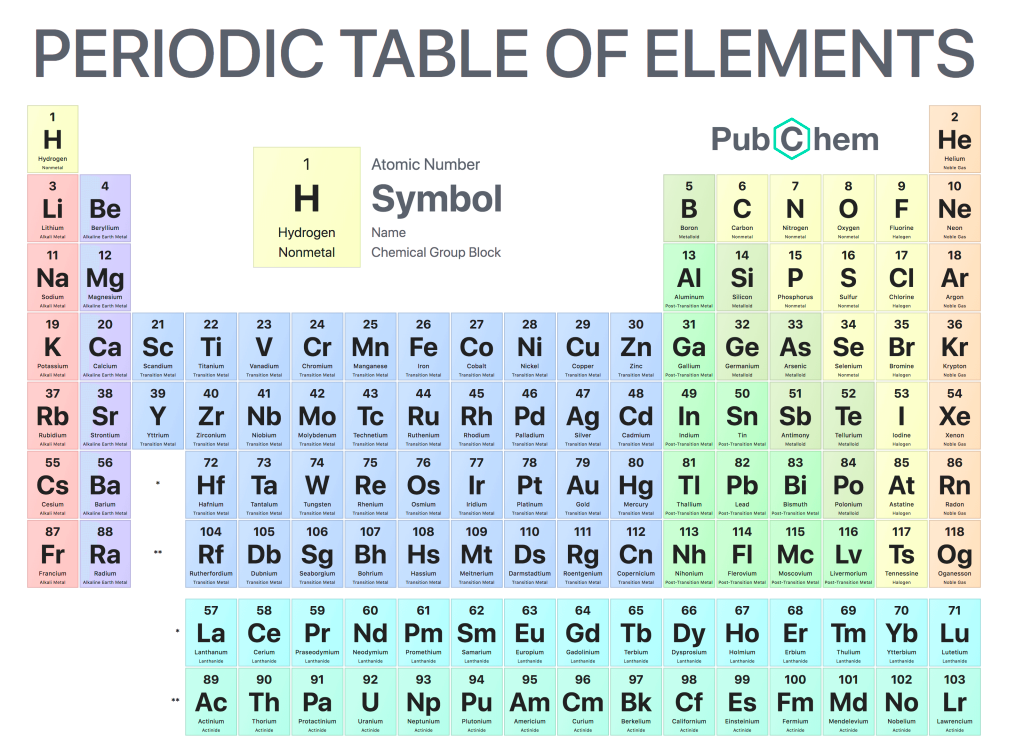
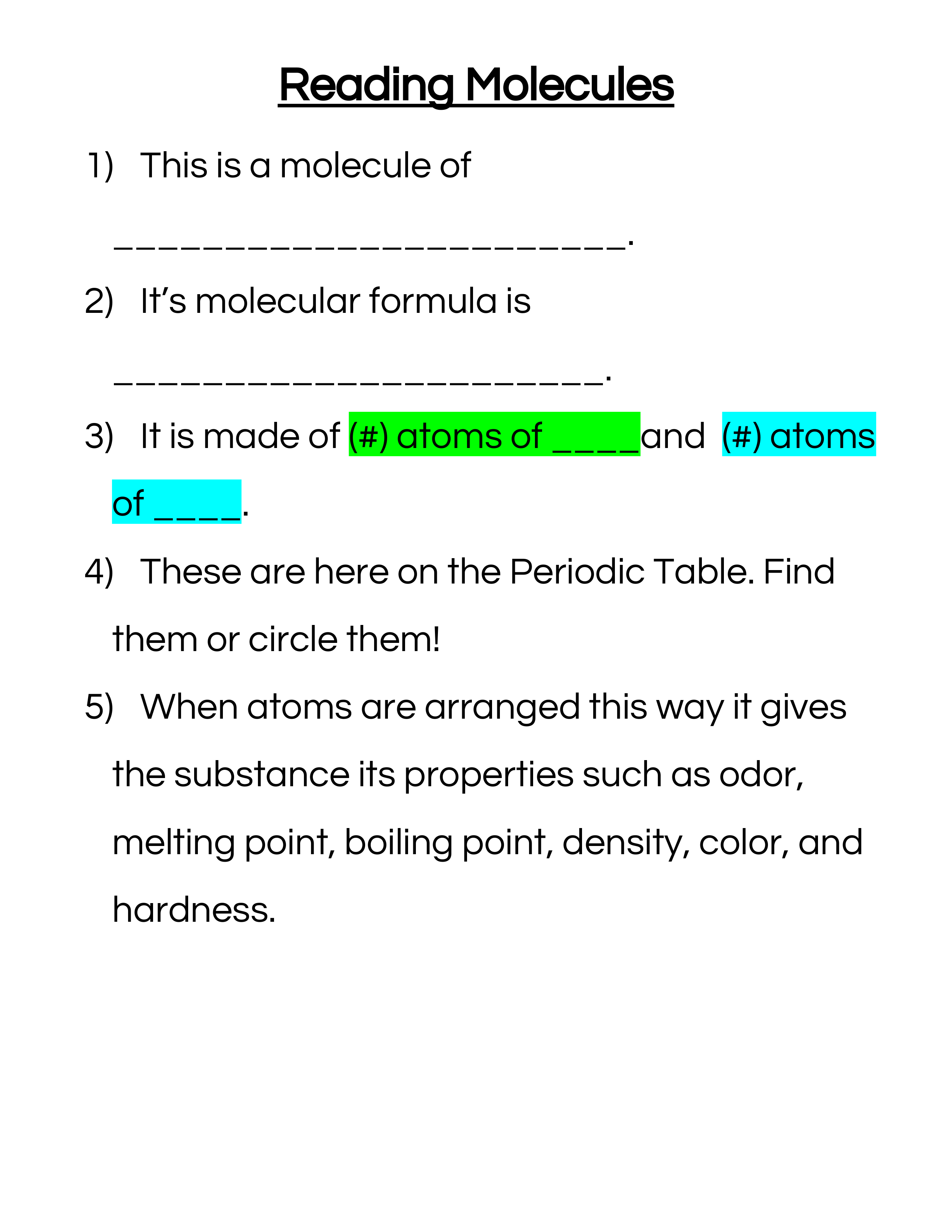
Circle the elements (building blocks) that made up the molecules on our paper from class today.
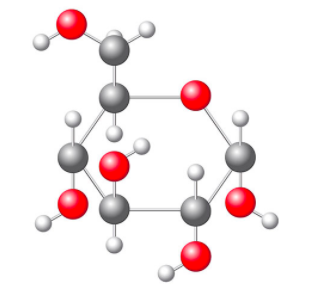
How many carbon atoms make up this molecule?
How many oxygen atoms make up this molecule?
How many hydrogen atoms make up this molecule?
Glucose's molecular formula is
Grab an item in your pantry. Take of photo of the label HERE. Circle if it contains fats, carbohydrates or proteins.
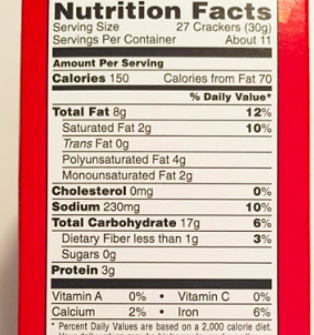
Select which complex food molecules are in your pantry item.
Which of the following statements is true about the molecules that make up our food.
Add the following notes into your science journal. When you are finished please check the box.
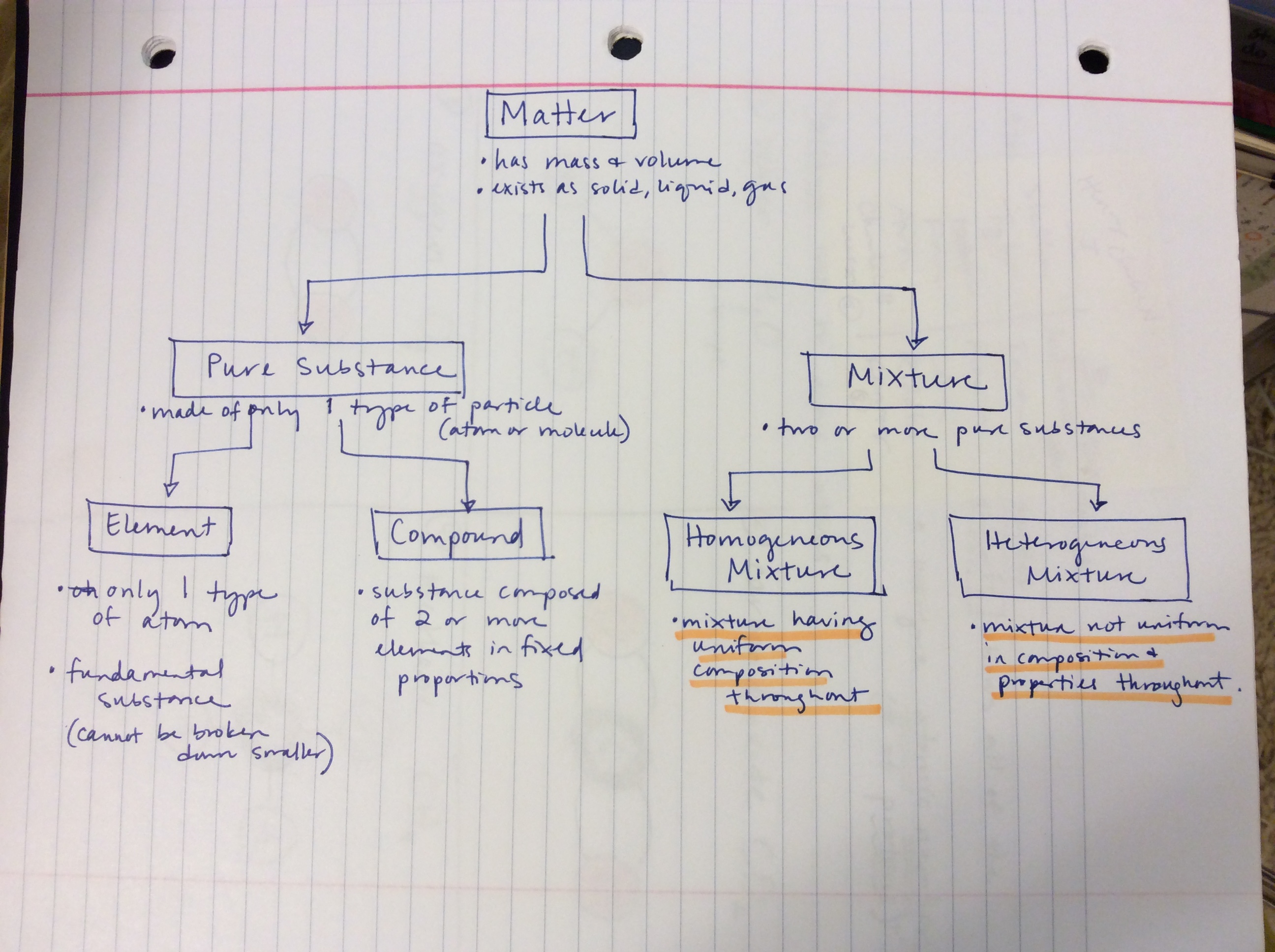
Criteria for Success:
Everyone on task during the break out time
Reading is an agreed, shared responsibility
Ask each other questions as you are working.
Quiet time for writing questions is provided.
Time is monitored well.
The video is important to watch too.
As a group, sort the examples in the article into the correct category after reading the article.
perfectly stirred chocolate milk
steel
salad
unopened soda
air
vinegar
dishwashing detergent
toy box filled with toys
salt and sand
atmosphere
homogenous mixtures
heterogeneous mixtures
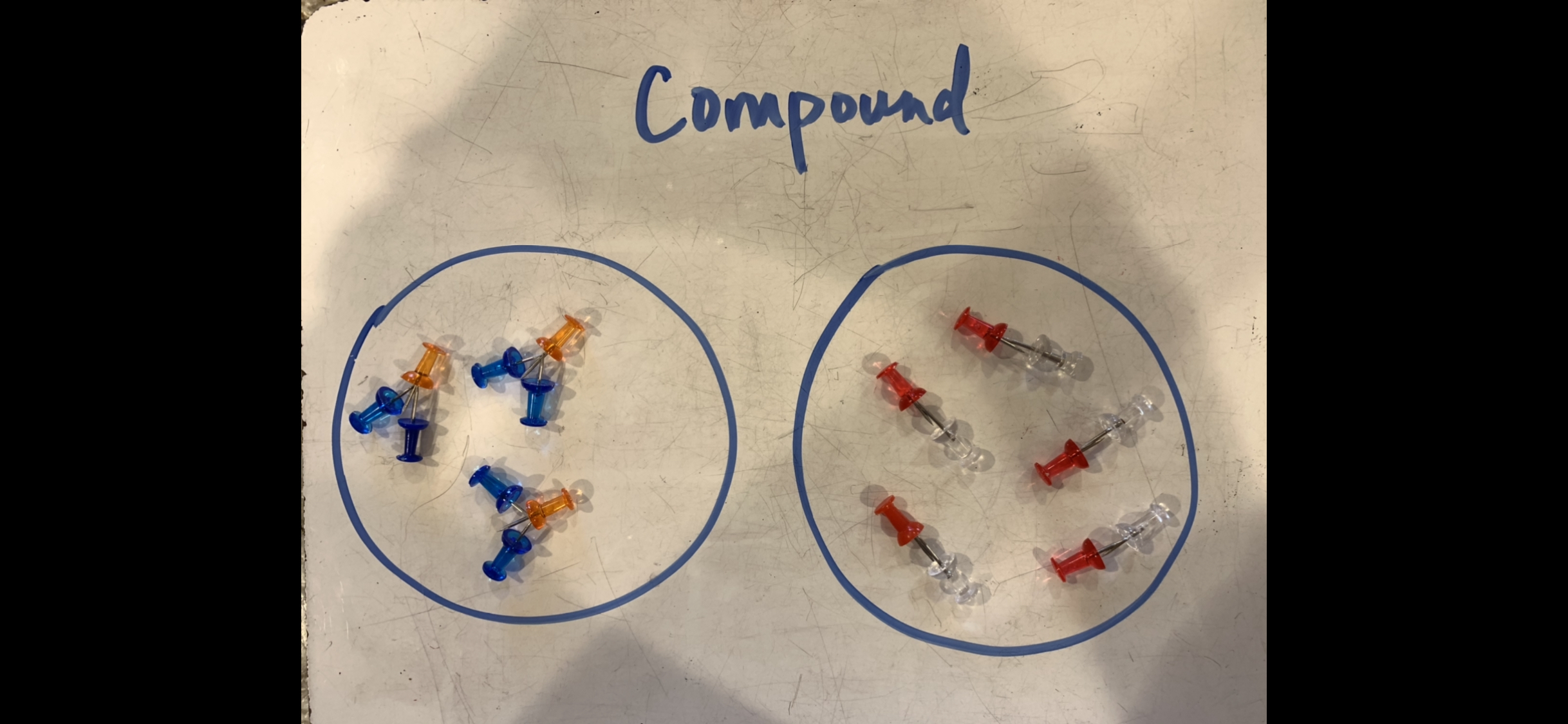
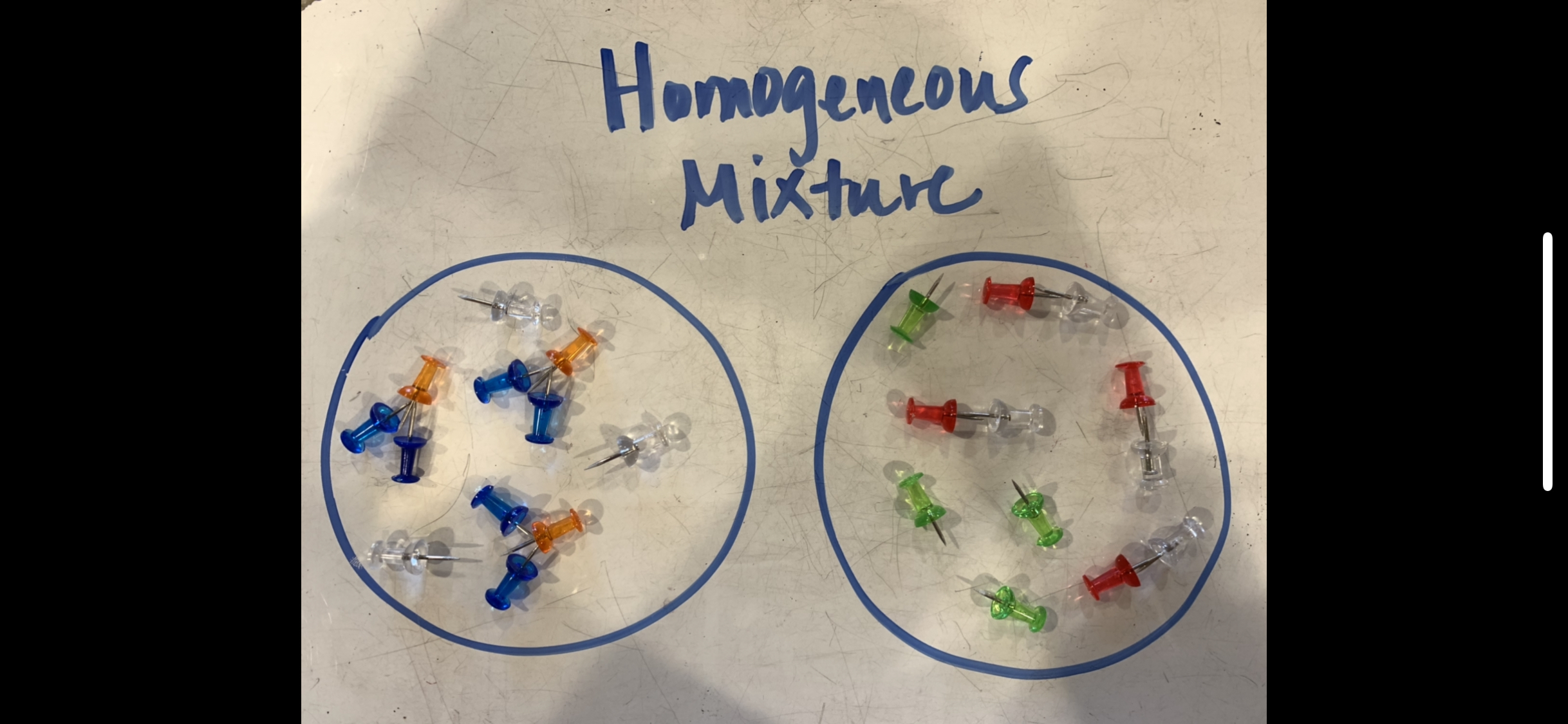
Use materials at home and your white board to build a model of the four classifications of matter.
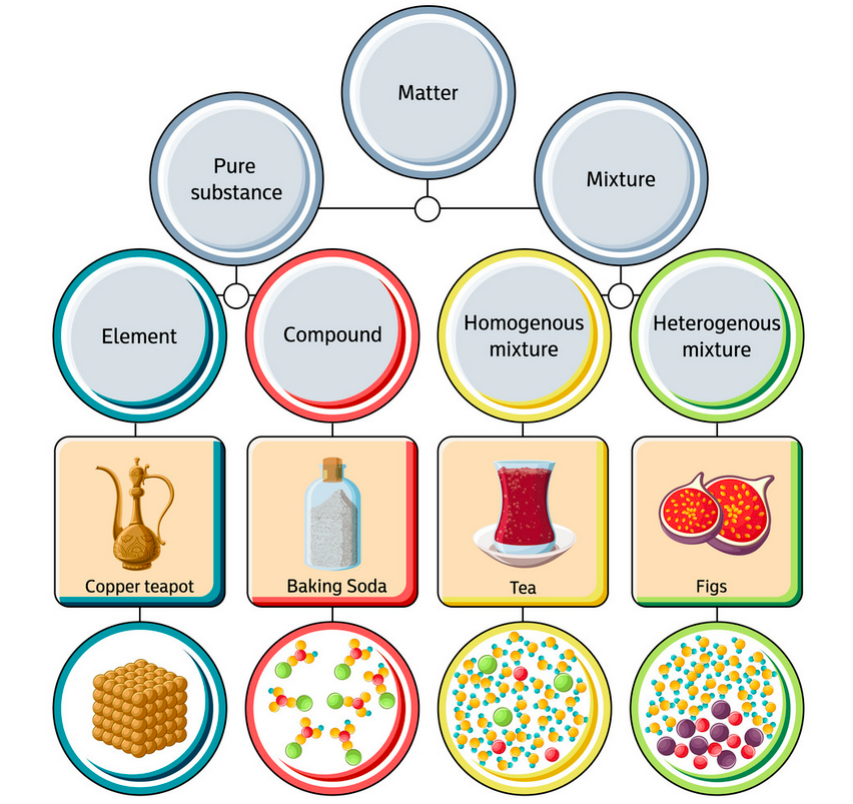
For example, here are my models using push pins. You only have to make one example for each. I did two.
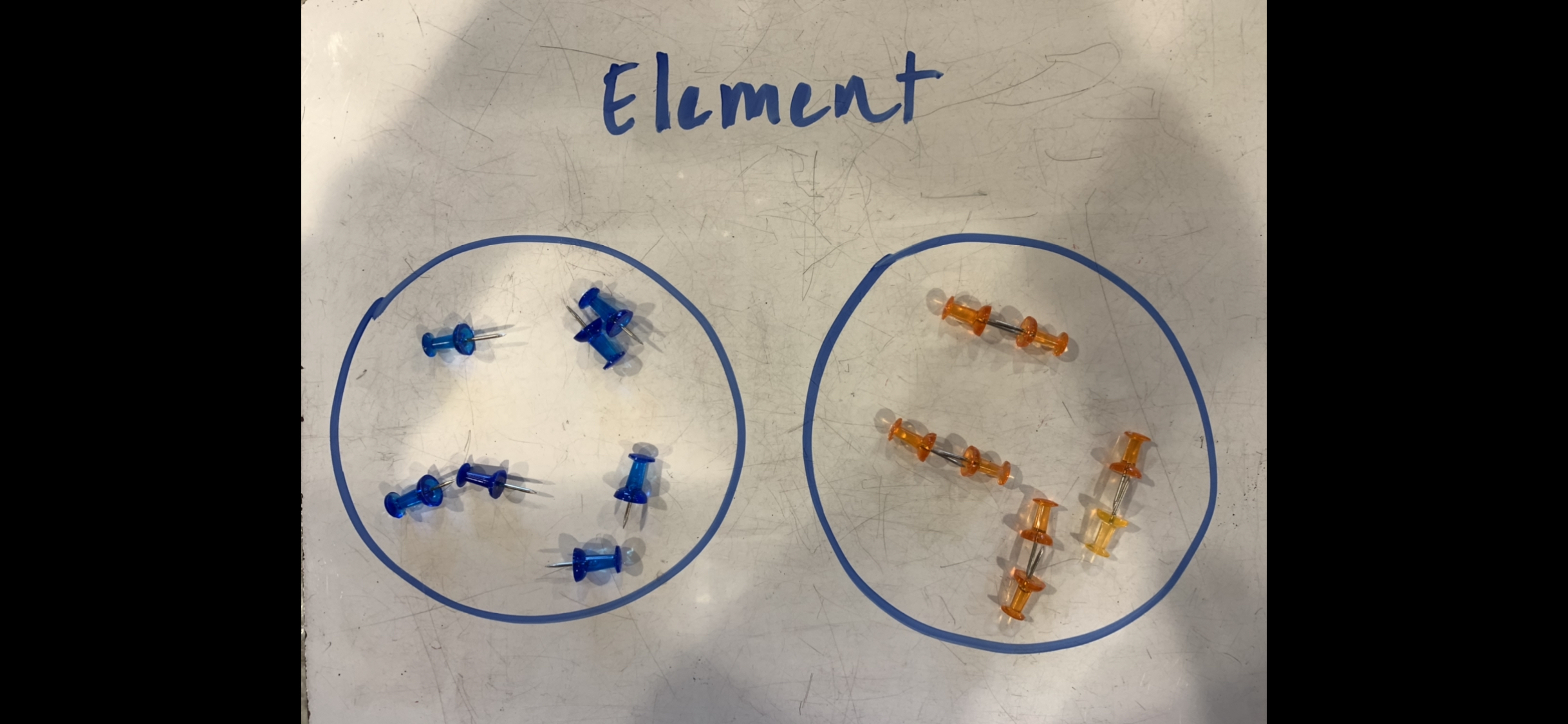
Build a model of an element. Take a photo. Label the items.
For example, here is my model using push pins. You only have to make one example for each. I did two.
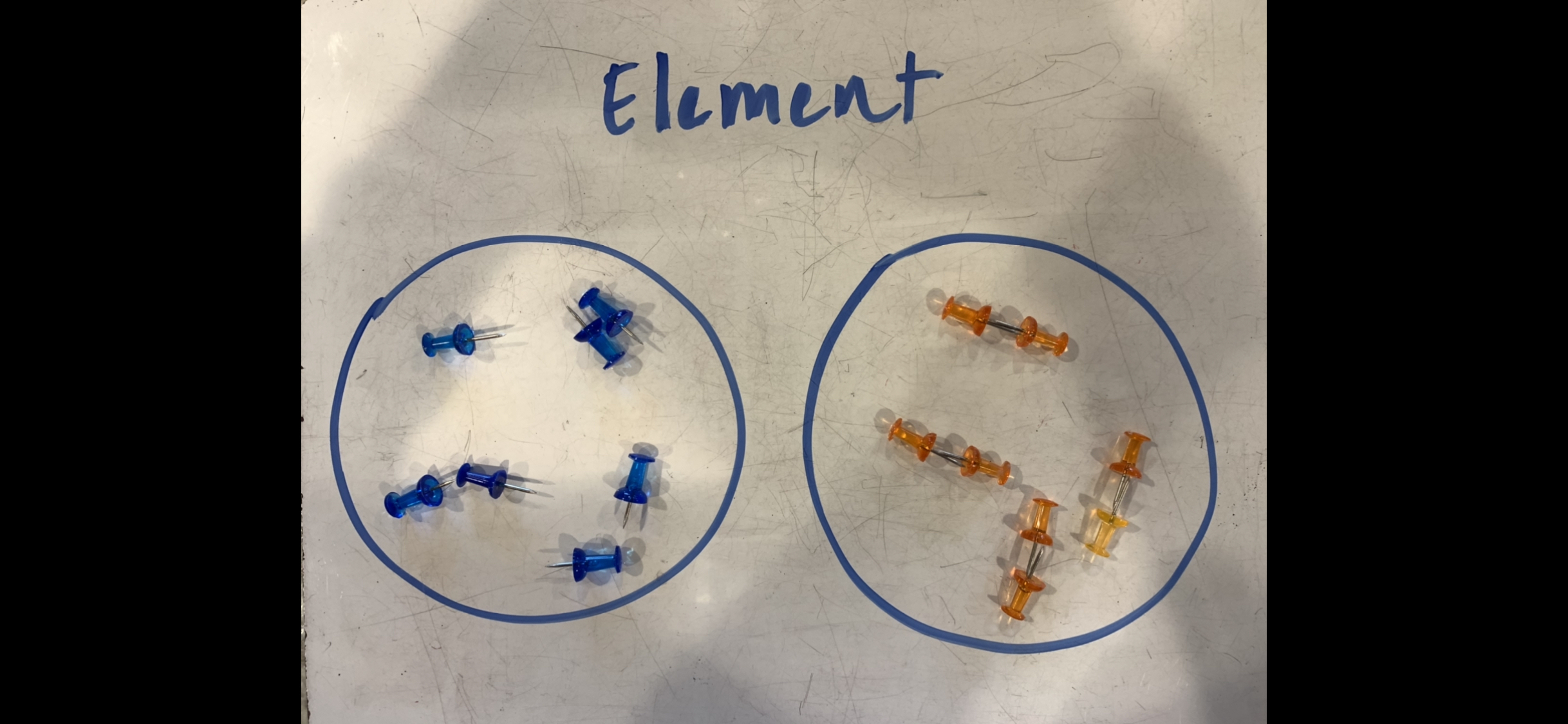
The best definition of an element is:
Build a model of a compound. Take a photo. Label the items.
For example, here is my model using push pins. You only have to make one example for each. I did two.
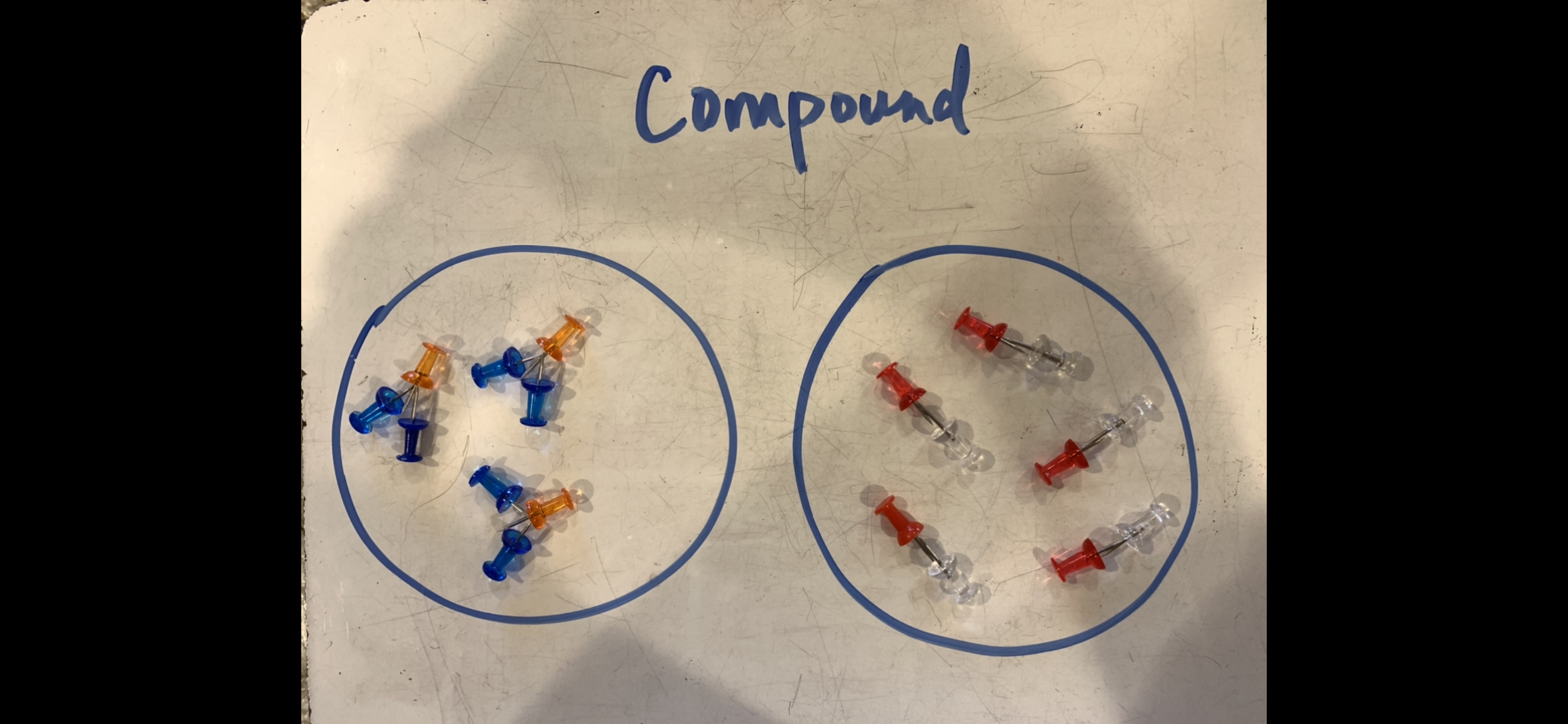
The best definition of a compound is:
Build a model of a homogeneous mixture. Take a photo. Label the items.
For example, here is my model using push pins. You only have to make one example for each. I did two.
Actually my example isn't totally correct - the molecules need to be evenly mixed - the one on the right shows more green together which it shouldn't. I bet yours can be stronger!!!
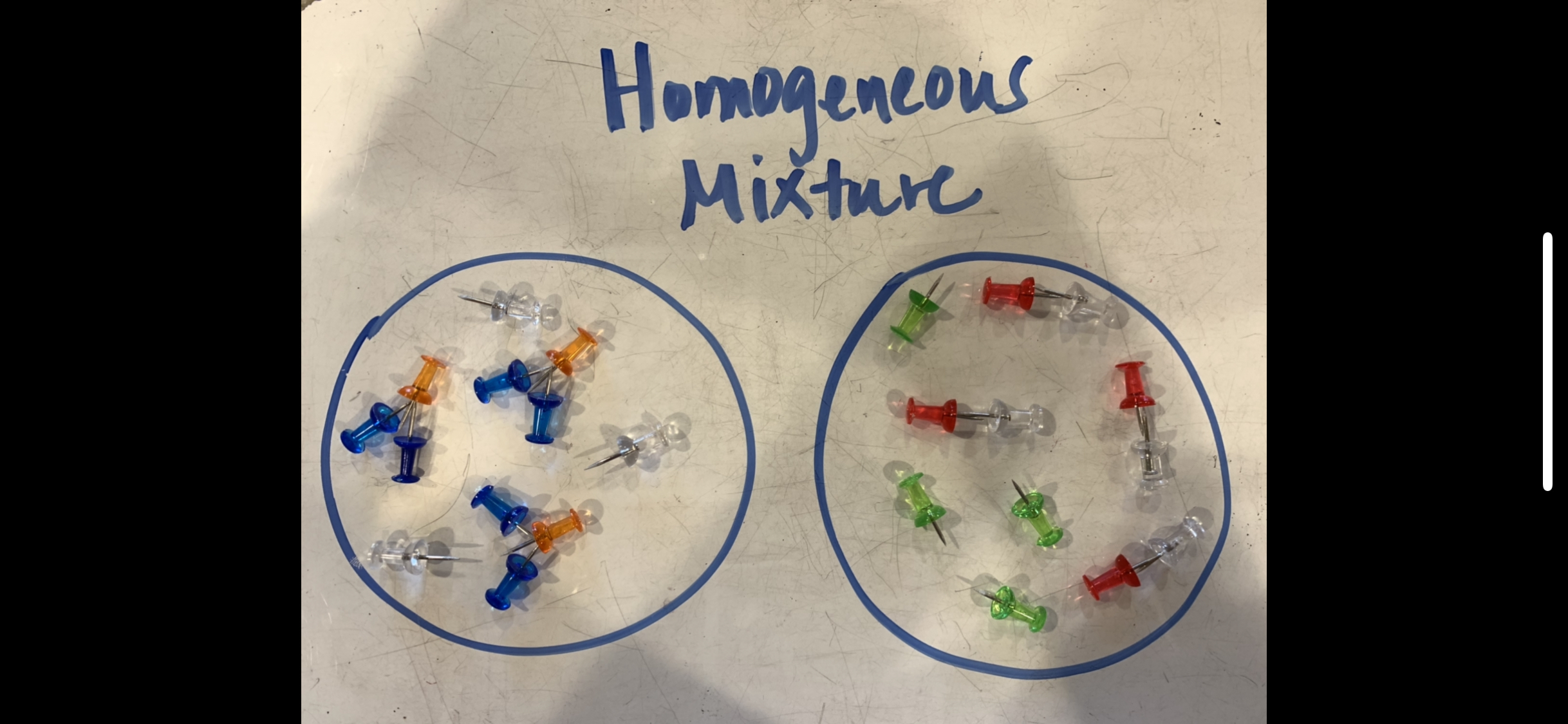
The best definition of a homogeneous mixture is:
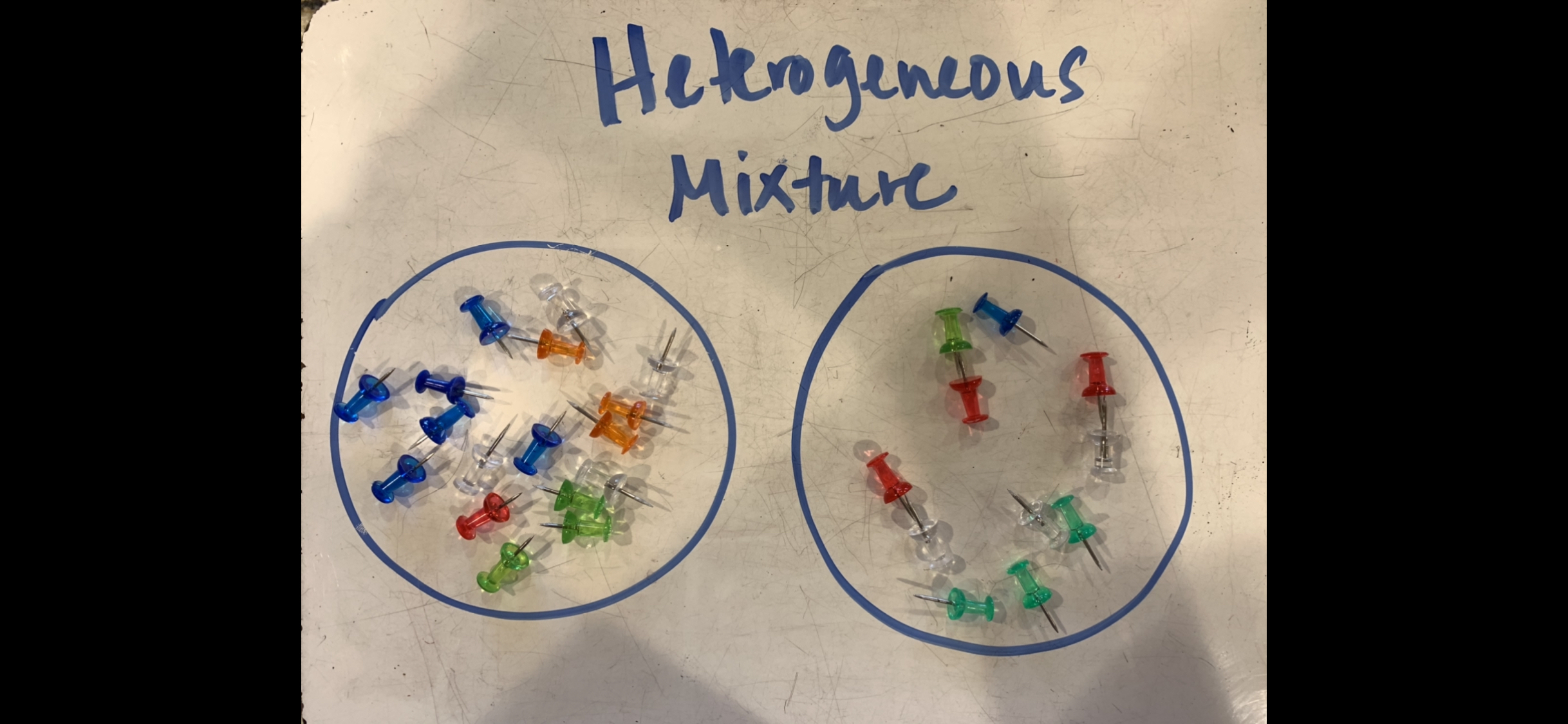
Build a model of a heterogeneous mixture. Take a photo. Label the items.
For example, here are my models using push pins. You only have to make one example for each. I did two.
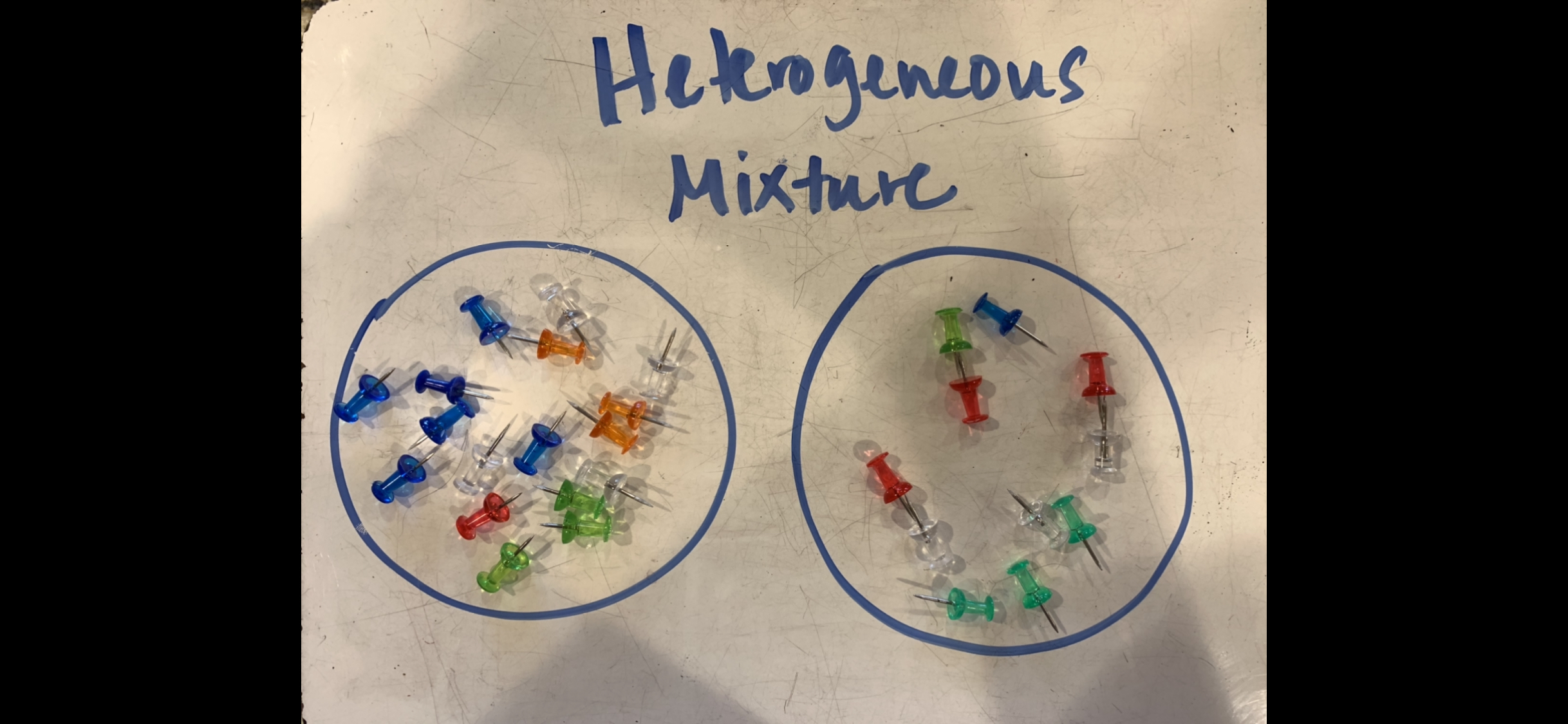
The best definition of a heterogeneous mixture is:
Looking back on question 7 and 8 is your pantry item a pure substance or a mixture?
Watch the following film and share one thing you learned from watching it.