The figured bass for a Dominant 7th chord with the 3rd on the bottom is:

The figured bass for a Dominant 7th chord with the 3rd on the bottom is:
What kind of 7th does a Dominant 7th chord have? (What is the interval between the root and 7th)
What Roman Numeral would you use for a Dominant 7th chord in root position?
Complete the C7 chord: C E G __
A dominant 7th chord contains which of the following?
Choose all answers that describe NCTs (non-chord tones).
A 7th chord with the root on the bottom is in what inversion?
The figured bass for a Dominant 7th chord with the 3rd on the bottom is:
What is the inversion for this triad?
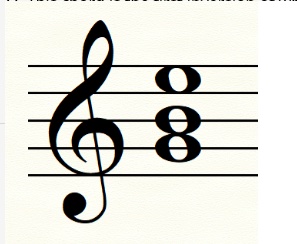
What would this chord look like in 2nd inversion?
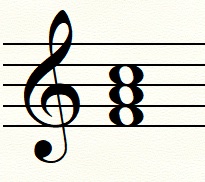
Click all the G Major triads:
When labeling chords with Roman numerals, lower case letters indicate what kind of chord?
Below the staff write the roman numeral and figured bass for each chord.
Below the staff write the roman numeral and figured bass for each chord.
What type of scale is this?

What type of scale is this?

What type of scale is this?

Reorder in numerical order from top to bottom. (first = top, last = bottom)
Ionian
Dorian
Aeolian
Phrygian
Mixolydian
Lydian
Locrian
Choose all of the following that are true.
Select all notes that would appear in the V7 chord of f# minor.
Drag the minors to the correct relative majors.
d# minor
f# minor
bb minor
a# minor
eb minor
c minor
A major
Gb major
Eb major
C# major
F# major
Db major
Choose the answer that describes this:

Choose the chord progression that best describes this:
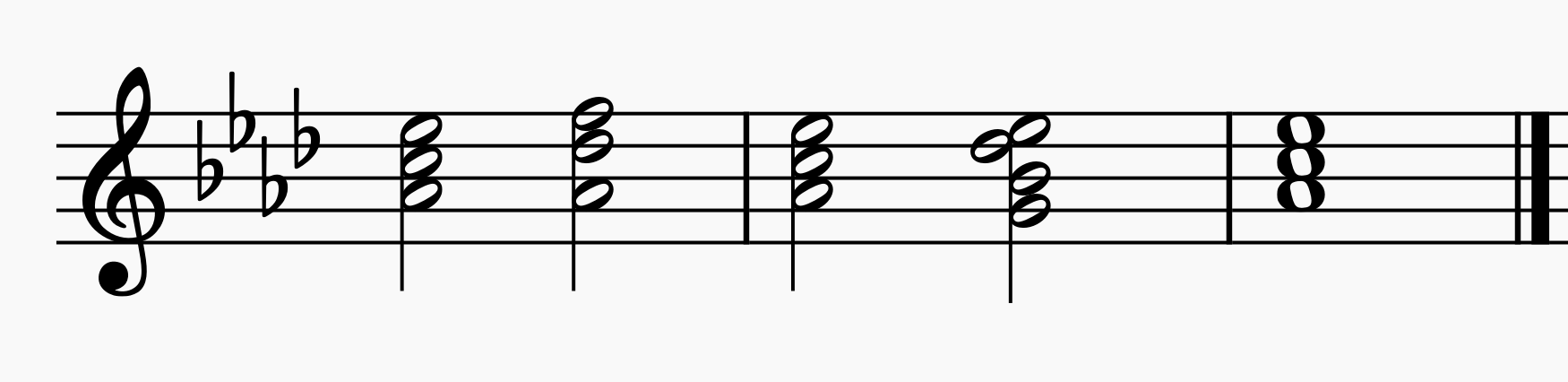
Write down the key in the designated space and Roman numerals with figured base for the progression below:
1. Harmonize the following melody excerpt with primary chords in the correct inversions.
**You may have one chord per measure, OR two chords.
2. Provide the correct Roman numerals with figured bass underneath the chords you've written.