Log in
Sign up for FREE
arrow_back
Library

5.3 - Principles of Skill Learning Review

star
star
star
star
star
Last updated over 5 years ago
24 questions
1
7
5
7
1
1
1
6
1
1
1
1
6
6
10
5
4
3
3
3
3
3
3
3
Question 1
1.

Match the terms with the appropriate description

Draggable itemarrow_right_altCorresponding Item
Learning
arrow_right_alt
A relatively permanent change in performance brought about by experience (excluding changes due to maturation and degeneration)
Performance
arrow_right_alt
A temporary occurrence fluctuating over time (a change in performance over time is often used to infer learning)
Question 2
2.

Question 3
3.

Question 4
4.

Question 5
5.

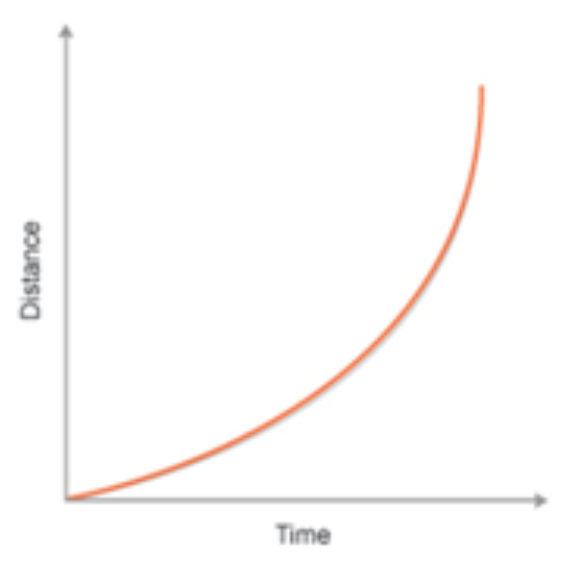
The following learning curve can be described as:
Question 6
6.

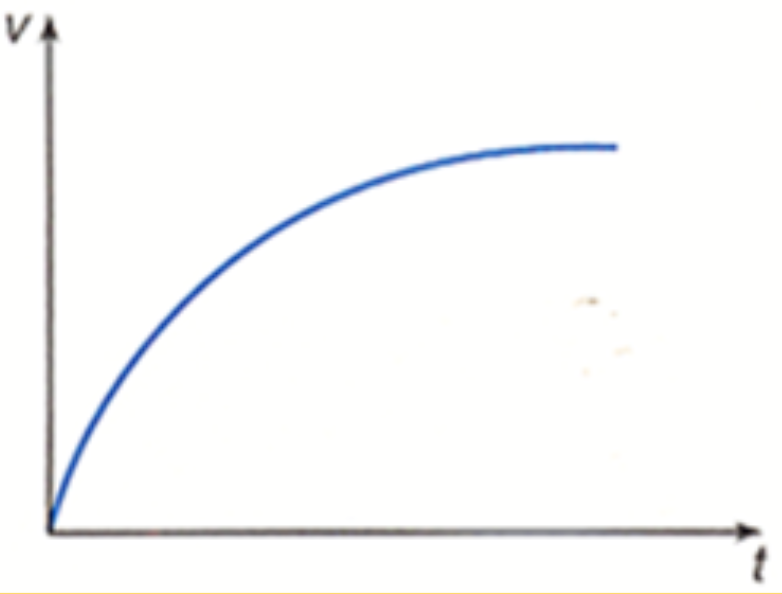
The following learning curve can be described as:

Question 7
7.

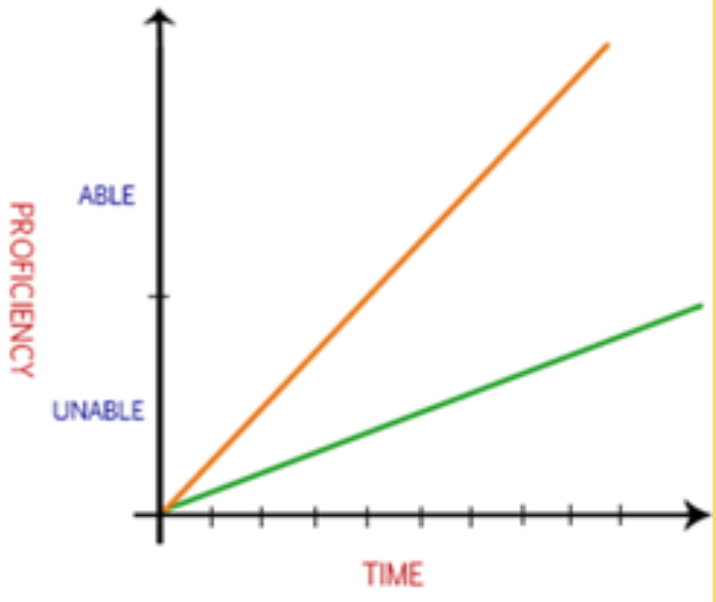
The following learning curve can be described as:
Question 8
8.

Question 9
9.

The following learning curve can be described as:


Question 10
10.

The following description best represents what type of curve?
"Skill is difficult to learn at first, then rapid improvements in performance - the task took a long time to learn"

Question 11
11.

The following description best represents what type of curve?
"Rapid initial improvements then lesser gains from practice (learning slowed)"

Question 12
12.

The following description best represents what type of curve?
"After steady improvements in performance, there is a stage where there appears to be little or no improvement"

Question 13
13.

Match the factors that influence the rate of learning with the appropriate descriptions descriptions

Draggable itemarrow_right_altCorresponding Item
arrow_right_alt
arrow_right_alt
arrow_right_alt
arrow_right_alt
arrow_right_alt
arrow_right_alt
Question 14
14.

Match the factors that influence the rate of learning with the appropriate descriptions descriptions

Draggable itemarrow_right_altCorresponding Item
arrow_right_alt
arrow_right_alt
arrow_right_alt
arrow_right_alt
arrow_right_alt
arrow_right_alt
Question 15
15.

Draggable itemarrow_right_altCorresponding Item
arrow_right_alt
arrow_right_alt
arrow_right_alt
arrow_right_alt
arrow_right_alt
arrow_right_alt
arrow_right_alt
arrow_right_alt
arrow_right_alt
arrow_right_alt
Question 16
16.

Match the types of practice based on descriptions

Draggable itemarrow_right_altCorresponding Item
Variable Practice
arrow_right_alt
Mental Practice
arrow_right_alt
Distributed Practice
arrow_right_alt
arrow_right_alt
arrow_right_alt
Question 17
17.

Match the types of presentation to the appropriate descriptions

Draggable itemarrow_right_altCorresponding Item
Whole
arrow_right_alt
  • The skill is demonstrated and practiced in its entirety from start to finish
  • Commonly used for skills that cannot be easily broken because they are quick and fluent/discrete in nature or simple serial skills
Progressive Part
arrow_right_alt
Part
arrow_right_alt
arrow_right_alt
Question 18
18.

Match each of the teaching styles with the corresponding description

Draggable itemarrow_right_altCorresponding Item
Problem Solving
arrow_right_alt
Teacher or coach makes all the decisions / pupils make no decisions about the content of the lesson
Command
arrow_right_alt
Students work in pairs - one as the observer and one as the doer
Reciprocal
arrow_right_alt
A task or issue is presented in which the learner has to find a solution in their own way
Question 19
19.

Question 20
20.

Question 21
21.

Question 22
22.

Question 23
23.

Question 24
24.

Identify the aspects that can be used to describe the cognitive (early phase) of learning
A performer practices the task and can associate their movements with the mental image of the skill
Movement patterns are well integrated and automatic
During the cognitive stage of learning, the beginner focuses on cognitively-orientated problems for example how fast should I move this arm?/where should this arm be when my right leg is here?
Feedback should be specific and focus on both knowledge of performance and knowledge of results to allow the association of kinesthetic feedback with outcomes
A performer judges his/her own performance and make changes without external feedback from a coach
They can be performed without the performer giving conscious attention to the movement, unless it is required
The learner must engage in cognitive processing as he/she listens to instructions and receives feedback - Learners are less likely to self-correct
Movement patterns are now more fluent and integrated
There is less need for feedback from the teacher because the performers are able to judge their own performances - but any information/feedback can now be very detailed and specific
The learner uses verbalization to aid memory
Reaction time is shorter as motor programmes are well learnt - stored in long-term memory
Performance is highly variable/shows a lack of consistency from one attempt to the next
A performer begins to “feel” what a good performance is like kinaesthetically or a performer begins to detect and correct errors in their performance
Skills appear automatic as attention is focused elsewhere
Learning is characterized by a large number of errors
The learner now understands the aim of the activity
The performer can concentrate on the external demands of the environment and give a lot of attention to subtle cues
Change in the rate of improvement is faster in the cognitive stage
The sport/skill is completely new to the learner - the beginning/initial stage of the learning stages continuum
Identify the aspects that can be used to describe the Associative (intermediate phase) of learning
Change in the rate of improvement is faster in the cognitive stage
The learner must engage in cognitive processing as he/she listens to instructions and receives feedback - Learners are less likely to self-correct
Skills appear automatic as attention is focused elsewhere
Feedback should be specific and focus on both knowledge of performance and knowledge of results to allow the association of kinesthetic feedback with outcomes
The performer can concentrate on the external demands of the environment and give a lot of attention to subtle cues
There is less need for feedback from the teacher because the performers are able to judge their own performances - but any information/feedback can now be very detailed and specific
The learner now understands the aim of the activity
Learning is characterized by a large number of errors
Performance is highly variable/shows a lack of consistency from one attempt to the next
A performer practices the task and can associate their movements with the mental image of the skill
They can be performed without the performer giving conscious attention to the movement, unless it is required
A performer judges his/her own performance and make changes without external feedback from a coach
Movement patterns are now more fluent and integrated
During the cognitive stage of learning, the beginner focuses on cognitively-orientated problems for example how fast should I move this arm?/where should this arm be when my right leg is here?
Movement patterns are well integrated and automatic
Reaction time is shorter as motor programmes are well learnt - stored in long-term memory
The learner uses verbalization to aid memory
The sport/skill is completely new to the learner - the beginning/initial stage of the learning stages continuum
A performer begins to “feel” what a good performance is like kinaesthetically or a performer begins to detect and correct errors in their performance
Identify the aspects that can be used to describe the Associative (intermediate phase) of learning
There is less need for feedback from the teacher because the performers are able to judge their own performances - but any information/feedback can now be very detailed and specific
Skills appear automatic as attention is focused elsewhere
The learner now understands the aim of the activity
Change in the rate of improvement is faster in the cognitive stage
During the cognitive stage of learning, the beginner focuses on cognitively-orientated problems for example how fast should I move this arm?/where should this arm be when my right leg is here?
Movement patterns are now more fluent and integrated
They can be performed without the performer giving conscious attention to the movement, unless it is required
The learner must engage in cognitive processing as he/she listens to instructions and receives feedback - Learners are less likely to self-correct
A performer judges his/her own performance and make changes without external feedback from a coach
Performance is highly variable/shows a lack of consistency from one attempt to the next
A performer begins to “feel” what a good performance is like kinaesthetically or a performer begins to detect and correct errors in their performance
Learning is characterized by a large number of errors
The learner uses verbalization to aid memory
The performer can concentrate on the external demands of the environment and give a lot of attention to subtle cues
Feedback should be specific and focus on both knowledge of performance and knowledge of results to allow the association of kinesthetic feedback with outcomes
A performer practices the task and can associate their movements with the mental image of the skill
The sport/skill is completely new to the learner - the beginning/initial stage of the learning stages continuum
Reaction time is shorter as motor programmes are well learnt - stored in long-term memory
Movement patterns are well integrated and automatic
Plateau
What are the factors that influence the rate of learning?
Ability of the Athlete
Physical Strength of the Performer
Motivation
Difficulty of Task
Teammates
Athleticism of the Learner
Individual Differences of Coaches
Speed of the Performer
Teaching Environment
Physical Fitness
Skill of the Athlete
Age
Plateau
Individual Differences of Coaches
Small group learning enables a performer to have more opportunities and feedback
Teaching Environment
A command style or reciprocal style may appeal to one learner but not another
Difficulty of Task
Can be related to a person’s inner drive (intrinsic) or external factors such as trophies (extrinsic)
Physical Fitness
Progress will be slowed if the task is too difficult for the learner
Motivation
Emotional maturity will affect the progress of a learner and whether they can focus on the learning task safely with understanding
Age
A learner has an ability to make decisions more effectively if they are not fatigued
Physical Fitness
Limited distractions will enhance focus for learning
Difficulty of Task
Good rapport improves rate of learning
Motivation
The more the performer practices, the better the rate of learning
Teaching Environment
If the task is too easy or too difficult, this may have an impact on the motivation of the learner
Individual Differences of Coaches
Experience may be lacking for some people who are too young whereas someone who has experience will be familiar with expectations
Age
One person may have more flexibility and strength than another helping them to perform a task more easily
Match the correct types of transfer with the descriptions/examples
Bilateral
When the learning/performance of one task has a positive effect on the learning/performance of another
Principle to Skill
When the learning/performance of one task has a negative effect on the learning/performance of another
Abilities to Skill
The learning/performance of one skill has no impact on the learning/performance of another skill
Stage to Stage
Occurs when a skill developed in one sport has an influence on the development of a skill in another sport
Negative Transfer
When learning to perform a skill with one limb aids in the ability of the performer to perform the skill with the other limb
Positive Transfer
When practice situations simulate a game situation
Transfer Definition
When a concept learned in one sport aids in the learning of a concept in another sport (Example: positioning/spacing)
Skill to Skill
When things like strength, speed, flexibility (etc.) aid in the performance of a skill
Zero Transfer
Skills that are learned in the cognitive phase in a particular activity will develop until the associative stage of the activity
Practice to Performance
The effect of learning/performance of one skill on the learning/performance of another
  • Is interspersed with breaks which can either be rest or the practice of another skill
  • Training sessions include rest intervals - could involve mental practice
  • Sessions are short & spread over time - recovery periods between
  • Good for beginners & most skill learning
  • Provides times to recover physical & mentally
  • The skill is practiced without taking any breaks/with little or no gaps between efforts
  • Most suitable for learners who are highly motivated
  • Training sessions do not include rest intervals
  • Long in duration - single training sessions
  • All activities are performed one after the other
  • This method encourages a habitual response
  • Can lead to fatigue & boredom
  • A specific movement pattern is practiced repeatedly - repetition of a particular skill
  • Most effective for closed skills where the environment doesn't change
  • There is limited variance in the practice
  • Low levels of cognitive interference
Massed Practice
  • Practicing a skill in a variety of different contexts and experiencing the full range of situations in which the technique or tactic might be used in competition
  • Practice conditions are varied
  • Conditions of practice simulate competition conditions
  • Effective for open-skills
Fixed Practice (Drill)
  • Visualization & imagery - visualizing motor performance
  • When a performer visualizes the skill in their mind prior to carrying out the skill
  • Can help reinforce the correct motor movement without actually performing the skill
  • Aspects of the skill are demonstrated and practised individually
  • Commonly used for complicated or serial skills, where the coach may wish to isolate a particular component to practice
  • The skill is demonstrated and practiced in its entirety and then it is broken down into its constituent parts, before being progressed back to the entire skill
  • Effective for complex skills with easily distinguished parts - serial in nature
Whole - Part - Whole
  • Parts of the skill are practiced individually before being linked together
  • Commonly used for skills that contain discrete parts that form a sequence
Identify the examples of transfer that would fall under skill to skill
- The examples can be forms of either negative or positive transfer
Baseball player receiving batting practice from pitcher or pitching machine
3 on 3 volleyball scrimmage to help with moving on defense
Throwing cues learned in early performance continue to guide the learner as motor programmes are developed later on in learning
Stamina to run long distances
Practicing a situation where there is 30sec left, and the team with the ball is down by 3
Balance to balance on the beam in gymnastics
Explosive strength to jump in the long jump
The concept of maintaining space in basketball helping an athletes understanding of spacing in soccer
Performer understands the concept of zone defense in soccer which is similar to zone defense in basketball
Moving without the puck in hockey to moving without the ball in basketball
Shooting free throws after running lines to simulate the fatigue that may be experienced in a game
During a tennis forehand the wrist is stiff wheres in badminton the wrist is not stiff
Learning to juggle two juggling balls becomes more fluent & consistent over time
Ability to do right handed layups helps performer to complete left handed layups
Juggling the soccer ball with your left foot enhances your ability to juggle with the right foot
When golfing in the off-season has a negative impact on a performers baseball swing
The effect of throwing mechanics in javelin to the skill of kicking a soccer ball
The increase in efficiency of sprint mechanics over time
Kicking a soccer ball & kicking a football
Kicking a soccer ball with the dominant foot helps learner to develop kicking skill with the less dominant foot
Identify the examples of transfer that would fall under stage to stage
- The examples can be forms of either negative or positive transfer
Performer understands the concept of zone defense in soccer which is similar to zone defense in basketball
The effect of throwing mechanics in javelin to the skill of kicking a soccer ball
Learning to juggle two juggling balls becomes more fluent & consistent over time
Stamina to run long distances
During a tennis forehand the wrist is stiff wheres in badminton the wrist is not stiff
Shooting free throws after running lines to simulate the fatigue that may be experienced in a game
Practicing a situation where there is 30sec left, and the team with the ball is down by 3
Kicking a soccer ball with the dominant foot helps learner to develop kicking skill with the less dominant foot
Moving without the puck in hockey to moving without the ball in basketball
Kicking a soccer ball & kicking a football
When golfing in the off-season has a negative impact on a performers baseball swing
Balance to balance on the beam in gymnastics
3 on 3 volleyball scrimmage to help with moving on defense
Baseball player receiving batting practice from pitcher or pitching machine
The increase in efficiency of sprint mechanics over time
Throwing cues learned in early performance continue to guide the learner as motor programmes are developed later on in learning
The concept of maintaining space in basketball helping an athletes understanding of spacing in soccer
Explosive strength to jump in the long jump
Juggling the soccer ball with your left foot enhances your ability to juggle with the right foot
Ability to do right handed layups helps performer to complete left handed layups
Identify the examples of transfer that would fall under principle to skill
- The examples can be forms of either negative or positive transfer
Kicking a soccer ball & kicking a football
Practicing a situation where there is 30sec left, and the team with the ball is down by 3
The effect of throwing mechanics in javelin to the skill of kicking a soccer ball
Performer understands the concept of zone defense in soccer which is similar to zone defense in basketball
The increase in efficiency of sprint mechanics over time
The concept of maintaining space in basketball helping an athletes understanding of spacing in soccer
Kicking a soccer ball with the dominant foot helps learner to develop kicking skill with the less dominant foot
Shooting free throws after running lines to simulate the fatigue that may be experienced in a game
Stamina to run long distances
Learning to juggle two juggling balls becomes more fluent & consistent over time
3 on 3 volleyball scrimmage to help with moving on defense
Ability to do right handed layups helps performer to complete left handed layups
Baseball player receiving batting practice from pitcher or pitching machine
Explosive strength to jump in the long jump
Moving without the puck in hockey to moving without the ball in basketball
Juggling the soccer ball with your left foot enhances your ability to juggle with the right foot
Balance to balance on the beam in gymnastics
When golfing in the off-season has a negative impact on a performers baseball swing
Throwing cues learned in early performance continue to guide the learner as motor programmes are developed later on in learning
During a tennis forehand the wrist is stiff wheres in badminton the wrist is not stiff
Identify the examples of transfer that would fall under practice to performance
- The examples can be forms of either negative or positive transfer
Shooting free throws after running lines to simulate the fatigue that may be experienced in a game
Balance to balance on the beam in gymnastics
Learning to juggle two juggling balls becomes more fluent & consistent over time
Practicing a situation where there is 30sec left, and the team with the ball is down by 3
Juggling the soccer ball with your left foot enhances your ability to juggle with the right foot
Baseball player receiving batting practice from pitcher or pitching machine
Kicking a soccer ball with the dominant foot helps learner to develop kicking skill with the less dominant foot
Moving without the puck in hockey to moving without the ball in basketball
The increase in efficiency of sprint mechanics over time
Stamina to run long distances
3 on 3 volleyball scrimmage to help with moving on defense
During a tennis forehand the wrist is stiff wheres in badminton the wrist is not stiff
Throwing cues learned in early performance continue to guide the learner as motor programmes are developed later on in learning
The effect of throwing mechanics in javelin to the skill of kicking a soccer ball
Kicking a soccer ball & kicking a football
When golfing in the off-season has a negative impact on a performers baseball swing
The concept of maintaining space in basketball helping an athletes understanding of spacing in soccer
Ability to do right handed layups helps performer to complete left handed layups
Explosive strength to jump in the long jump
Performer understands the concept of zone defense in soccer which is similar to zone defense in basketball
Identify the examples of transfer that would fall under abilities to skill
- The examples can be forms of either negative or positive transfer
3 on 3 volleyball scrimmage to help with moving on defense
Throwing cues learned in early performance continue to guide the learner as motor programmes are developed later on in learning
Shooting free throws after running lines to simulate the fatigue that may be experienced in a game
Juggling the soccer ball with your left foot enhances your ability to juggle with the right foot
The effect of throwing mechanics in javelin to the skill of kicking a soccer ball
During a tennis forehand the wrist is stiff wheres in badminton the wrist is not stiff
When golfing in the off-season has a negative impact on a performers baseball swing
Kicking a soccer ball & kicking a football
The increase in efficiency of sprint mechanics over time
The concept of maintaining space in basketball helping an athletes understanding of spacing in soccer
Practicing a situation where there is 30sec left, and the team with the ball is down by 3
Performer understands the concept of zone defense in soccer which is similar to zone defense in basketball
Stamina to run long distances
Kicking a soccer ball with the dominant foot helps learner to develop kicking skill with the less dominant foot
Moving without the puck in hockey to moving without the ball in basketball
Ability to do right handed layups helps performer to complete left handed layups
Balance to balance on the beam in gymnastics
Baseball player receiving batting practice from pitcher or pitching machine
Explosive strength to jump in the long jump
Learning to juggle two juggling balls becomes more fluent & consistent over time
Identify the examples of transfer that would fall under bilateral
- The examples can be forms of either negative or positive transfer
Kicking a soccer ball with the dominant foot helps learner to develop kicking skill with the less dominant foot
Ability to do right handed layups helps performer to complete left handed layups
Shooting free throws after running lines to simulate the fatigue that may be experienced in a game
Baseball player receiving batting practice from pitcher or pitching machine
3 on 3 volleyball scrimmage to help with moving on defense
Balance to balance on the beam in gymnastics
Juggling the soccer ball with your left foot enhances your ability to juggle with the right foot
Explosive strength to jump in the long jump
During a tennis forehand the wrist is stiff wheres in badminton the wrist is not stiff
Learning to juggle two juggling balls becomes more fluent & consistent over time
Stamina to run long distances
Kicking a soccer ball & kicking a football
Performer understands the concept of zone defense in soccer which is similar to zone defense in basketball
When golfing in the off-season has a negative impact on a performers baseball swing
The concept of maintaining space in basketball helping an athletes understanding of spacing in soccer
The effect of throwing mechanics in javelin to the skill of kicking a soccer ball
Practicing a situation where there is 30sec left, and the team with the ball is down by 3
Throwing cues learned in early performance continue to guide the learner as motor programmes are developed later on in learning
The increase in efficiency of sprint mechanics over time
Moving without the puck in hockey to moving without the ball in basketball