According to the phylogenetic tree, what trait separates the sponges from the cnidarians?
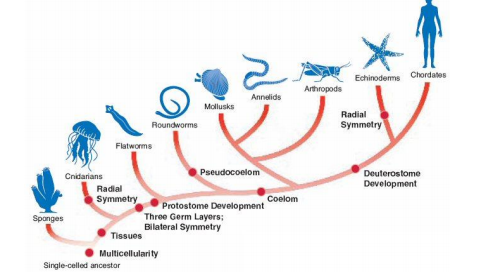
According to the phylogenetic tree, what trait separates the sponges from the cnidarians?
Place the following organisms on the phylogentic tree in the correct position; Human, Snake, Monkey, Lizard
Place the following animals on the phylogenetic tree in the correct location; Snake, Frog, Bird, Chimp, Fish
According to the phylogenetic tree, what trait separates the sponges from the cnidarians?
According to the phylogenetic tree, which organism is most related to the Mollusks?
According to the phylogenetic tree, which organism's DNA will differ the most from the Echinoderms?
Use the diagram to answer the following question: Which direction does time run on this tree?
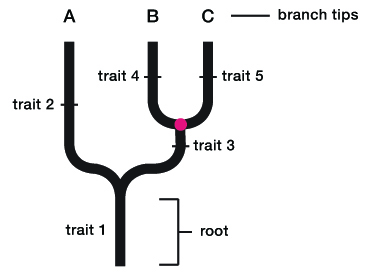
Use the diagram to answer the following question: Which lived more recently in time?
Which of the following is NOT a shared characteristic between vertebrates and invertebrates?
Which of the following is a unique characteristic to vertebrate animals?
Explain why the following statement is WRONG: The dorsal nerve chord is responsible for side to side movement
Explain why the following statement is WRONG: all vertebrates have an exoskeleton - which is a rigid outer skeleton
Radial symmetry is when both halves of an organism are identical when cut in half
In a closed circulatory system, blood is enclosed within vessels throughout the entire body cavity
Chordates have which features at some point in their lives?
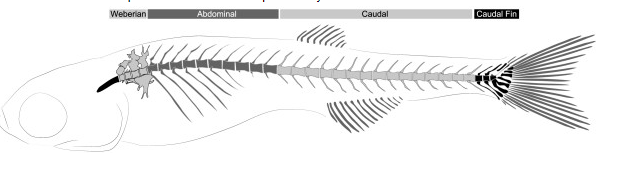
Examine the picture below. Explain why this animal could not be an invertebrate animal.