Log in
Sign up for FREE
arrow_back
Library
How Enzymes Work Shortened
By Katelyn Owens
star
star
star
star
star
Share
share
Last updated about 2 years ago
14 questions
Add this activity
1
zoom_in
1
Question 1
1.
2
3
4
5
6
7
8
9
zoom_in
1
1
1
1
1
1
1
1
10
11
zoom_in
1
1
zoom_in
1
1
1
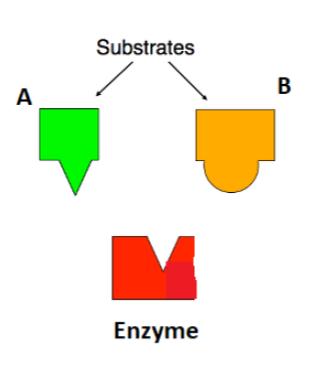
look at the digarm and determine which substrate would bind with the enzyme
A. Both A and B would bind
B. Only A
C. Only B
D. Neither one of the substrates would be able to bind
Question 2
2.
Question 3
3.
Question 4
4.
Question 5
5.
Question 6
6.
Question 7
7.
Question 8
8.
What are two factors that limit an enzyme's ability to function?
Question 9
9.
Question 10
10.
Question 11
11.
Question 12
12.
Question 13
13.
Question 14
14.
What kind of organic compound is an enzyme?
A. nucleic acids
B. carbohydrate
C. lipid
D. protein
What is the monomer of an enzyme?
A. nucleotides
B. monosaccharides
C. amino acids
D. fatty acids
What is an enzyme's function?
A. stores genetic information
B. speeds up chemical reactions
C. provides structure
D. provides energy
Do chemical reactions occur without enzymes present?
A. No the reaction cannot occur at all
B. Yes the reaction happens but the reaction is slower
How do enzymes affect the activation energy (energy needed to start a reaction)
A. lower the activation energy so the reaction happens faster
B. increases the activation energy so the reaction does not occur
C. Does not change the activation energy
Secretions from the pancreas contains compounds called lipases. Lipases speed up the chemical digestion of lipids. Lipases are example of
A. enzymes
B. hormones
C. nucleic acids
D. simple sugars
When heat is added to an enzyme, it denatures. What does denature mean?
A. the enzyme works faster
B. The enzyme loses it shape and cannot function
C. The enzyme binds to 2 substrates at the same time
D.The enzyme binds to a different substrate
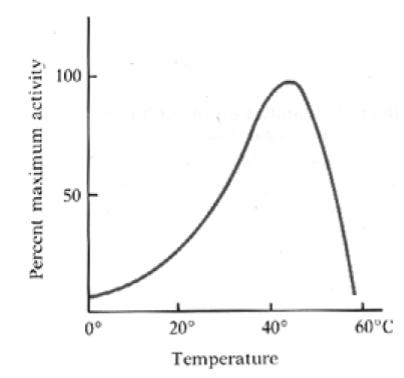
At what temperature does this enzyme work the fastest?
0
20
40
60
What happens to the enzymes as the temperature increases above 50 degrees?
A. the enzyme activity increases
B. the enzyme activity decreases
C. the enzyme activity stays the same
D. the enzyme activity stops completely
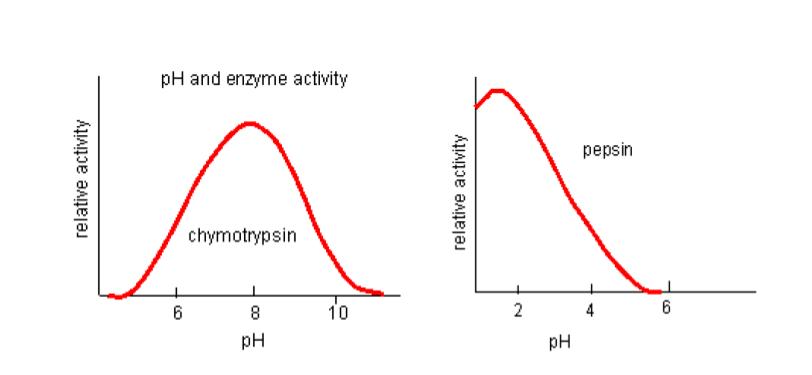
Which enzyme works best in an acidic environment (pH around 2)
chymrotrypsin
pepsin
both enzymes
Which enzyme works best in a neutral environment (pH around 8)?
chymrotrypsin
pepsin
both enzymes
What happens to the enzyme when the pH increases too high?
The enzyme works faster
The enzyme stops working
Nothing happens