Los artículos
star
star
star
star
star
Last updated almost 6 years ago
36 Nsɛmmisa
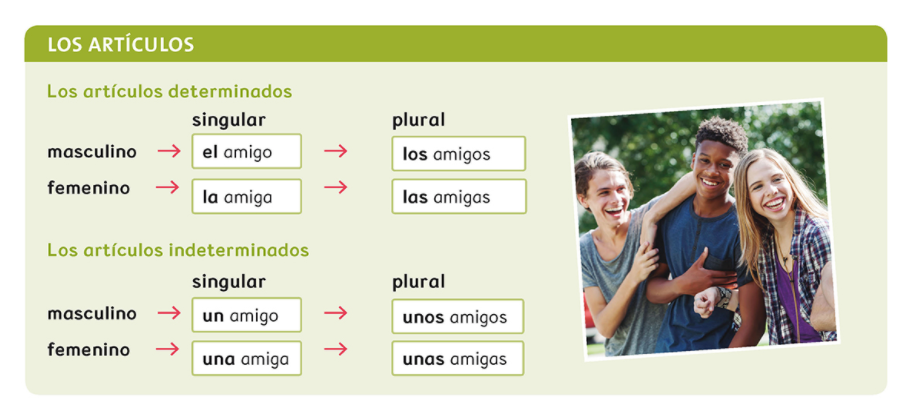
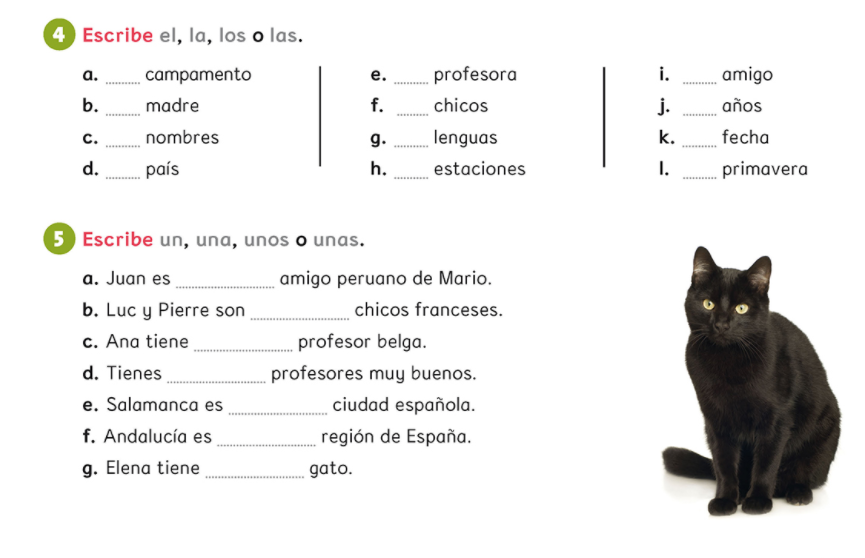
Articles accompany nouns and indicate gender (masculine or feminine) and number (singular or plural). In Spanish grammar, there are indefinite articles (un, una, unos, unas - in English "a", "an") and definite articles (el/los, la/las, lo - in English "the").
Definite articles (the):
The masculine definite articles are el (singular) and los (plural).
The feminine definite articles are la (singular) and las (plural).
Indefinite articles (a, an):
The masculine indefinite articles are un (singular) unos (plural).
The feminine indefinite articles are una (singular) and unas (plural).
NB! Usually the words ending with -o or -e are masculine and the words ending with -a are feminine.
Exeptions:
The word "mother" is a feminine word, "la madre", just like the word "woman" is a feminine word "la mujer".
The words that end with -ión are feminine words (una estación - a season, una región - a region).
The word "ciudad" is a feminine word "una ciudad" (a city).
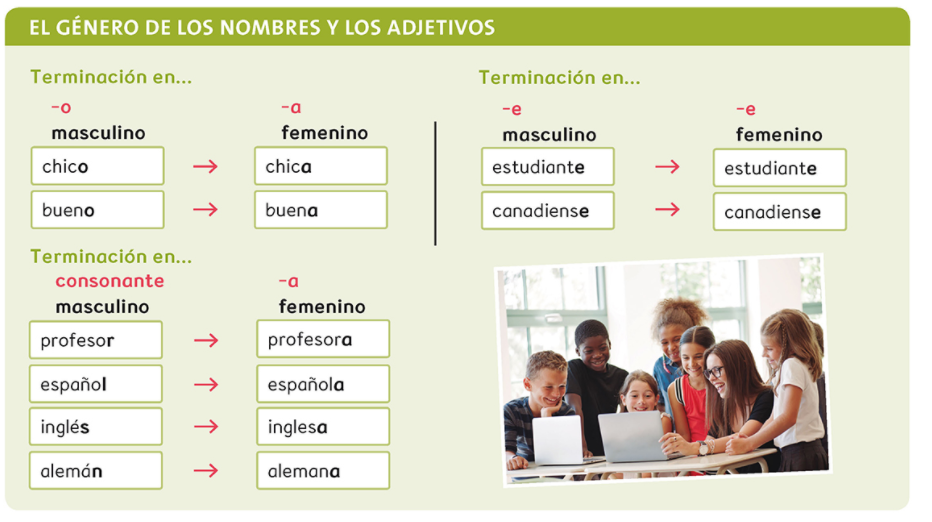
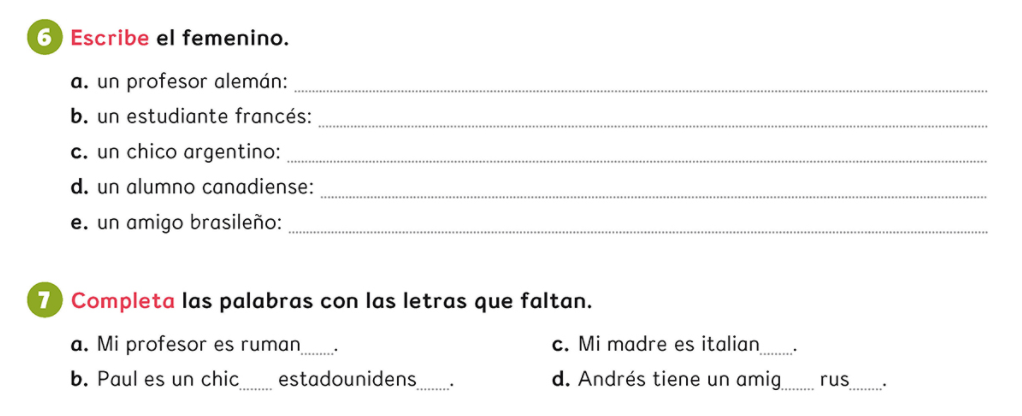
Words ending with an "-o" in the masculine change to an "-a" for the feminine.
chico - chica, bueno - buena
Words ending with an "-ense, -ante" do not change for the feminine.
canadiense - canadiense, estudiante - estudiante
Words ending with a consonant, add an "a" for the feminine
inglés - inglesa, profesor - profesora
Haz los ejercicios 6 y 7. En ejercicio 6 tienes que escribir la forma femenina (un profesor alemán - una profesora alemana). En ejercicio 7 sólo escribe una letra que falta.
Do the exercises 6 and 7. In the exercise 6 write the whole phrase in the feminine form (un profesor alemán - una profesora alemana.
In exercise 7 only write the missing letter. (ruman...O)
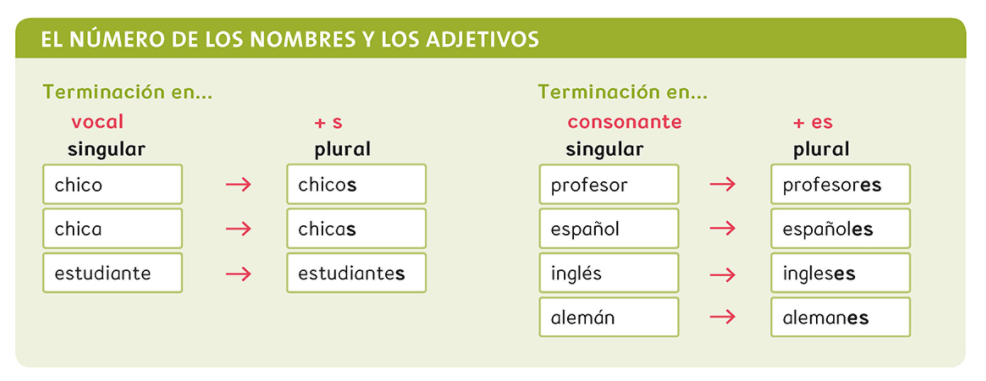
Words ending with a vocal, in plural an "s" is added.
chico - chicos, chica - chicas
Words ending with a consonant, in plural an "-es" is added.
alemán - alemanes, español - españoles
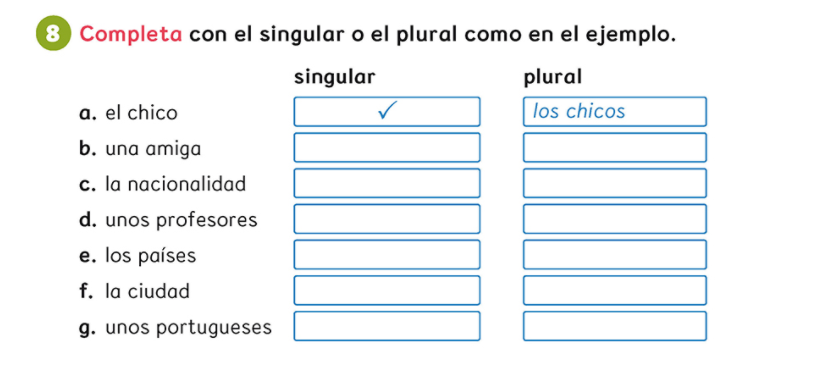
Haz el ejercicio número 8. Marca si la palabra es plural o singular y escribe la forma contrario.
Do the exercise 8 and write if the word is singular or plural and add the opposite form, separated by a comma. (If the word is singular, write the plural form, if the word is plural, write the singular form).
Ejemplo/Example:
los buses: plural, el bus
la mochila: singular, las mochilas
el chico: singular, los chicos